
Sarto Bikes · Road
Sarto Cima Road Bike
A new Italian road bike, born of the Seta Plus, sharpened by aerodynamics, and quietly dedicated to climbing.
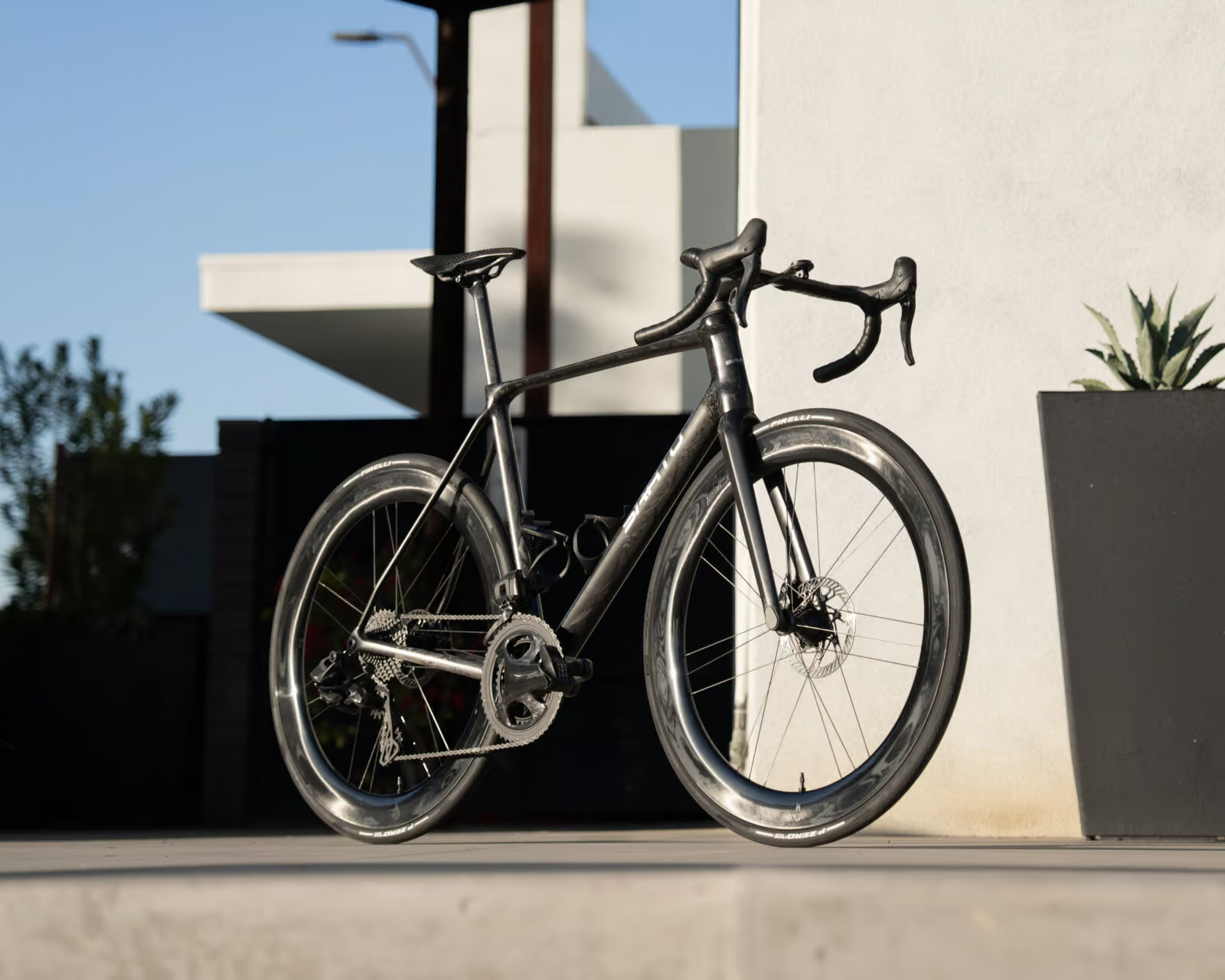
Say the name out loud — Cima, 'peak' in Italian — and you already know what this bike is for.
The Cima is Sarto’s new road bike — the successor to the much-loved Seta Plus, and the first frame from the Venice workshop to bring the brand’s aero know-how into its pure road line without ever forgetting why you ride a Sarto in the first place. Lighter, more reactive, and unmistakably modern, the Cima is a climber’s road bike with all-day comfort and the handmade soul Sarto has been refining for over twenty-five years.
Specifications
- Carbon
- UD / Tri-Composite / Forged Carbon
- Head Set
- 1½" – 1½"
- Bottom Bracket
- T47 × 86
- Cockpit
- Integrated, hidden-screw system
- Stem Angle
- –8°
- Seatpost Setback
- Straight / 15 mm / 25 mm
- Tire Clearance
- Up to 35 mm
- Derailleur Hanger
- UDH
- Sizes
- XXS · XS · S · M · L · XL · XXL
- Stock Colors
- Amber Ridge · Zenith Cyan · Glacial Depth · Stellar Silver · Summit Ruby
- Tri-Composite Colors
- Blue Hour · Raw Ridge · Alpenglow · Treeline
From the ReviewThe Cima Question
More about the Cima
Say the name out loud — Cima, 'peak' in Italian — and you already know what this bike is for. The Cima road bike steps into the space once occupied by the Seta Plus, Sarto's long-running road endurance frame, and carries its spirit forward with a new silhouette, new materials, and a subtle but serious shift in character. Where the Seta Plus was a classic road bike with a gentle touch, the Cima is something sharper: lighter in the frame, shorter in the chainstays (down to a quick-handling 400mm on many custom geometries), and more reactive when you stand on the pedals and go looking for the top of the hill.
It climbs better than anything. It's smoother. It rips downhill. It's snappy, it's quick.
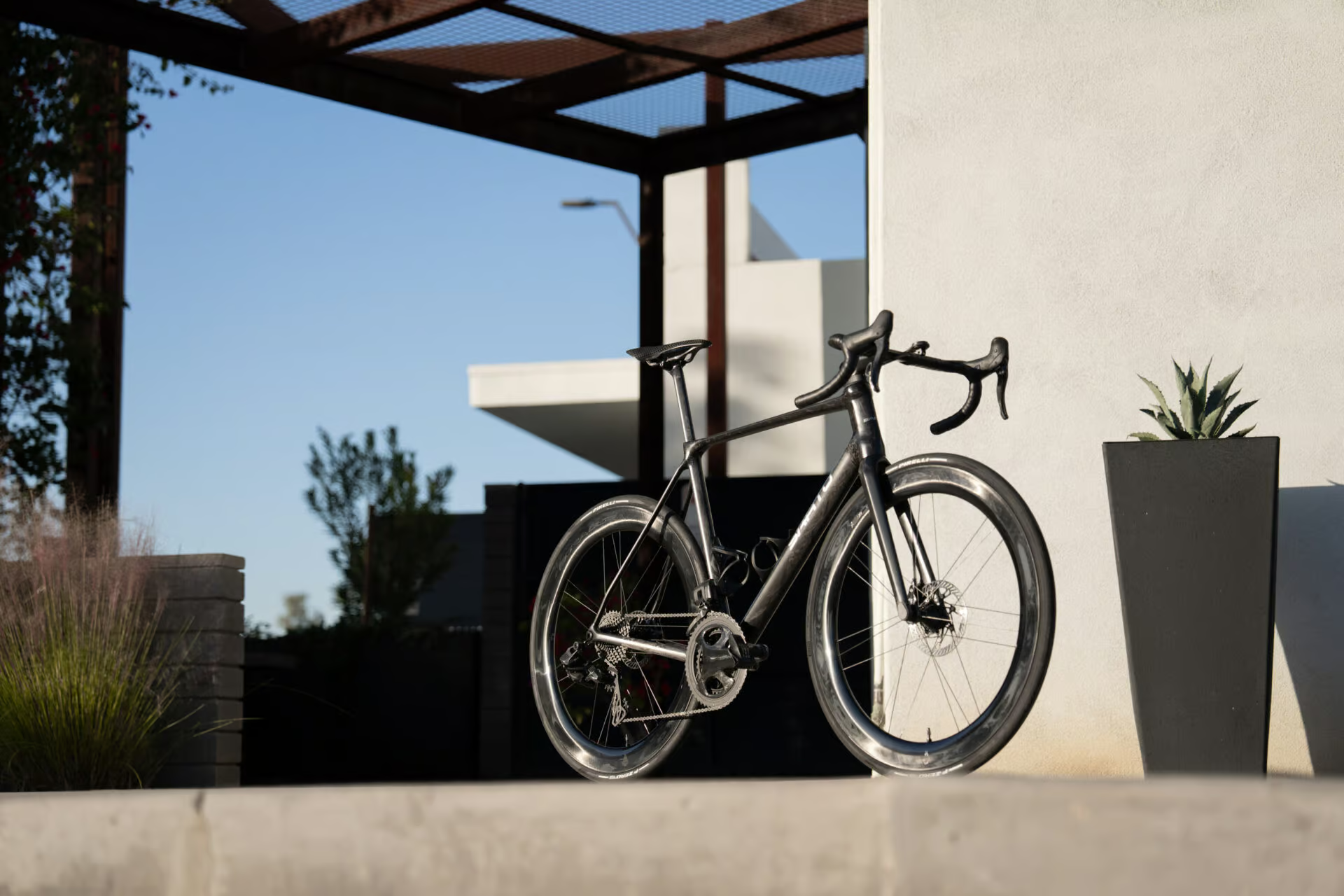
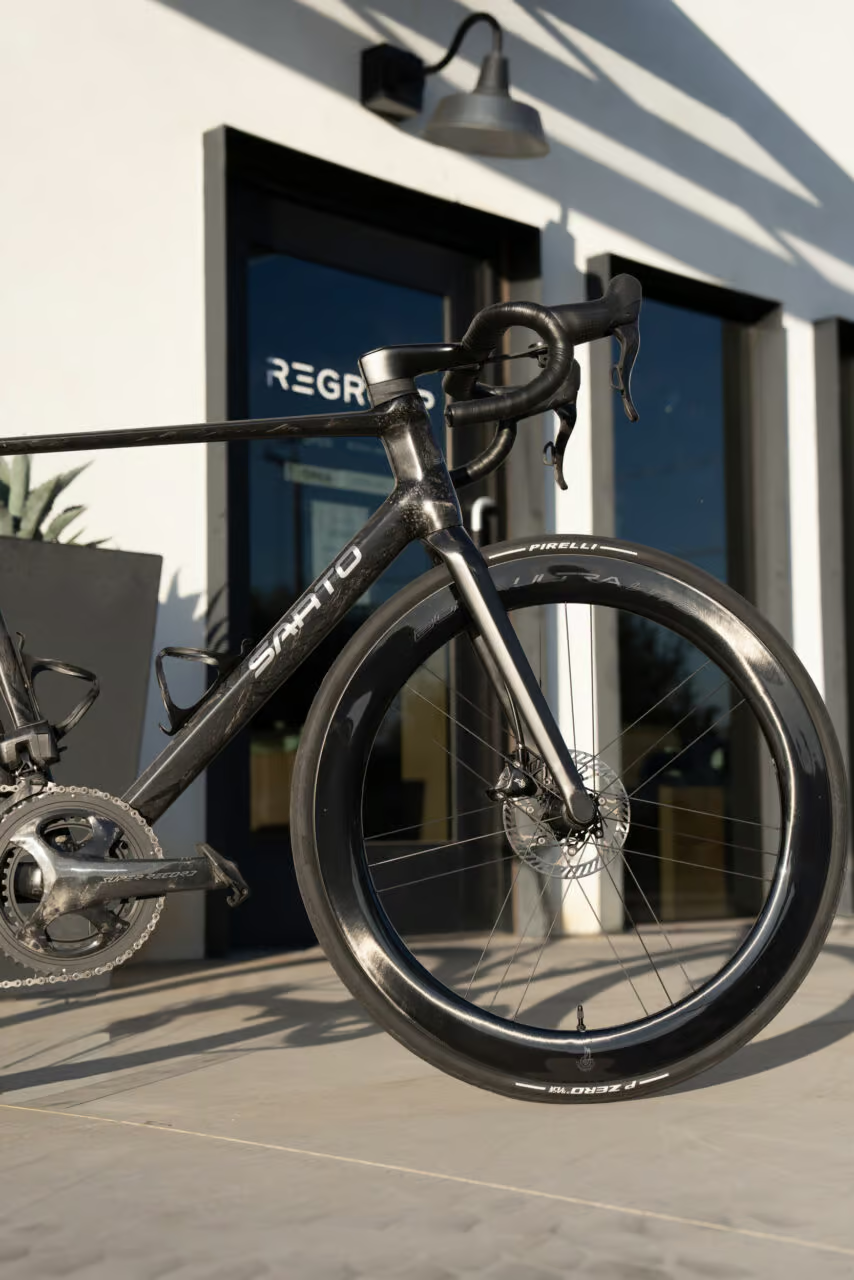
The look is instantly distinct. A broader, flattened head tube meets a diamond-faceted down tube, the two shapes chosen for their aerodynamic benefit but drawn for their presence. These aren't the NACA profiles everyone else is using — Enrico Sarto's instinct was always to design something that belongs to Sarto alone. Elsewhere, the Cima inherits the flat, horizontal top tube that has become a Sarto signature for vibration-absorbing comfort, along with slender seat stays that let the rear wheel breathe, accommodate up to 35mm tyres, and keep weight off a point on the frame that doesn't need reinforcement.
Under the clearcoat, Sarto's engineering has moved on. The Cima uses some of the most advanced composites on the market — which allows wall thicknesses to be reduced across key tubes without compromising strength or ride quality. The weight saved is then spent where it matters: on a wider, more aerodynamic head tube that pays back in drag reduction, and on stiffer chainstays that deliver the immediate, instinctive response Enrico was looking for when he designed this bike. The fork is new too — elegant, non-integrated, and sized at 1.5 inches with a generous 350mm steerer for riders who need a taller head tube.
And then, of course, there's the Sarto signature that can't be drawn on a spec sheet: tube-to-tube construction, hand-wrapped lugs, and the particular resin system Sarto has used since the beginning. Together, these are the reason a Sarto rides quiet, calm, and surefooted in ways a monocoque frame simply cannot match. The Cima is available with UDH compatibility (a first for Sarto on a road bike), three seatpost setbacks (0, 15, and 25mm), and in unidirectional carbon or, since October 2026, in Sarto's Tri-Composite weave. Like every Sarto, it can be built to custom geometry, with the frame lay-up tuned to your riding profile, your goals, and the kind of roads you dream about.
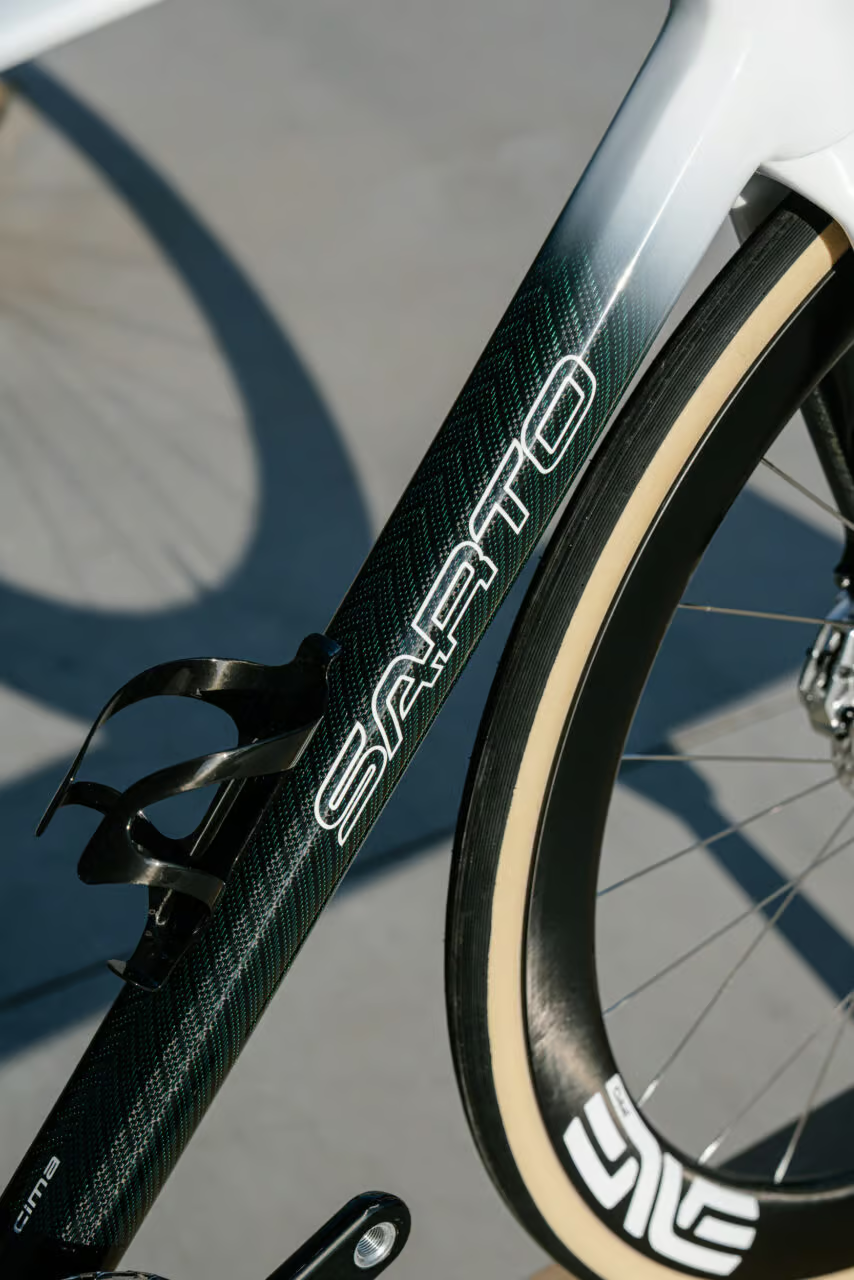
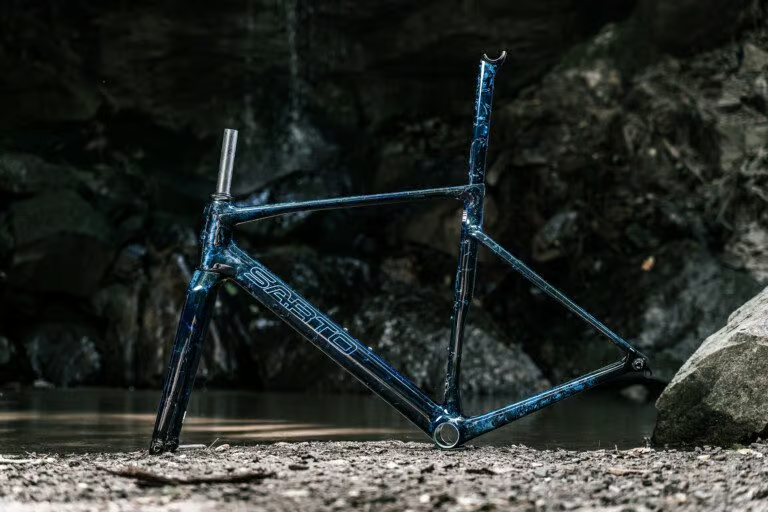
So there are now two Cimas to choose between. The unidirectional carbon frame is the original. The Cima TC wraps the same geometry and the same tube-to-tube construction in Tri-Composite, a layup of carbon fiber interlaced with copper filament, tightened here to a finer pattern than on the original Raso TC. In Sarto's words it damps vibration through the frame and resists impact without adding weight, while the frame holds its stiffness where it needs to stay precise: a bike that climbs like a race bike and rides all day like an endurance bike. It launches in four colors, Blue Hour, Raw Ridge, Alpenglow and Treeline, and the color runs through the weave itself rather than the paint, so it shifts with the light and holds up over years. We built what we believe was the first Tri-Composite Cima in the United States, Max's green one, and his story is in the Review below.
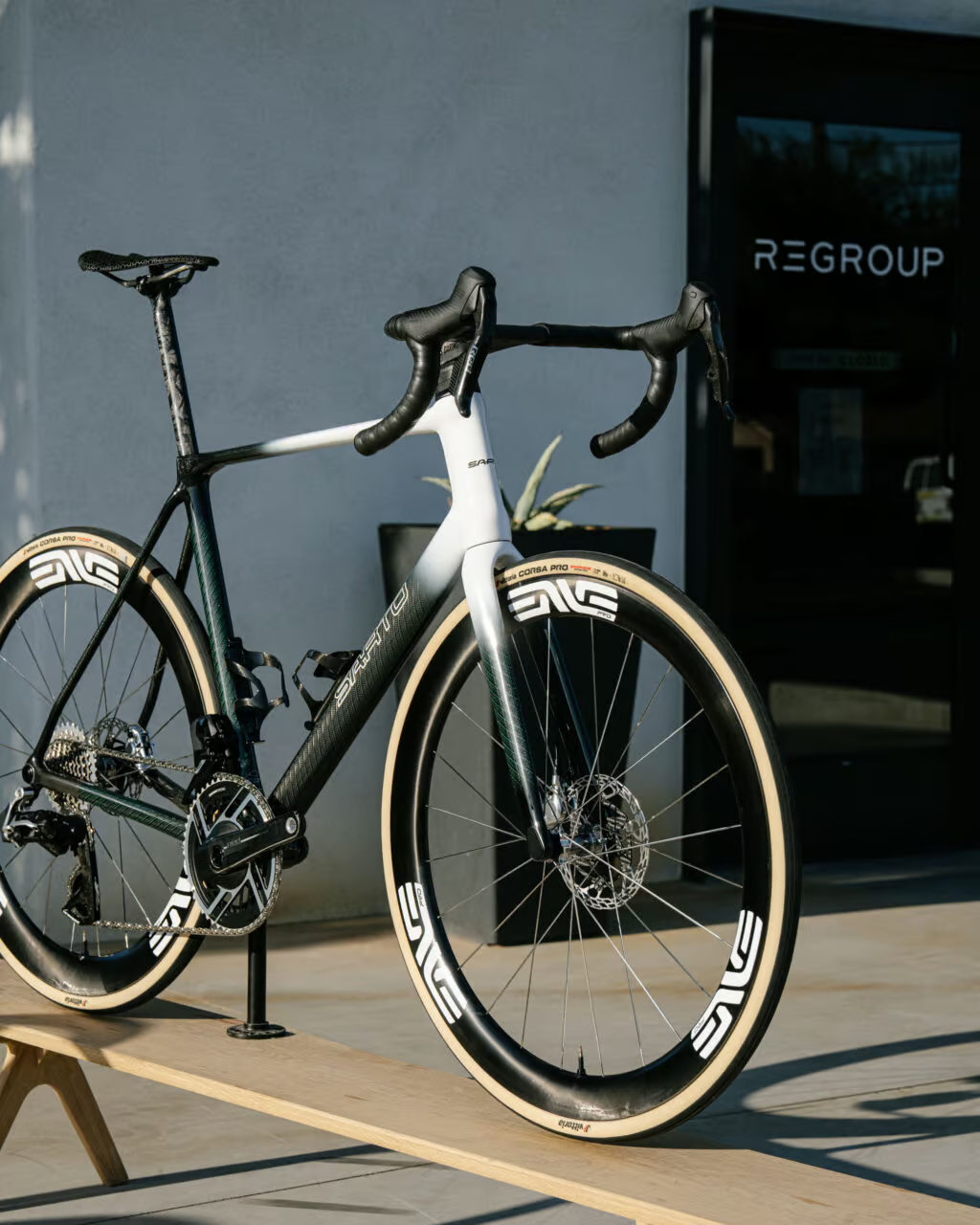
It is a road bike that has been quietly, intelligently aero-tuned where the aero-tuning doesn't cost you anything — and left alone where it would.

From the ReviewDown the Rabbit Hole: Max’s Green Tri-Composite Sarto Cima
The Finer Details
A Climber's Instincts, A Road Bike's Soul
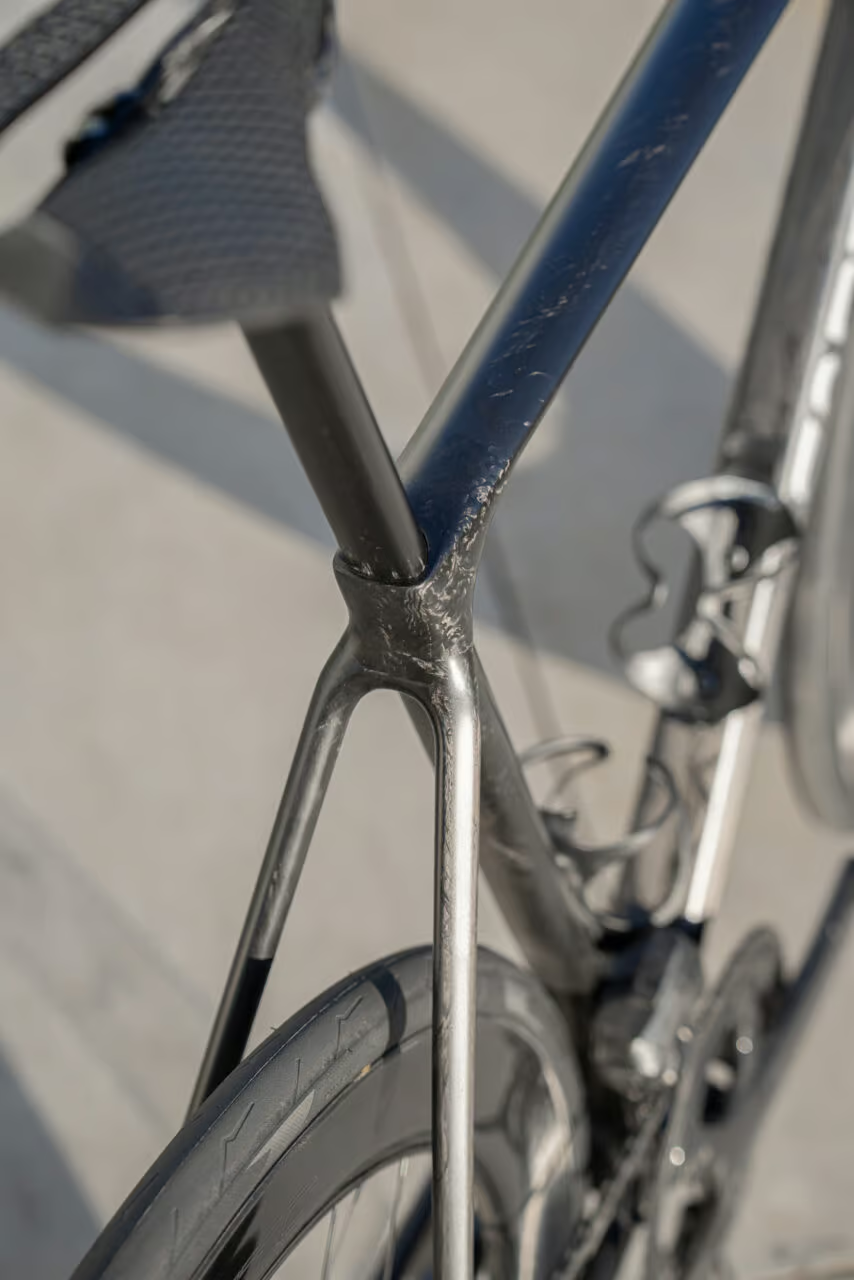
The Cima is built to reward riders who love to go up. Short, stiff chainstays — easily brought down to 400mm thanks to a triangular seat tube section — give the frame a snap when you rise out of the saddle. New-generation Toray T1100 carbon keeps the weight low (around 70–80 grams lighter than the Seta Plus in the raw frame), and a carefully tuned tube-to-tube lay-up delivers the lively, reactive feel Enrico wanted this bike to have. The Cima still holds the Sarto handling signature on descents — stable, confidence-inspiring, never nervous — but when the road tilts up, it lets you know it was made for this.
Aero, But Not At Any Cost
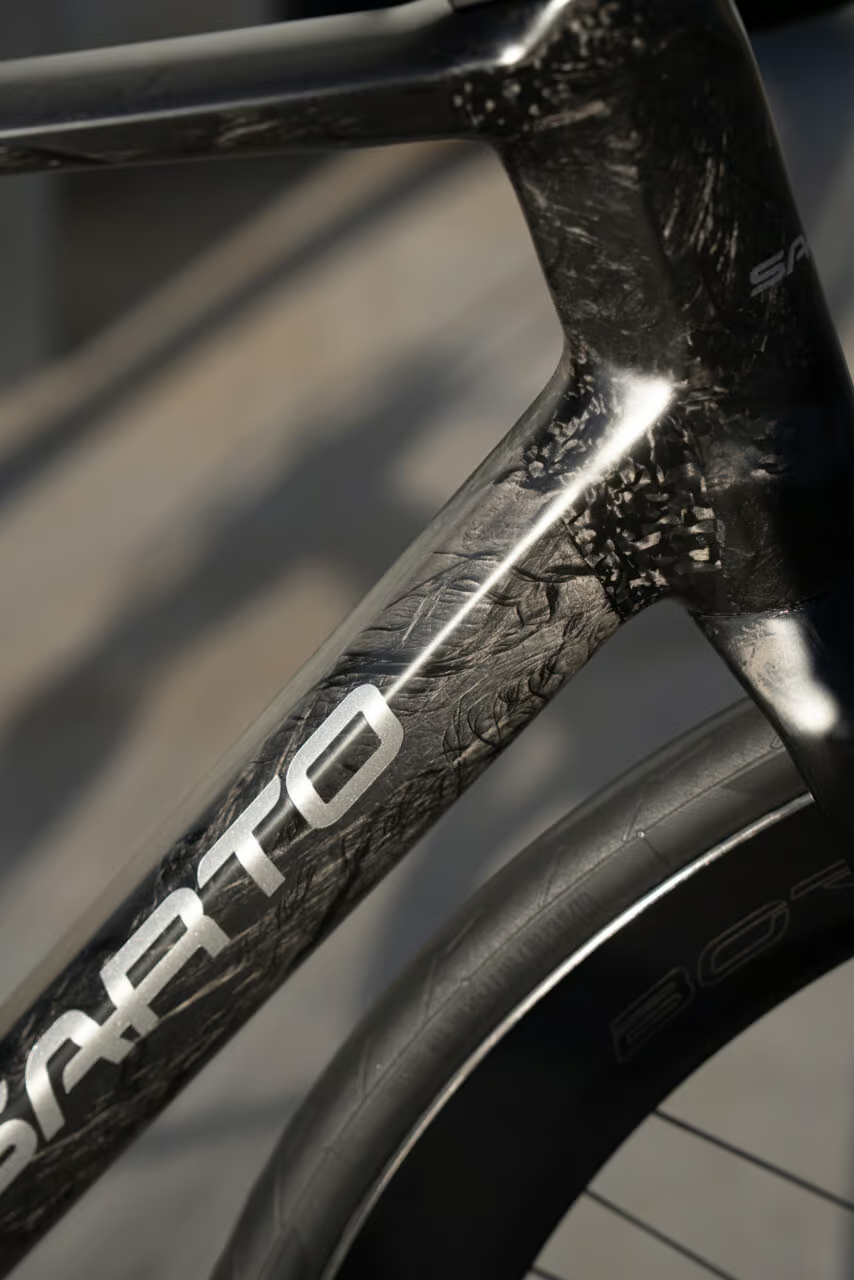
Sarto's approach to aerodynamics is, as ever, a thinking rider's one. The Cima's head tube and down tube have been redrawn with a distinctive diamond shape — aerodynamically tuned where it counts, aesthetically resolved where it doesn't. It's an aero road frame by virtue of being smarter, not by chasing a wind-tunnel headline at the expense of weight, comfort or character. Because most of us are not riding alone at 45kph on a pancake-flat motorway, the Cima aims its efficiency gains where they actually reach you: on rolling terrain, on fast group rides, on the kind of days where you want the bike to help, quietly, without asking for credit.
Now Speaking Tri-Composite
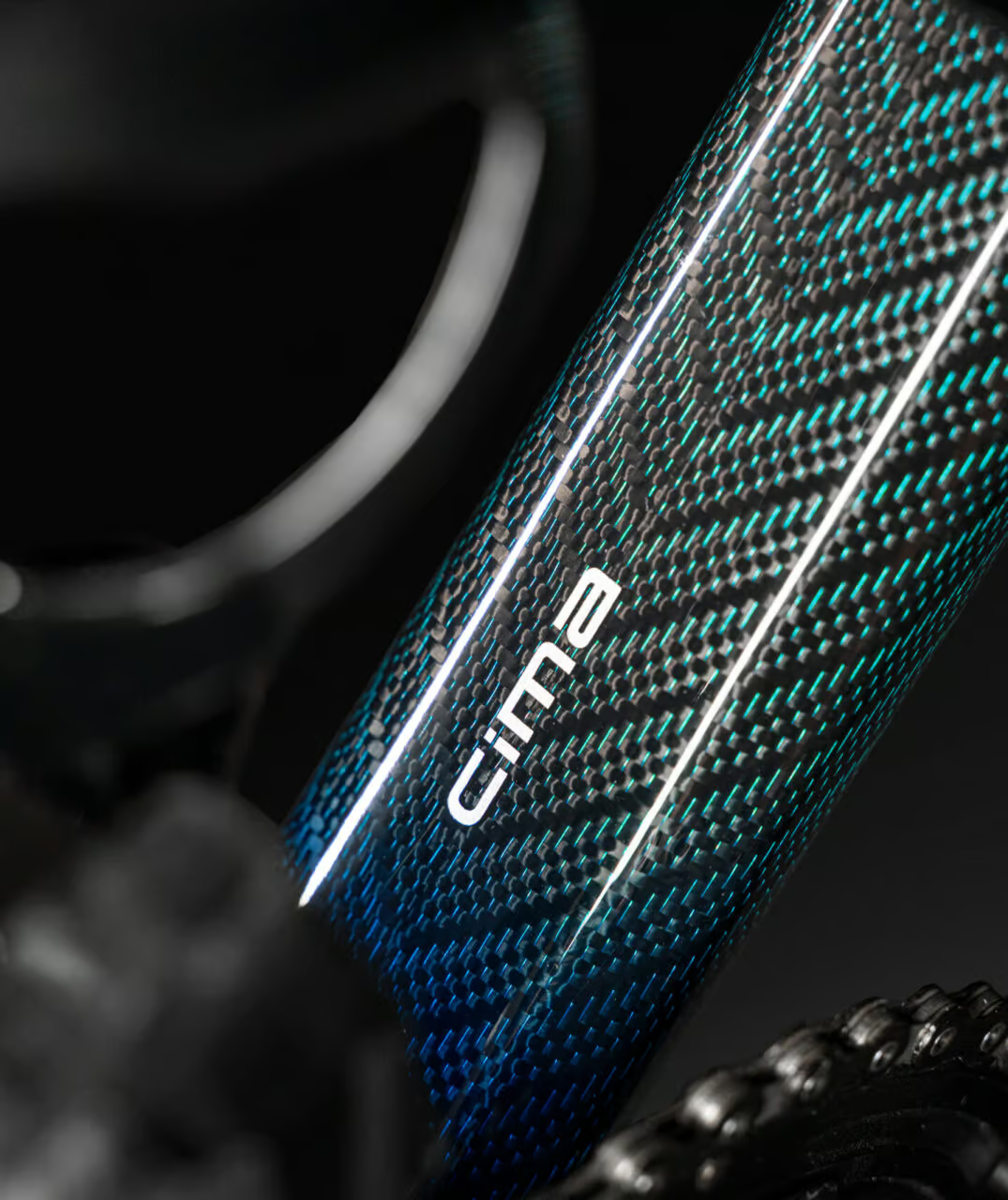
Sarto's Tri-Composite is a layup, not a paint effect: carbon fiber interlaced with copper filament, tightened on the Cima TC to a finer pattern than before. The filament damps road vibration and resists impact without adding weight, and the frame keeps its stiffness where it needs to stay precise, so it climbs like a race bike and rides all day like an endurance bike. Four colors at launch: Blue Hour, Raw Ridge, Alpenglow and Treeline, each running through the weave itself so the effect shifts with the light. Same geometry, the same hands in Pianiga, and like every Sarto, built to your fit.
Stories from the Review
All entries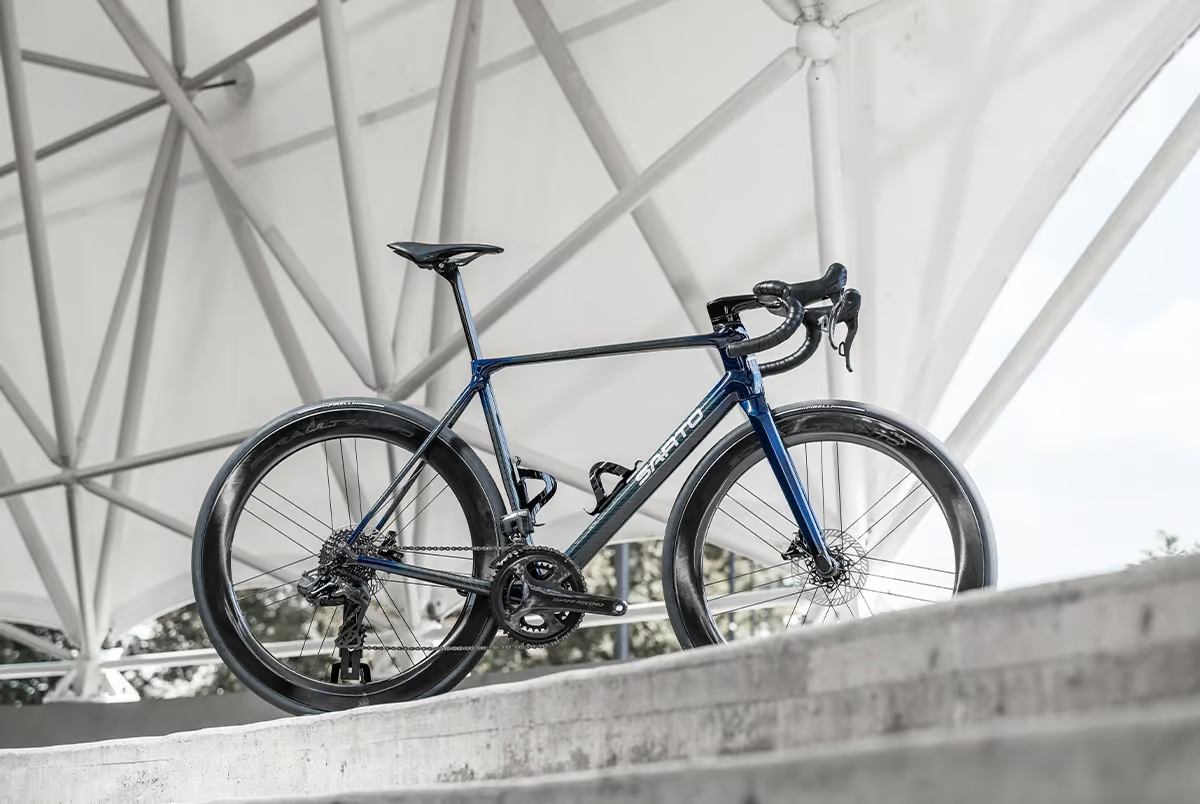
Find Your Fast
More custom bikes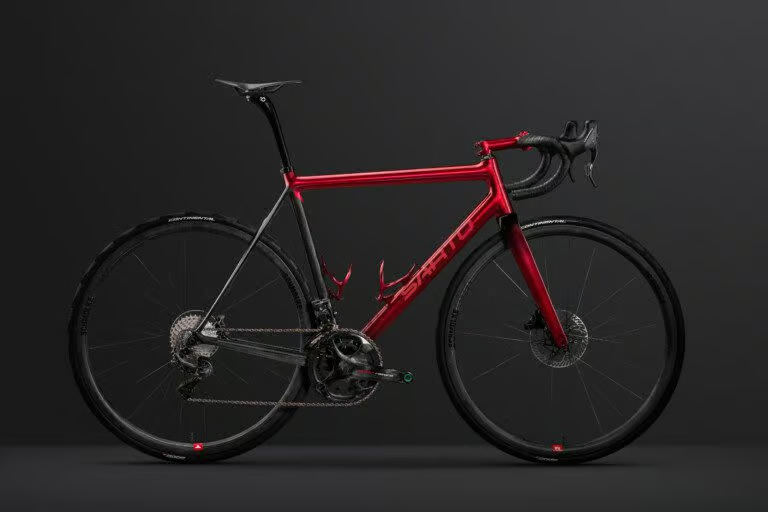

About the brand
Sarto Bikes
A racing bicycle is a thing of dreams, made from them, built to reach them. It should be fast, elegant, and brutal - a freedom machine that de-mechanizes the mind and allows it to connect to something bigger. Many racing bicycles do this, but few come with the panache of the Italian marque, Sarto Bikes.
Explore Sarto Bikes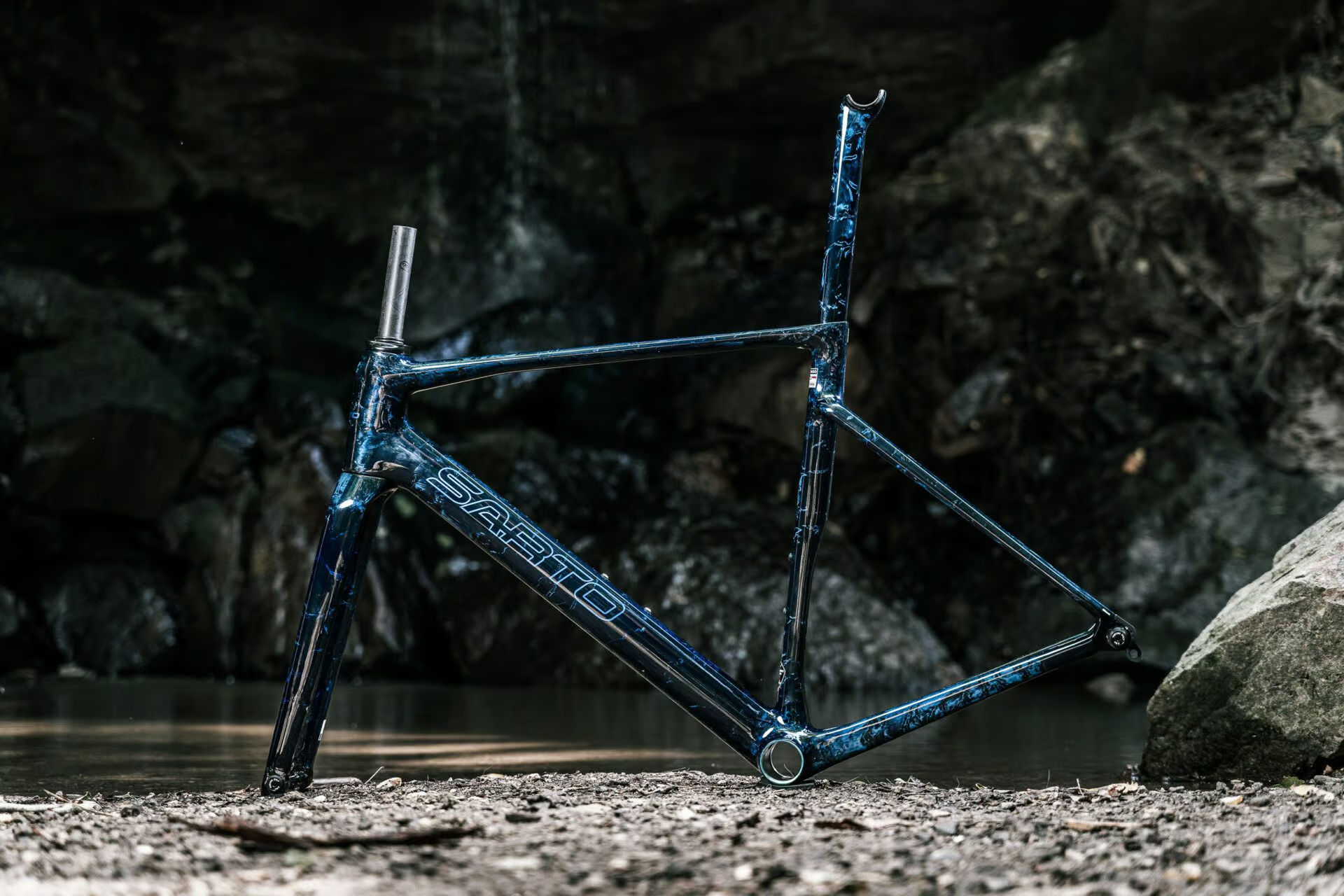
Let's do this
We can't wait to talk about your dream build. Fill in the form below to get started.