GEAR DIVE

The Factor ELARA: Not an Ostro Gravel With Bigger Tires

Factor replaces the OSTRO Gravel with the ELARA — 57 mm clearance, road-race geometry, 423 mm chainstays, and a rear triangle that took a ground-up redesign. What it is, what the engineering buys you, where it sits in a range that just went back to three bikes, and how to start an ELARA story of your own.

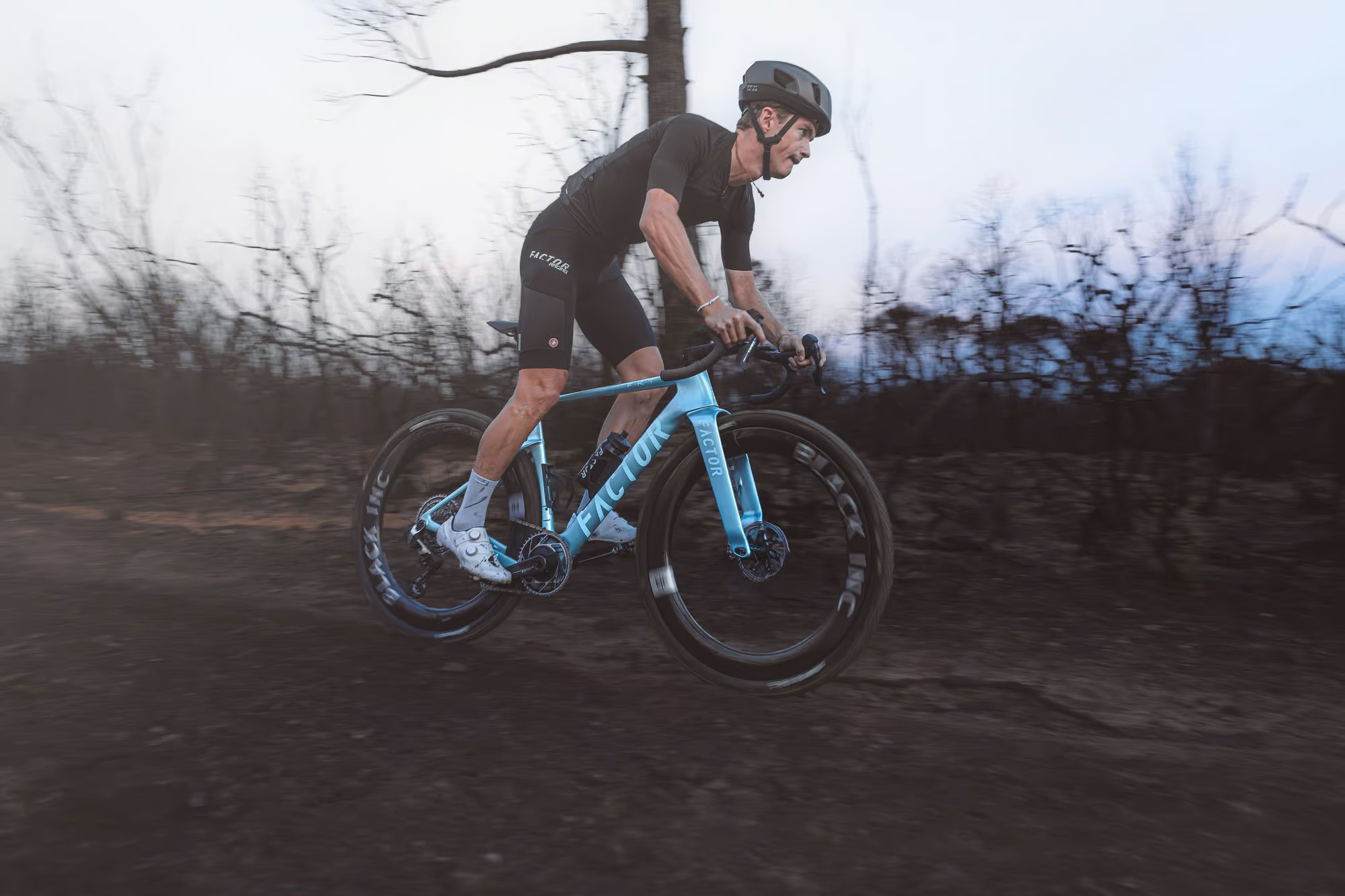
Rider in a low racing position on a Virescent Blue Factor ELARA, drive side, on a dirt trail through burnt woodland

WORDS

Peter Harrington

PHOTOS

Factor

Some launches you see coming. This one has been sitting in plain sight and Factor’s product playbook since Rob Gitelis told us a couple of years back that he saw the future of two wheels turning towards specialization not generalization. Since Emporia, and a Factor nobody would name, under Romain Bardet at Unbound, with a fork borrowed seemingly wholesale from the ONE and a rear end that had clearly been worked, worked and worked. The trade press photographed it from every angle, and Factor said nothing at all: no weight, no aero data, no price, no name.

It has a name now. It’s the ELARA (etymology, Ancient Greece – ‘spear’), it was revealed in Girona this morning, and the most important thing about it is, well, can we say more than one thing? Tire clearance, radical aero thinking and, yes, the Ostro Gravel is now in the wind.

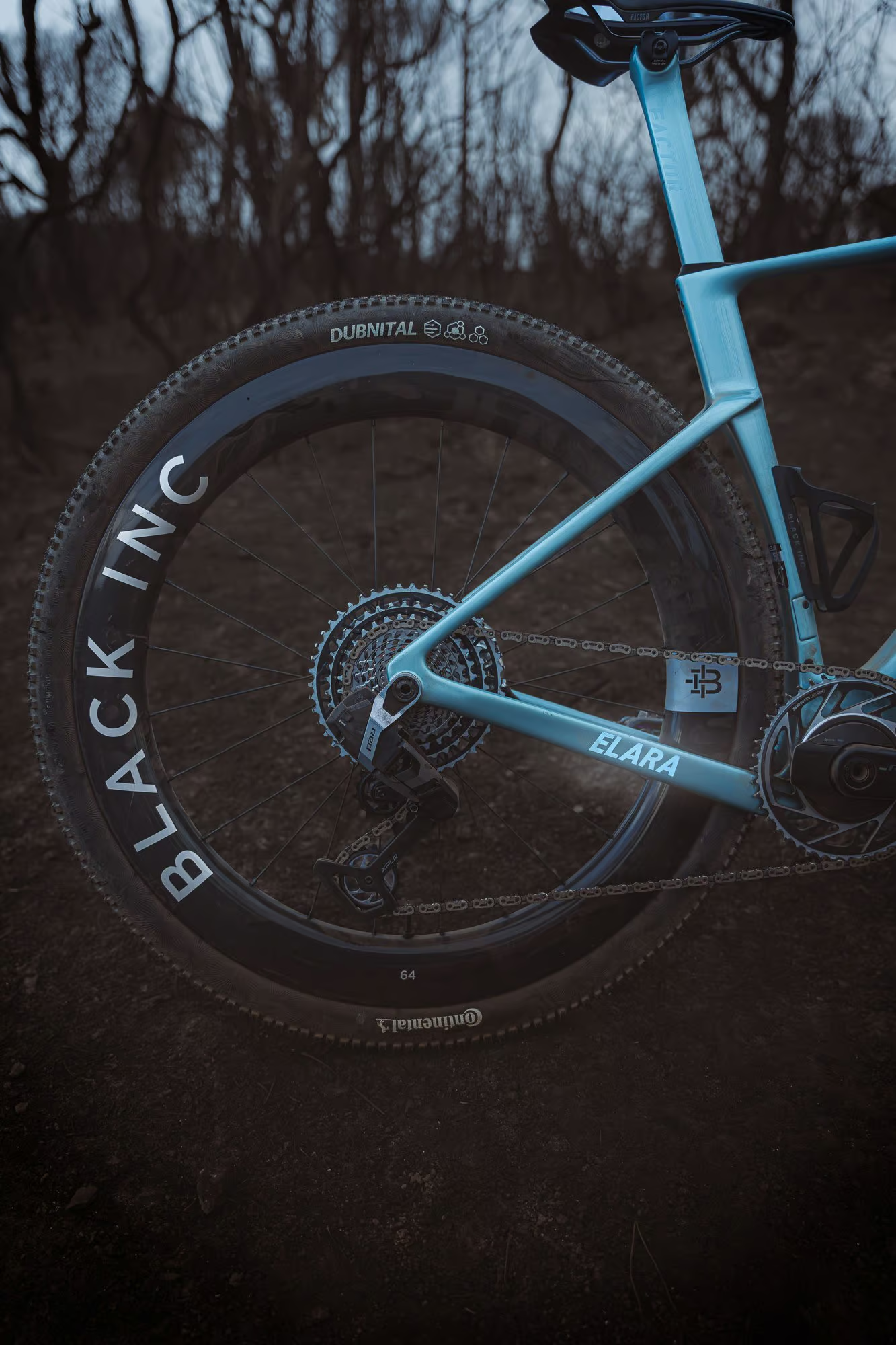
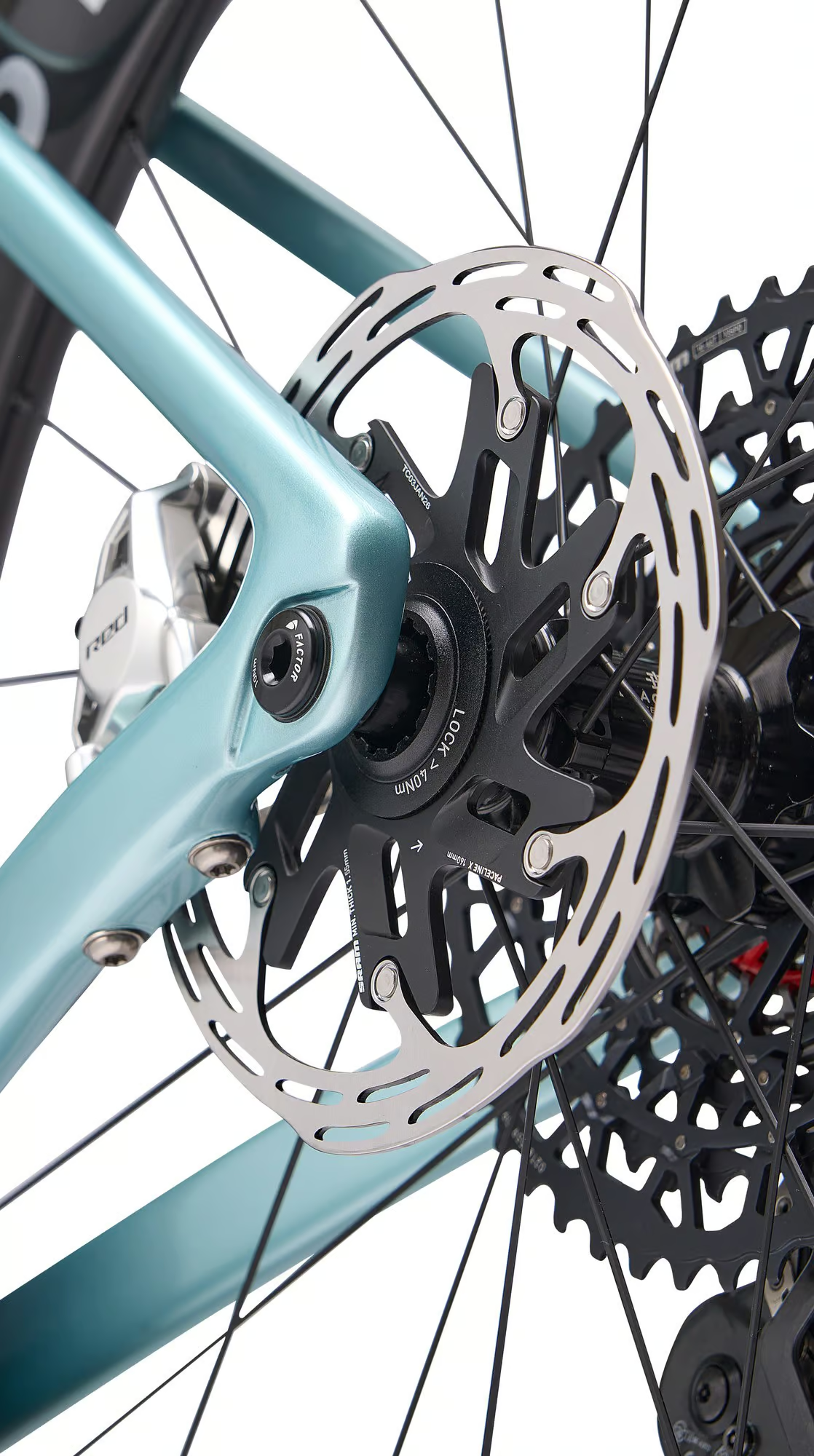
Rear triangle of the Factor ELARA showing the 57 mm tire, Black Inc SIXTY FOUR Gravel wheel and the ELARA name on the chainstay

A Reset, Not an Update

Factor is pretty clear about what’s in and what’s out: the ELARA replaces the Ostro Gravel. Not a model-year update, not a refresh — a new front triangle, a new rear triangle, a new fork, a new carbon lay-up, and a whole different idea about what constitutes a hyper-fast gravel flyer. Their industrial designer Mike McGinn puts it plainly: “This isn’t just an OSTRO Gravel with bigger tires, it’s a serious redesign.”


The reasoning is a reading of where gravel racing has gone and will probably continue to go. The courses got faster and the entrants more ‘road pro’. The equipment specialized. The gap between a road race and an off-road race kept narrowing (and the tires, ballooning), until the bikes at the front of gravel fields started to look like rude road bikes given free rein beyond the white lines. The Ostro Gravel was an answer to the first generation of that sport — 45 mm of tire, zoned front-end aero, a bike that balanced speed against versatility. Factor decided the sport had moved far enough that balancing was the wrong instinct.


So the ELARA doesn’t balance. It’s built to blur backgrounds, hold speed when the ground gives way to great gobs of rocks, roots and whatever else you fancy mowing down at a million miles per hour. Factor’s own shorthand for the three-bike gravel range is Race Speed for the ELARA, Race Balance for the Aluto and Race Endurance for the Sarana, and here, the marketing taxonomy is useful — three different bikes going three different ways.

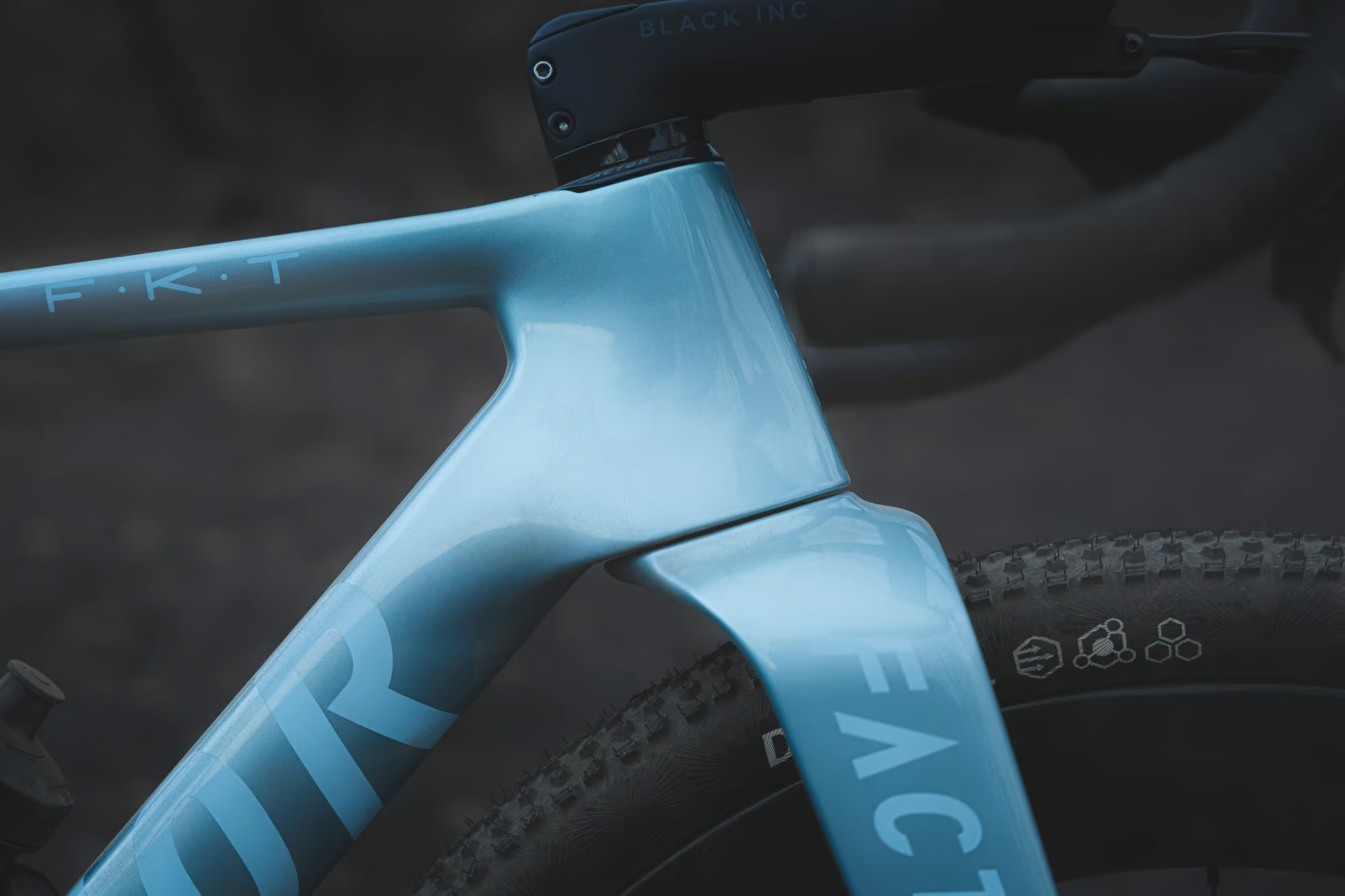
Close detail of the Factor ELARA hourglass head tube and one-piece Black Inc AB07 cockpit

The Rider Who Changed the Brief

Part of the origin story that might cause you to prick up your ears is that Factor’s engineers didn’t want 57 mm tires. They thought it was excessive on a high-speed race bike, which, historically, it would have been.


The person who talked them into it was Magnus Bak Klaris, who won the men’s Gravel Earth Series overall in 2025. His argument wasn’t about comfort, it was that at the speeds the front of a gravel race actually holds, big tires stop being a comfort feature and start being a speed feature. More traction, better impact management, lower rolling losses over broken ground, far fewer punctures, and a much bigger tolerance for choosing the wrong line when you are tired.


His line on it lands well: “It’s not about comfort; it means I don’t have to slow down, I can hold speed without thinking.”


A 2.2-inch tire on a gravel bike isn’t there to make the ride nicer. It is there to reduce the number of moments where you have to sit up and scrub speed off. Factor went back to the drawing board in October 2025, had a prototype racing by February 2026, and both Bak Klaris and Bardet reported it was faster. That prototype is the bike the trade press was photographing at Unbound.

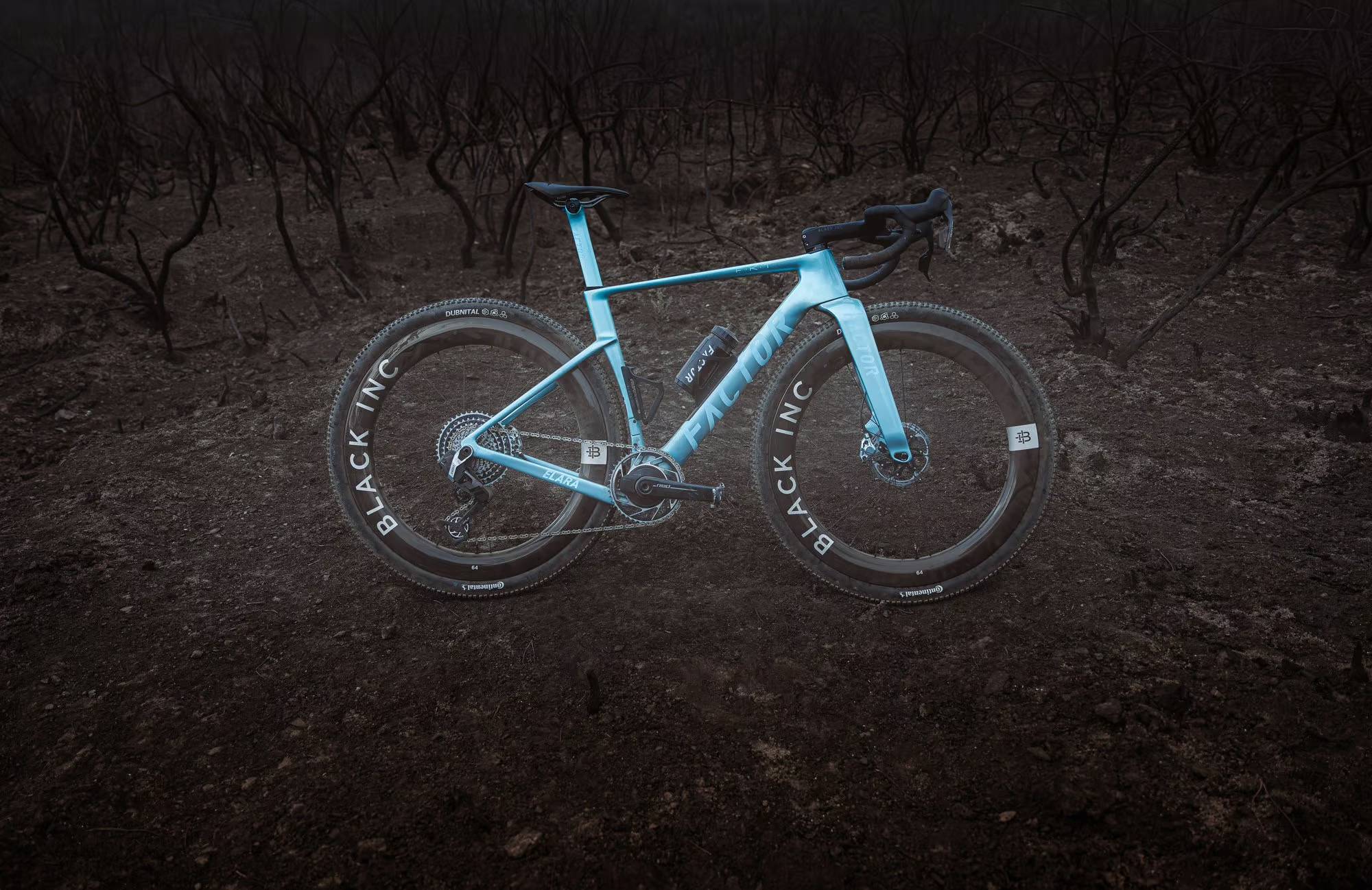
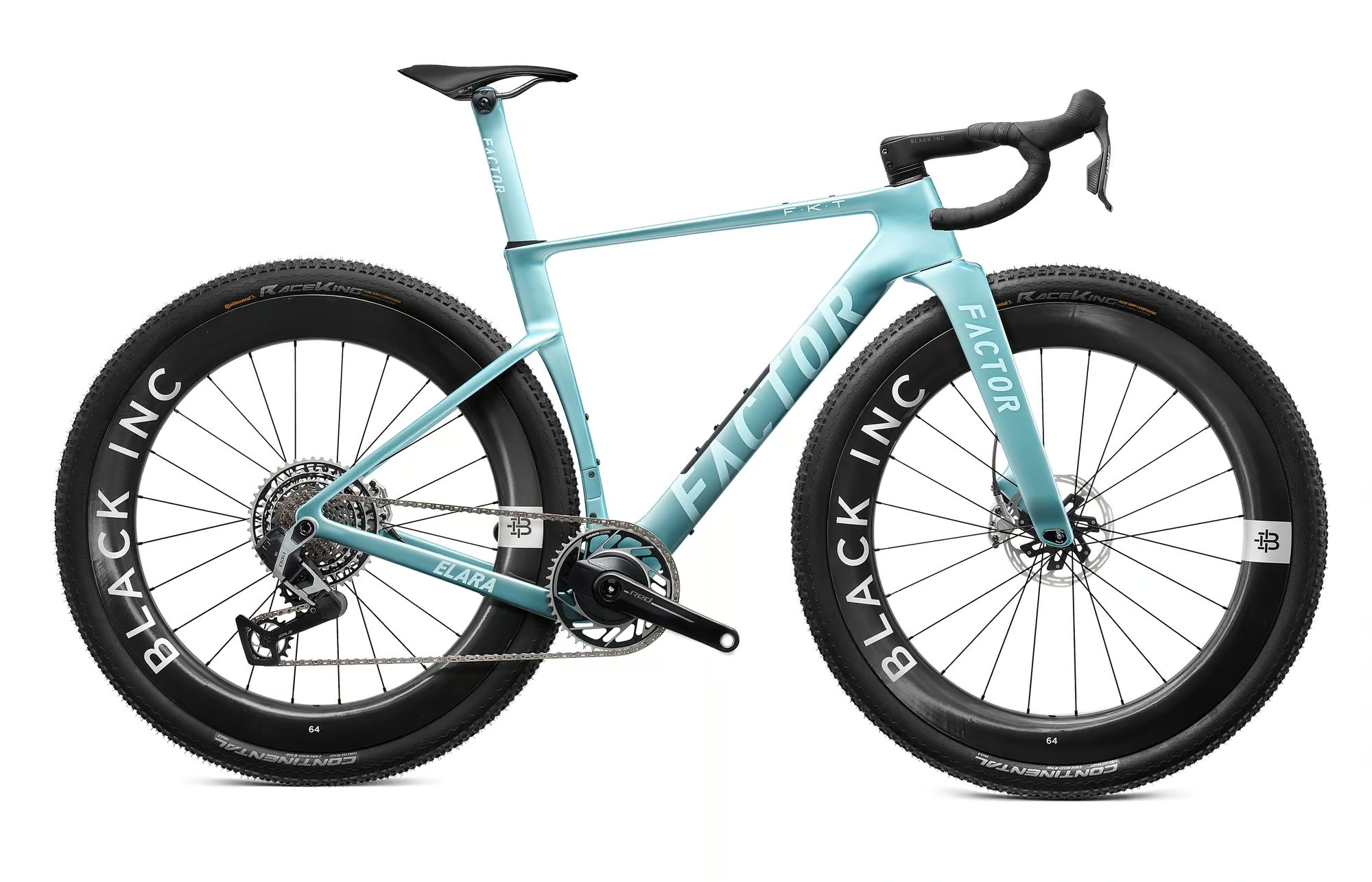
Factor ELARA in Virescent Blue, complete bike, drive side, on bare ground

The 423 Millimeters, and the Caveat

Once it was clear big tires were on the cards, Factor wanted it all – room for a 57 mm tire, more of the same for a 52-tooth chainring in a 1x setup, and the option of a 2x drivetrain — all on a short rear-centre. The usual industry answer is to lengthen the chainstays, or quietly drop 2x. Factor did neither, and got there with a split-plane rear triangle: a lowered drive-side stay and an offset seat-tube junction, sculpted to thread between the tire on one side and the chainring and mech on the other. Chainstays come in at 423 mm on a size 56, ranging 420 to 425 across the six sizes. The frame is lighter than the Ostro Gravel’s and stiffer at the bottom bracket and head tube, with a factory target under 1,100 g for a raw size-medium frame.


Design engineer Stuart Munro’s said of the Elara’s geometry: “Nobody’s managed to keep a proper short rear-centre on a 2× gravel bike with 57s. We just kept shaving it until it fit, 423 mm, and everything still clears. 2× was never negotiable; we didn’t want to force a drivetrain choice just to fit a tyre. That’s not how we work.”


Now the caveat, because that quote reads like you get both at once and you don’t. You get 57 mm with 1x. Fit a 2x drivetrain and rear clearance drops to 47 mm. It is in Factor’s own technical spec, and it follows from the geometry — the front derailleur and inner ring need the space the tire was using. So the honest version of the achievement is this: the ELARA is a 57 mm race bike with genuinely short stays that also takes a 2x if you want one, at 47 mm. That is still real engineering, and 47 mm with a front mech on a 423 mm rear end is not nothing. But it isn’t a bike that gives you a 2.2-inch tire and a front derailleur simultaneously, and anyone telling you otherwise hasn’t read the spec sheet.

Road-Bike Aero, Doing a Gravel Job

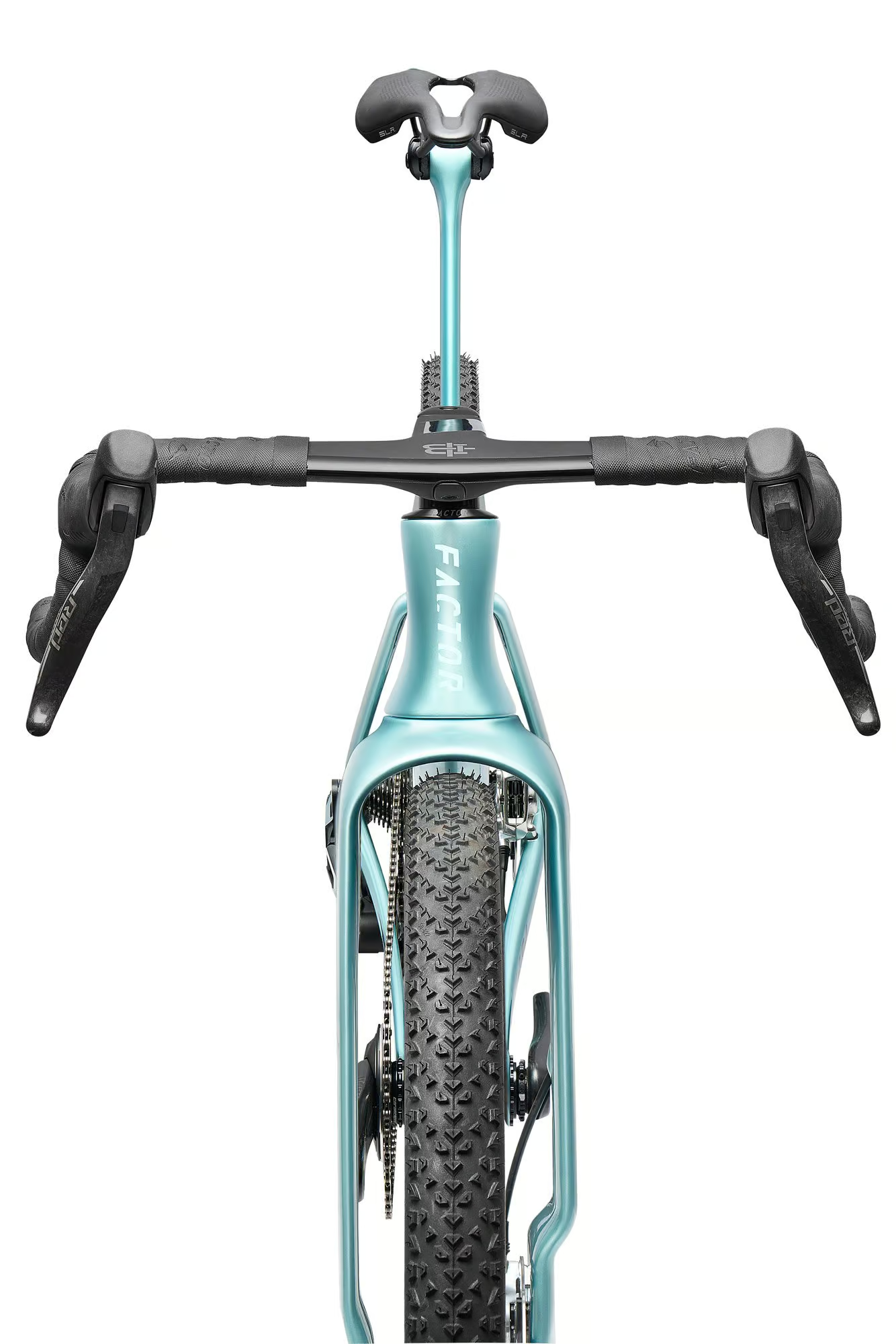
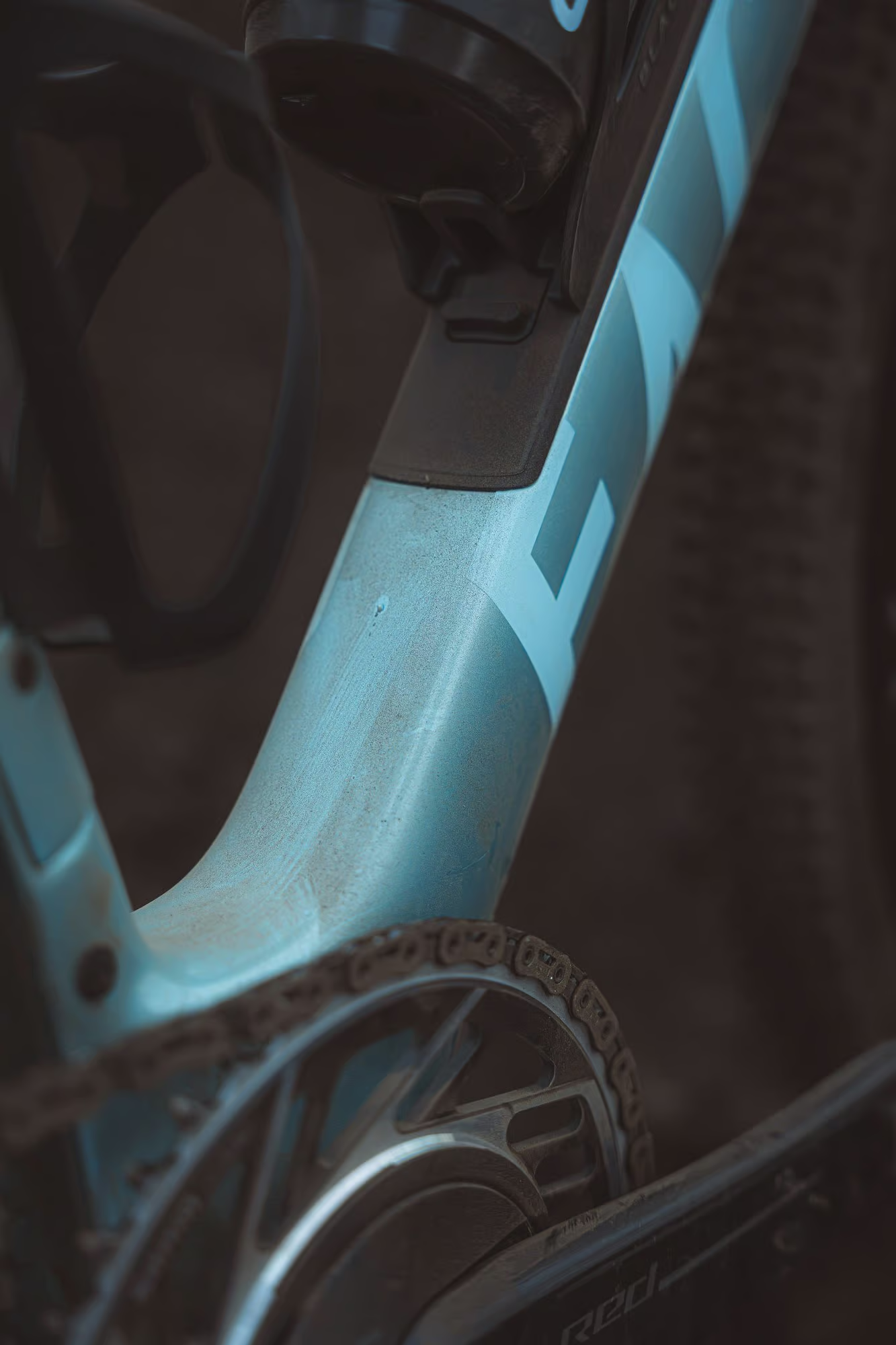
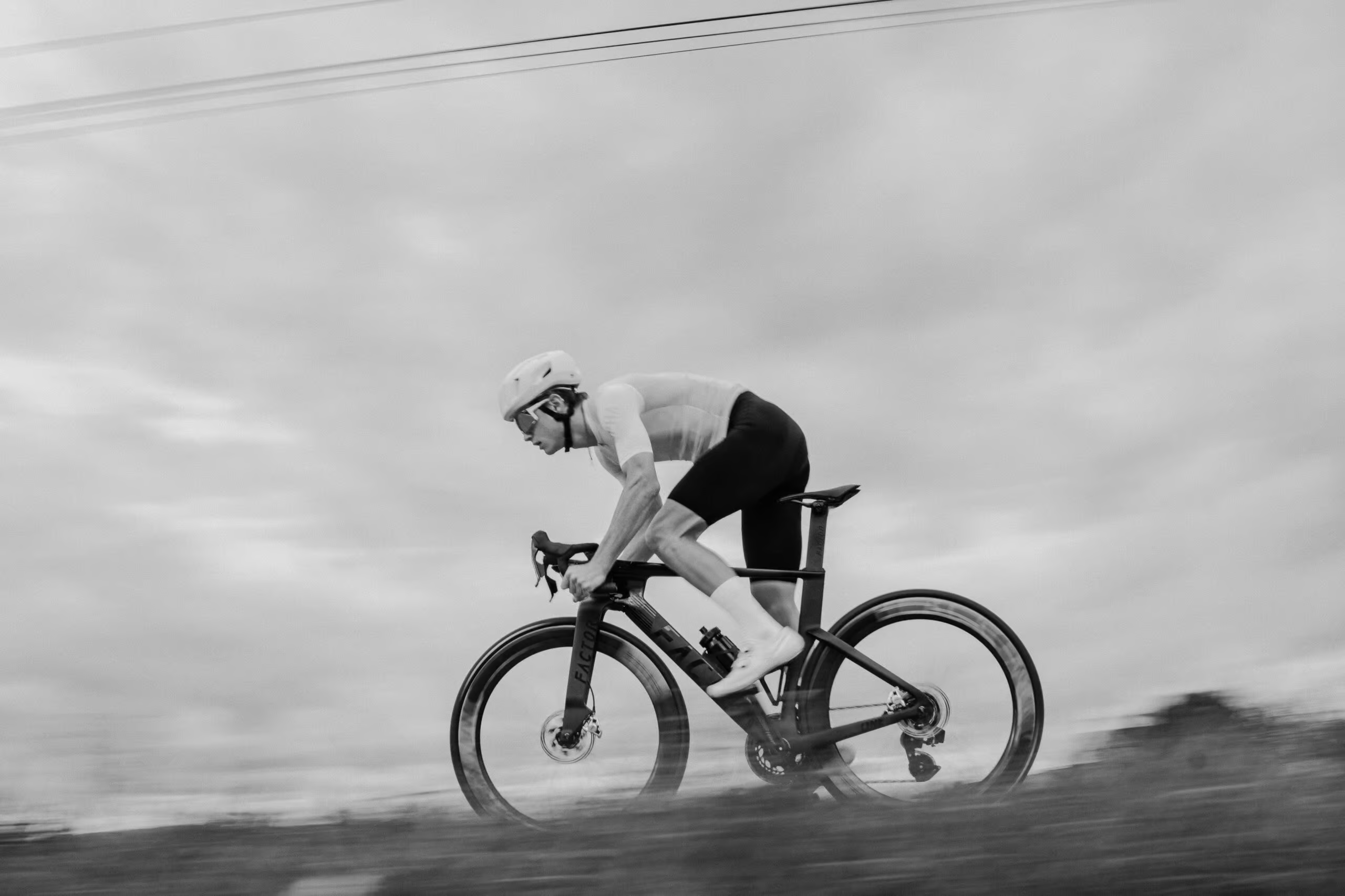
The aerodynamics come straight down the family tree from the ONE and the Ostro VAM, which is exactly what the Unbound spy shots suggested. Planar fork integration — that wide, unmistakable ONE-derived front end that manages air before it reaches the rider’s legs rather than merely slipping through it. A narrow hourglass head tube, and reworked leading-edge transitions around the down tube and the bottle zone, which is where a lot of theoretical gravel aero quietly goes to die once you put two bottles on the bike.


Factor ran CFD first and used the wind tunnel to check the theory held — Munro is refreshingly clear that “the tunnel’s a confirmation tool, not a design driver.” The number they will quote is a 5–8% lower drag coefficient than the Ostro Gravel, and it is worth keeping the context attached to it: that is in Factor’s stated test configuration with a 45 mm tire, not a blanket claim.


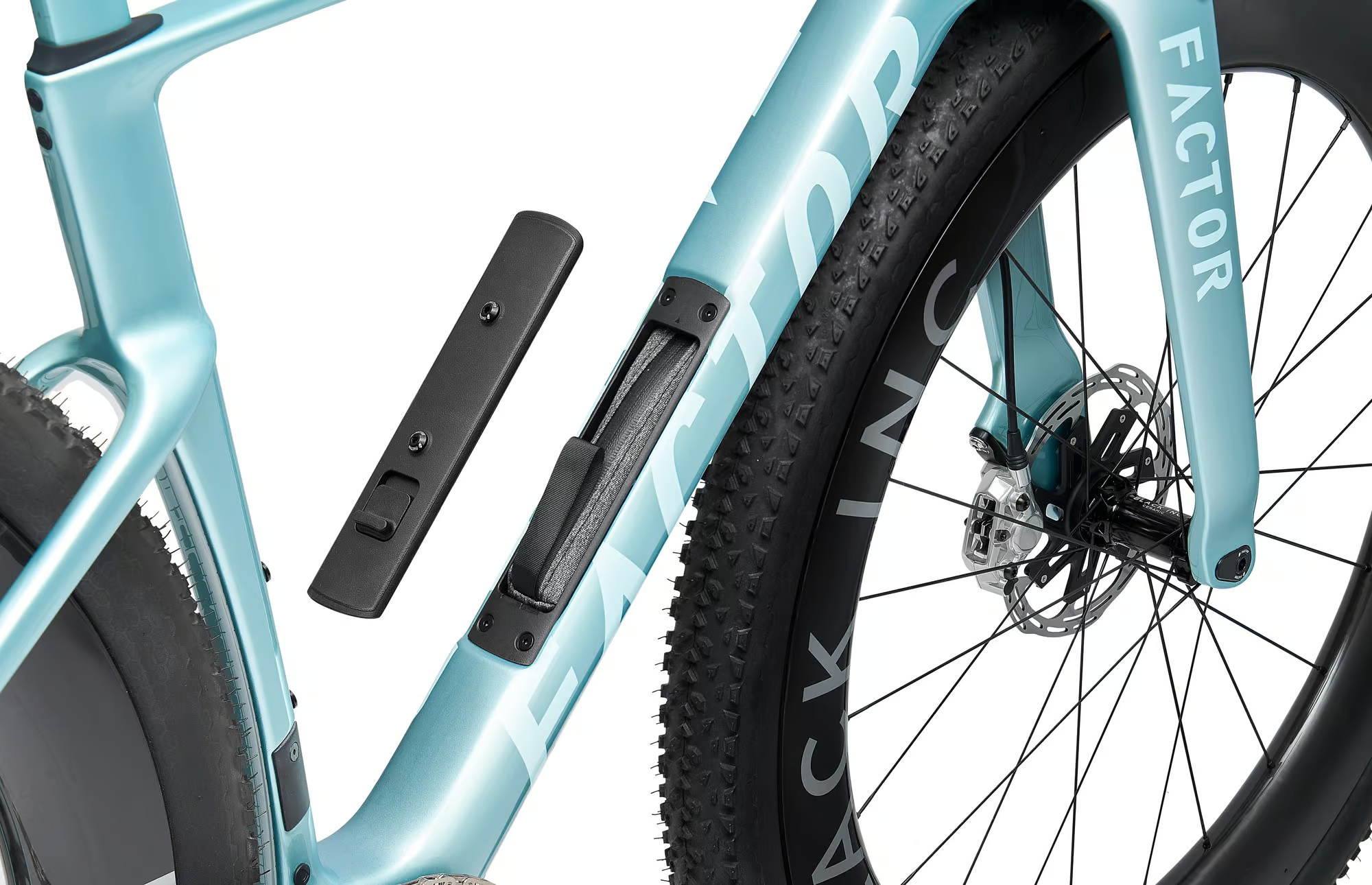
The down tube storage is formed in TexTreme, an exotic spread-tow carbon, so the ELARA carries its tube, levers and food inside the aero envelope rather than strapped to the outside of it. On a bike whose whole premise is holding speed, storage that costs you nothing is not a small detail.

Rider driving a Factor ELARA through a fast gravel corner, three-quarter view with motion blur

The Black Inc Half of the Bike

Factor have always sold systems rather than frames, and the ELARA arrives with its own.


The cockpit is the Black Inc Aero Gravel Bar AB07, a one-piece bar-stem that takes the road AB02’s aero logic and gives it a 17-degree flared drop — narrow and efficient on the hoods, wide and secure when you are braking hard into something loose. Widths run 36 to 40 mm, stems 80 to 130 mm.


The wheels are the Black Inc SIXTY FOUR Gravel, also developed with Bak Klaris, and the depth is interesting. Sixty-four millimetres sounds absurd for gravel until you follow the reasoning: as the tire gets fatter, the wheel has to do more work managing airflow around the whole tire-and-rim system, so the section gets deeper to claw the efficiency back. A 30 mm internal rim supports a 57 mm casing properly instead of letting it squirm, and the set comes in at 1,620 g with ceramic bearings and a 30-tooth freehub.

Head-on view of the Factor ELARA showing the wide planar fork and 57 mm tire clearance

Who the ELARA Is For, and Where It Sits

The ELARA is for the rider whose gravel is a race — high averages, aggressive position, riding in groups, caring about equipment, and racing on ground rough enough to force most bikes to tamp down the pace.


If you want one bike that goes long, carries a bag, and stays good company across a five-hour day, that is the Aluto, and it always was. If your calendar has Atlas Mountain Race or the Tour Divide in it — days rather than hours, self-supported, rough with the occasional tumble — that is the Sarana. Factor are firm that this isn’t a good-better-best ladder. Instead, the range presents three bikes, three racing perspectives. Our Factor gravel buyer’s guide lays all three out side by side.


We would add one more filter. The ELARA is now the most expensive bike in Factor’s gravel range by a clear margin, and the position it wants is genuinely aggressive. If you are buying it for the tire clearance rather than for the racing, you are buying the wrong bike, and the Aluto will make you happier.

Swipe sideways to compare all three bikes →

 ELARAALUTOSARANA
Factor calls itRace SpeedRace BalanceRace Endurance
Built forThe fastest gravel racing, on rough groundAll-round long-distance gravelUltra-endurance, mixed terrain
Tire clearance57 mm with 1x — 47 mm with 2x45 mm (47 mm rear max)57 mm front and rear
Drivetrain1x or 2x, up to 52T1x or 2x1x only, up to 52T
Chainstays420–425 mm by size425 mm, constant
In-frame storageDown-tube, TexTremeDown-tube storageDown-tube storage
Rider positionLow and aggressiveAdaptableLow and efficient under fatigue
Reference eventUCI Gravel World SeriesFast all-roundersAtlas Mountain Race
Builds from$10,099$6,999$8,699
Open down tube storage compartment on the Factor ELARA with its tool sleeve alongside

Starting Your ELARA Story With Regroup

As a premium Factor partner serving Arizona and beyond, we have built every model in the range across the years — the Ostro VAM, the ONE, the O2 VAM, the Monza, the Ostro Gravel, the Aluto, the Sarana, and now the ELARA. We know where the decisions that matter are hiding, and we will talk through every one of them over a coffee before a component goes on a build sheet.


On this bike, three decisions do most of the work. The drivetrain, because it is really a tire decision. 1x gives you the full 57 mm; 2x gives you a front mech and 47 mm. That is not a preference, it is a fork in the road, and the right branch depends on the courses you are actually racing. Rough, technical, one-surface racing where traction is the limit points at 1x and the big tire. Long, rolling, mixed-gradient racing where you want to stay on top of a gear — and where 47 mm is plenty — makes a real case for 2x. Choose it first, because everything else follows from it.


The tire itself, which on a 30 mm internal rim is a bigger lever than most people expect. The ELARA’s argument is that a wide tire at the right pressure carries speed across bad ground. True — and only true if the casing and the pressure are chosen for the surfaces you are actually on rather than for the biggest number the frame will take.


And fit, which on this bike is not a nice-to-have. The ELARA ships with a one-piece bar-stem across six frame sizes from 49 to 61, with a choice of zero or 20 mm setback post, and the geometry deliberately runs longer in reach and lower at the bottom bracket than what you may be used to. One-piece cockpits don’t let you change your mind cheaply. This is exactly what Regroup FIT is for: settle the position first, then let the parts follow it. Getting that sequence backwards is the most expensive mistake available on a bike like this.


It is worth borrowing a line from Factor’s own CEO here, because Rob Gitelis put it better than we could. When we sat down with him and asked what a Factor is finally supposed to feel like, he said: “I want every ride to feel like an experience. I want it to feel like the bike is a rocket ship, and I’m excited to get on it.”


Our job is making sure the experience he is describing is the one you actually get — from the first conversation about whether the ELARA is even the right bike for your riding, through fit, build, and everything the bike asks of us in the years after.

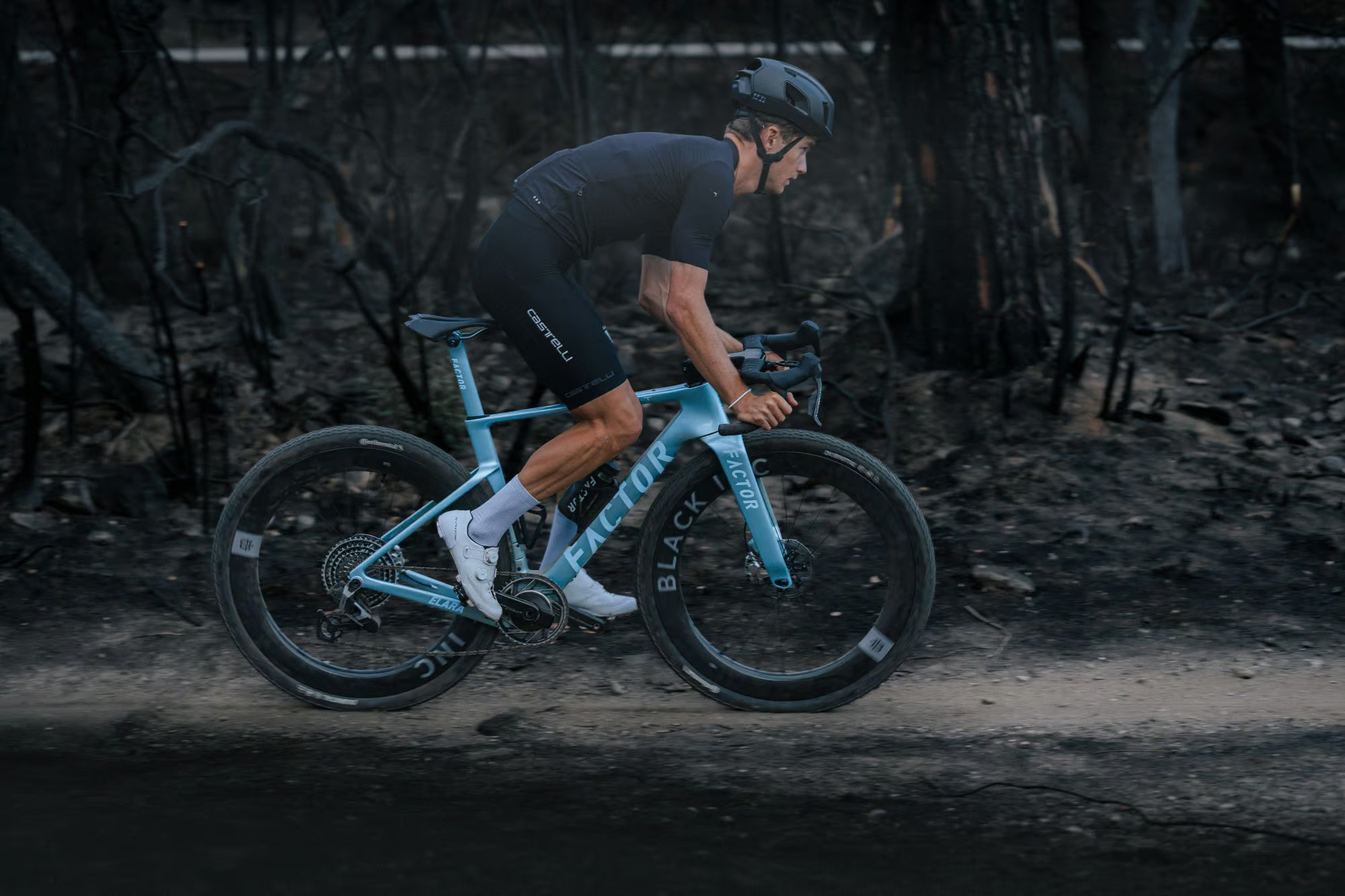
Factor ELARA gravel bike in Virescent Blue, drive side, built with SRAM RED

The Verdict, Such As It Is

We haven’t ridden it. Almost nobody has, and we will wait until there is one in the studio with proper miles on it before offering our two cents.


What we will say on launch day is that this is the most coherent argument Factor have made in gravel,  possibly the most fun from the gun, and the most honest about its own narrowness. Replacing the Ostro Gravel outright rather than adding a fourth bike is the right call — the range is clearer for it. The rear triangle is real engineering rather than a spec-sheet flourish. The aero claim comes with its test context attached, which is rarer than it should be. And the tire logic is sound.


The one thing we would want stated more plainly than Factor state it is the 1x/2x clearance trade. It is a good bike either way. It is just not both ways at once.


Whether it is yours depends entirely on whether your gravel is a race. If it is, this is a serious one. If you are not sure, that is precisely the conversation worth having before you commit rather than after.