FINDING YOUR FAST

The Factor Road Bikes Buyer's Guide:

A Regroup guide to the Factor ONE, Ostro VAM, O2 VAM and Monza — which one is the right ride for you?

The Regroup guide to Factor Road Bikes

WORDS

Peter Harrington

PHOTOS

Daniel Koeth

There's a conversation we have a lot at the shop. It usually starts with someone pointing at a Factor on the floor, then at another one on the wall, and asking a version of the same question: what's the actual difference? They look similar. The paint is gorgeous on all of them. The build sheets overlap. But the bikes themselves? Very different animals.

Factor doesn’t make a bad bike. That’s not the question. The question is which one is the right bike for you — and that depends far less on headline specs than on how you actually ride. A rider who lives on 60-minute loops with three traffic lights doesn’t want the same machine as someone who drives to Mount Lemmon twice a month to pin back a KOM. The Factor range, read properly, is a set of deliberately different answers to deliberately different riding lives.


So here’s the guide we wish we could hand to everyone who walks in (and we might – with coffee). Four road bikes, four distinct intentions. What each one does best, who it’s built for, and where it sits against its siblings. No fence-sitting.


A quick word on Factor before we get to the bikes. Factor operates its own factory in Taiwan, runs its own supercomputing CFD pipeline, and — per Mike McGinn, their Senior Industrial Designer — rarely has to fight internally over cost when performance is on the line. That’s why CEO Rob Gitelis is on record saying that, were Factor a different brand, the Ostro VAM would be a $10k frameset. We don’t think of Factor as a mass-market company. We think of them as a small-batch performance house that happens to ship at scale. Keep that framing in mind as we go.

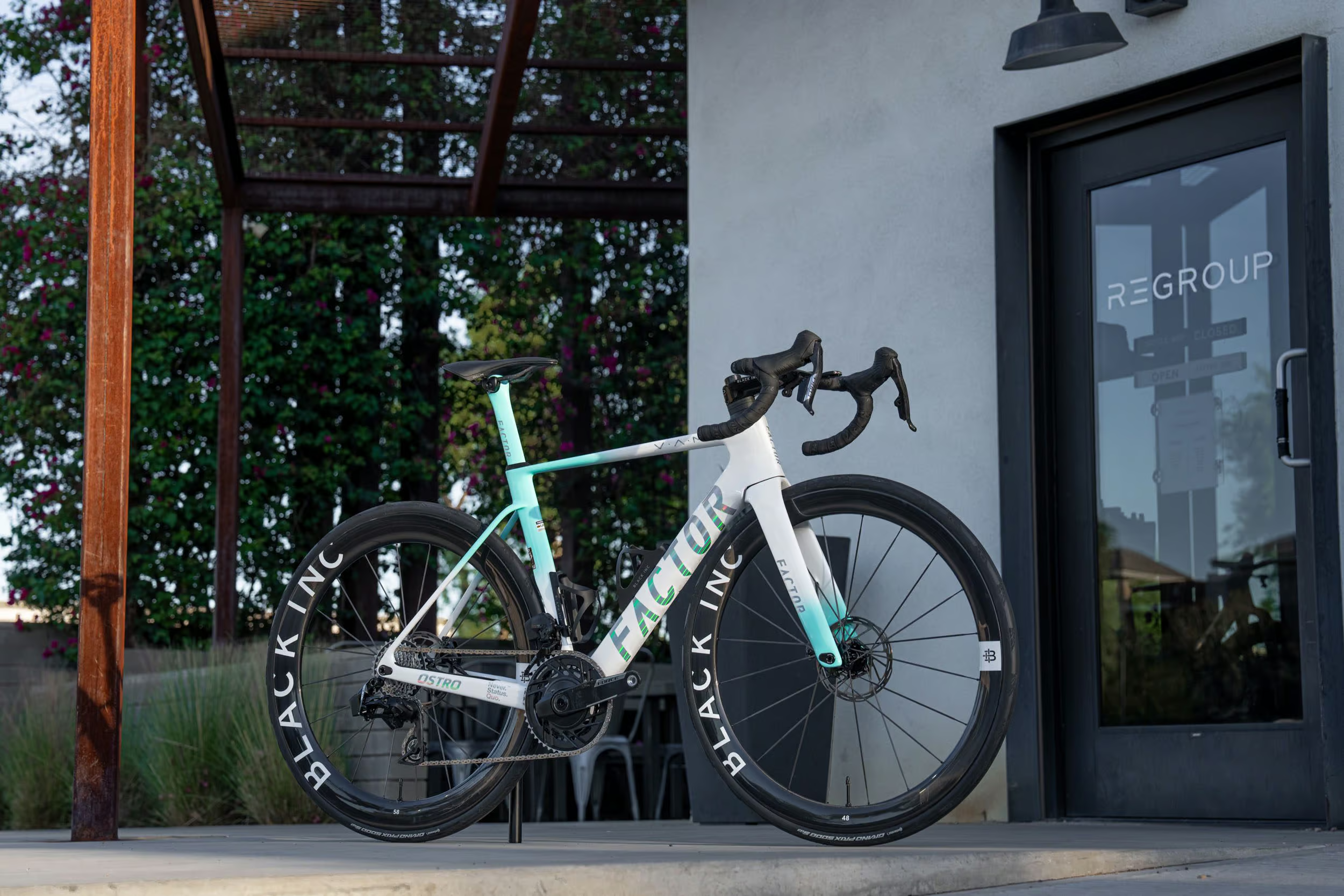
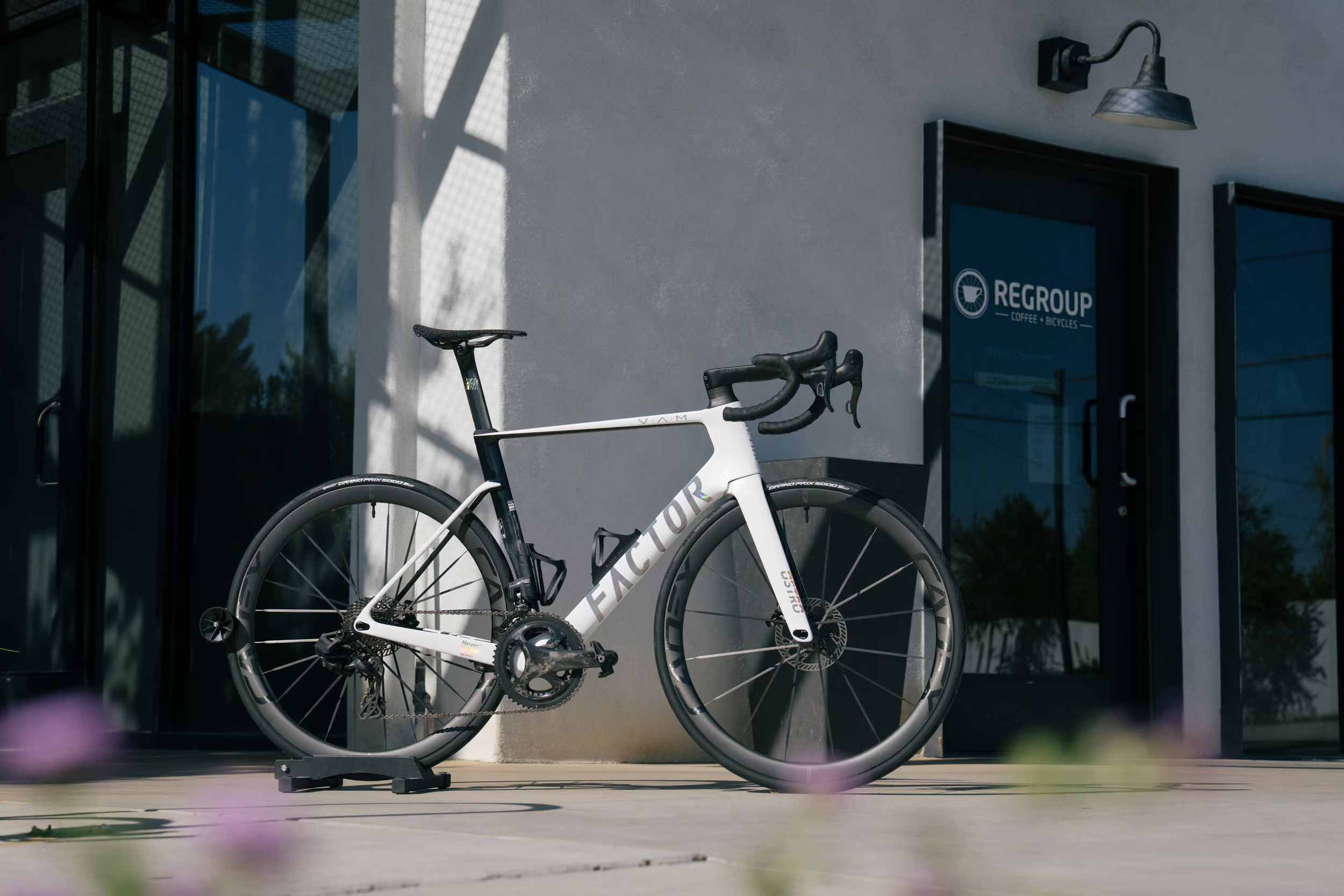
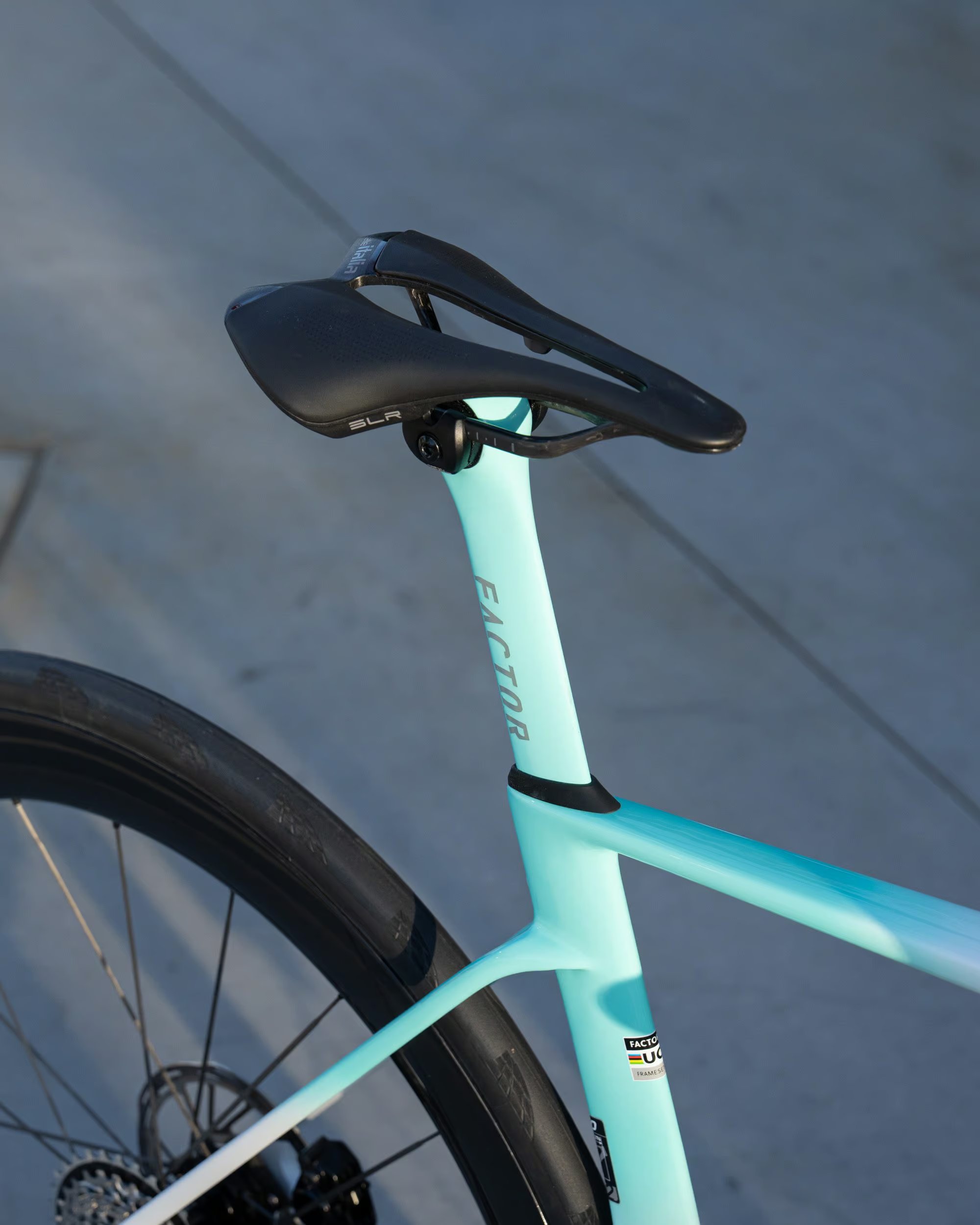
A Regroup Custom Factor Ostro VAM destined for the epic climbs of Tucson.

Factor Ostro VAM — the all-rounder that changed the category

The Ostro VAM is the bike that put Factor at the top of the timesheets. It’s also the reason riders started talking about Factor the same way they talk about the boutique Italians.


Here’s what the Ostro does that nothing else in its class quite manages: it refuses to pick a lane. Aero bikes are fast in a straight line and feel inert on a climb. Climbing bikes float uphill and get blown around on the flat. The Ostro, somehow, is a sub-7kg aero bike that wins sprints, survives cobbles, and summits with the best of them. Factor’s current version is 250g lighter and 7W faster than the outgoing model, with the new Black Inc 48|58 wheels. Those are real numbers, and they compound over a four-hour ride.


This is the bike for the rider who wants one bike. Not one for hills, one for races, one for Sundays — one bike for everything that isn’t dirt. You want to sign up for a stage race in May, your club’s Saturday chaingang in June, and the gran fondo with 3,000m of climbing in September, all on the same frame? The Ostro is built for that. It’s the default-great answer for most serious road riders, and it’s the benchmark against which every other bike in this guide is measured.

Where it sits

  • The all-course flagship
  • If you don’t have a specific reason to reach past it, the Ostro is almost always the right answer
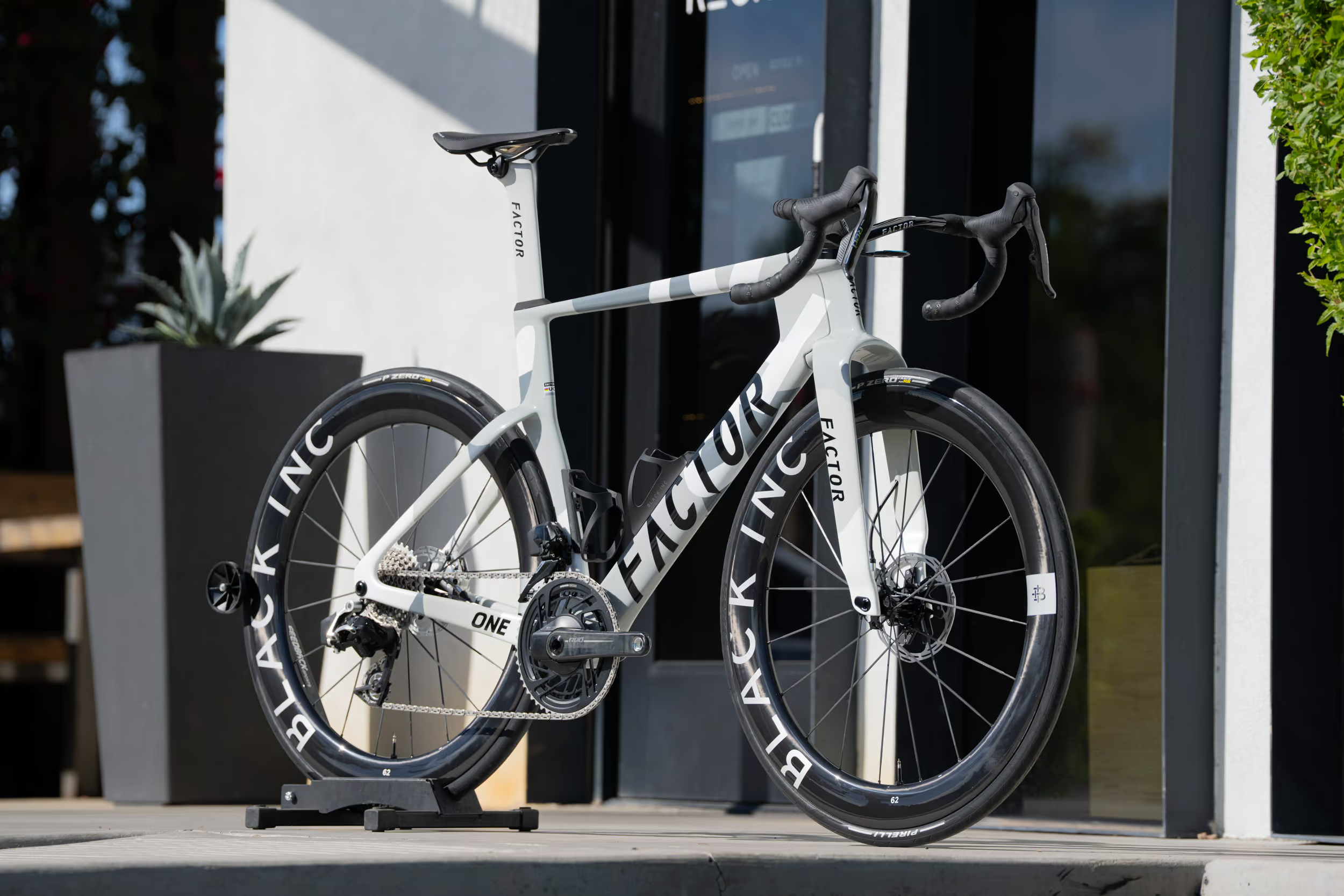
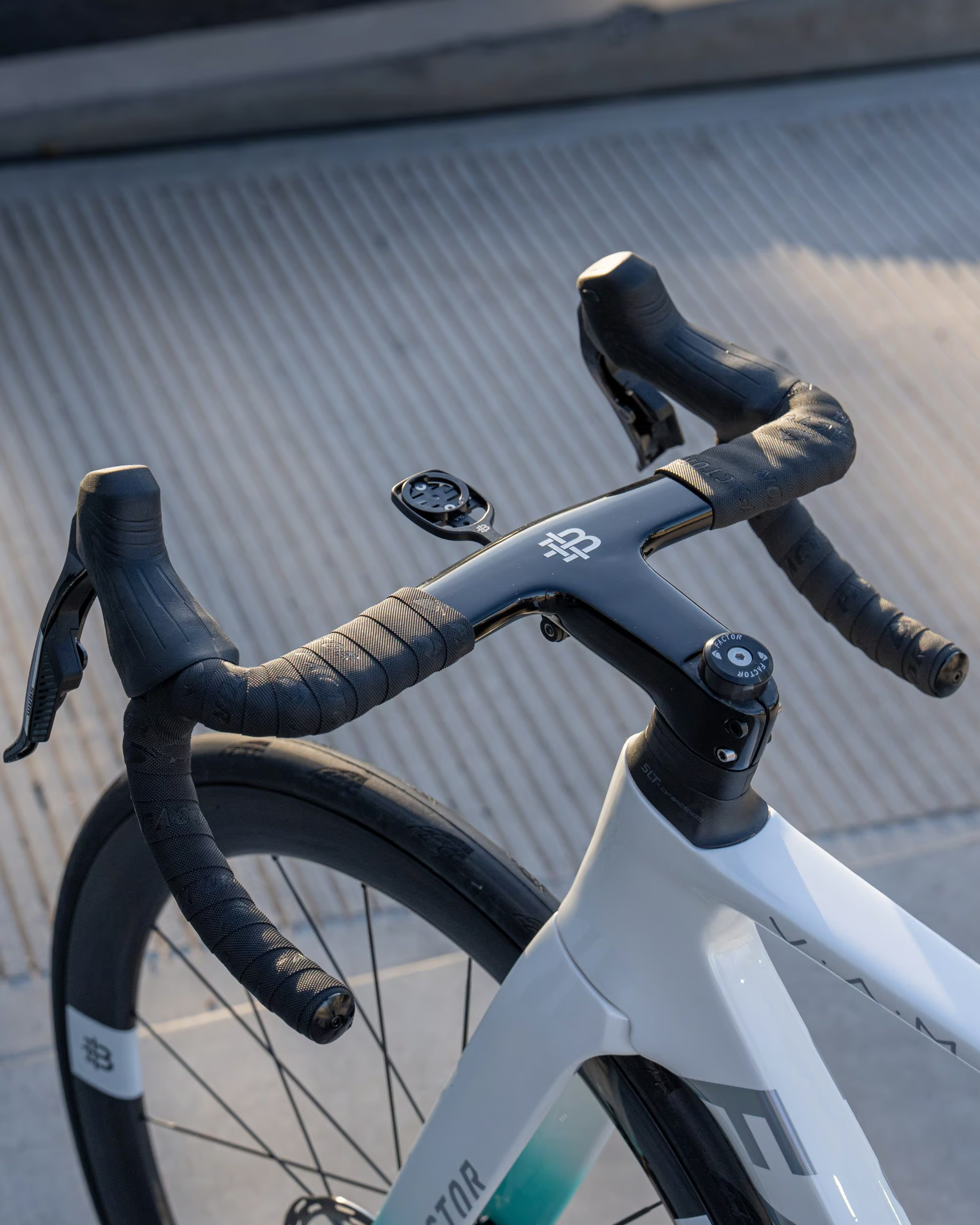
The Regroup Factor ONE, photographed outside the Regroup HQ in Tempe, Arizona.

Factor ONE — the aero bike reinvented

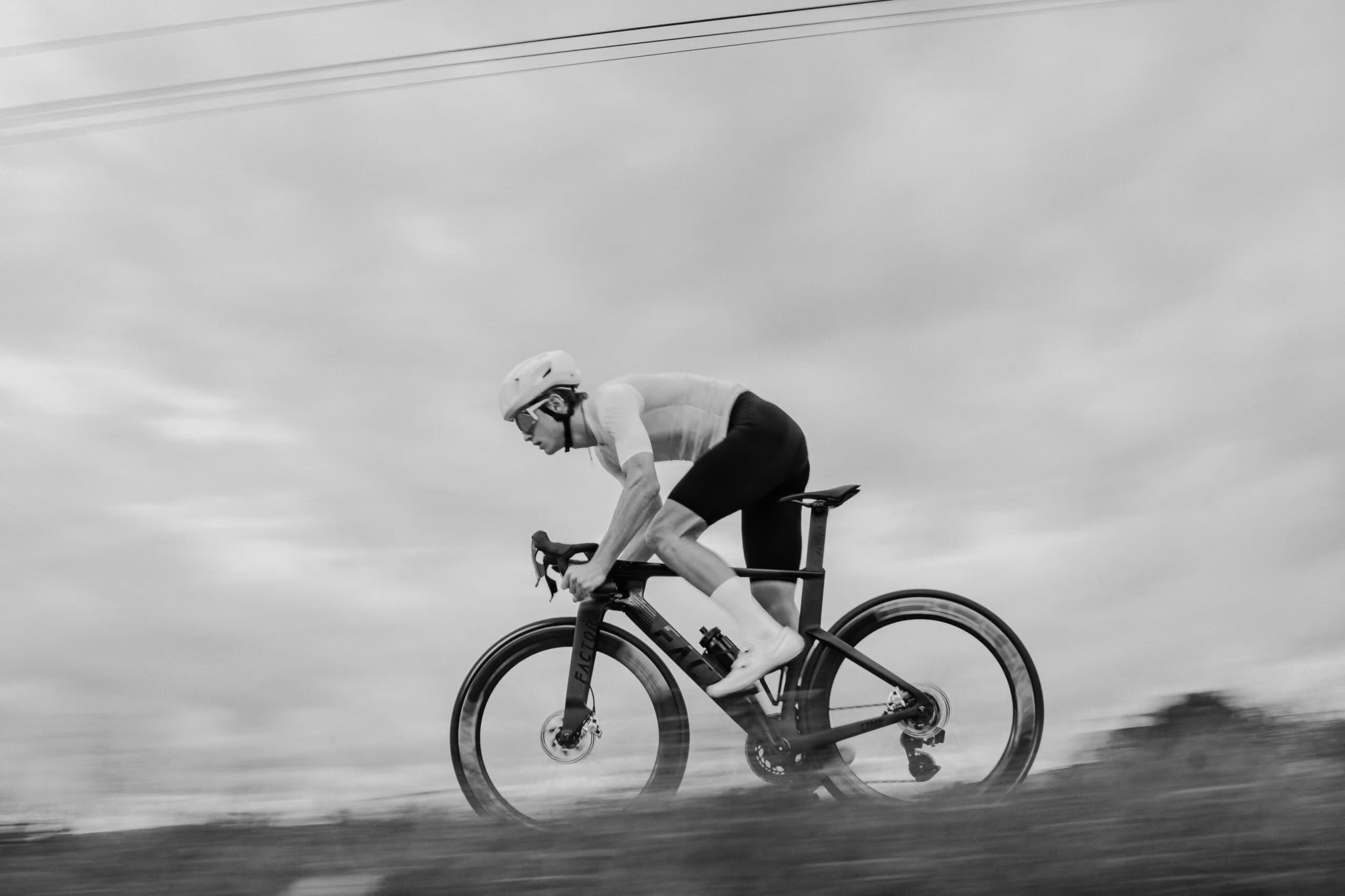
The ONE is a different proposition entirely. Where the Ostro is a scalpel built to do everything well, the ONE is a spear built to go devastatingly fast on the parcours that increasingly decide professional races — the 200km stage run at 50kph-plus, the 100km breakaway, the sprint at the end of a long, hard day.


Chief Engineer Graham Shrive put the thesis plainly when we spoke ahead of launch: this is a different sport than it was five or six years ago, and the ONE was designed for the sport it’s become.

It also arrived with a statement. Its first public appearance, unannounced and in prototype form, was a stage win at the Critérium du Dauphiné. Factor’s words: “It was not a debut. It was a declaration.”


The engineering story matters here because the ONE is the first Factor road bike designed around a UCI rulebook that was rewritten to allow more aerodynamic freedom at the front end. The Bayonet Fork and “chin” fairing manage airflow off the front tyre — the spot Factor’s Hanzō track research identified as the single largest source of spillover drag on a road bike. The cockpit has no traditional stem; instead, a numbered system (1 through 5, mapping to 110–150mm stem-equivalents) keeps the front end clean and the airflow uninterrupted.


Barry Anderson, Regroup’s Director of Fit and Biomechanics rode ours and put it well: he expected something twitchy and hand-heavy and found the opposite. “It holds speed better than anything I have ever ridden. Things feel easier over 50k/hour. The bike almost lifts underneath you.”


That last line is the ONE in a sentence. This bike rewards riders who ride hard for long periods at high average speeds. If you’re the person on your Saturday ride who always ends up on the front at 45kph wondering where everyone went, the ONE is for you. If you race flat crits or long punchy road races. If you love a hard breakaway. If you’re disciplined enough to stay in your fit for 80km without wanting to sit up. This is your bike.

Options

  • Geometry: the sharpest, most specialised road bike Factor makes
  • Choose it over the Ostro if — and only if — whole-stage aero is the thing you’re optimising for
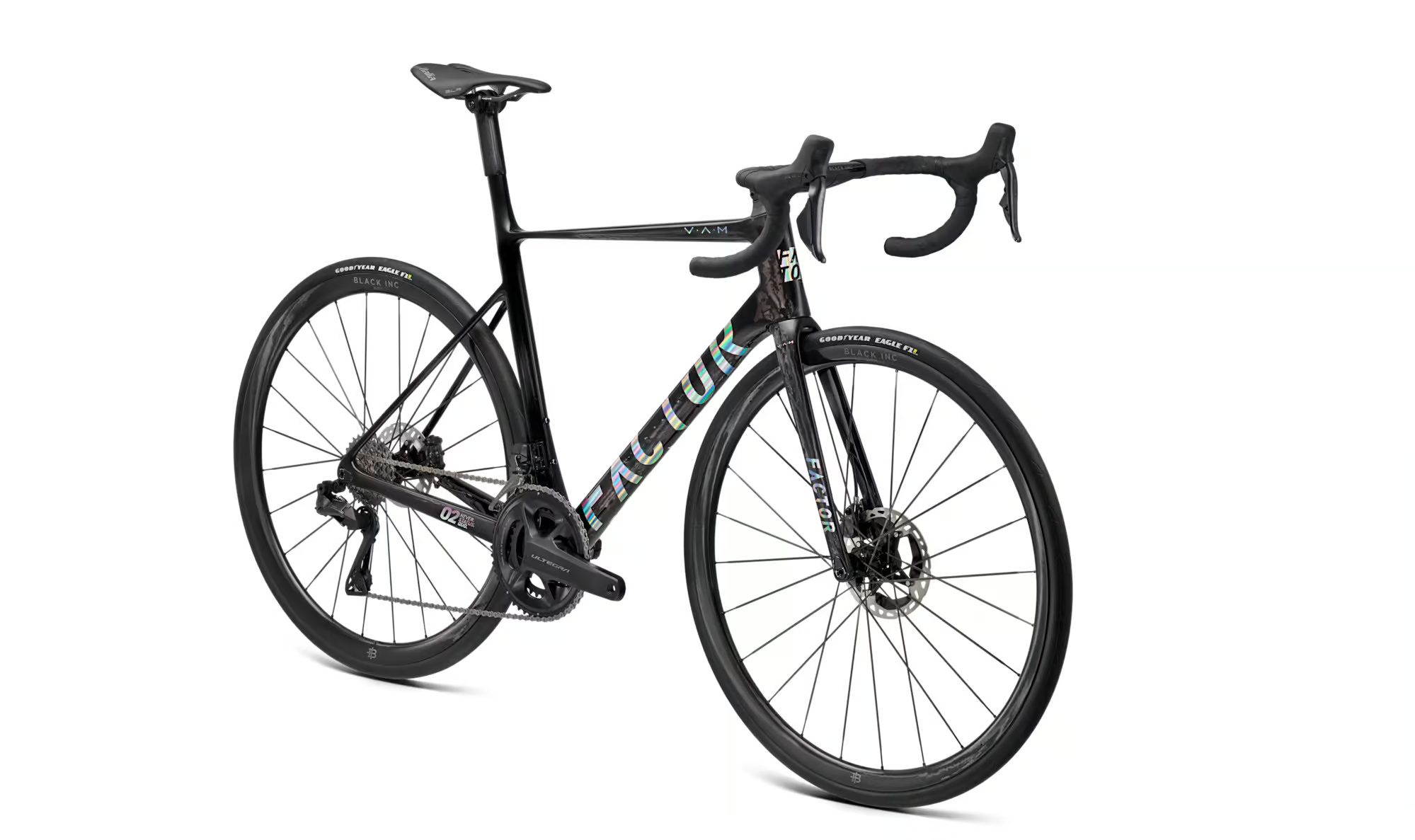
The Factor O2 VAM Road Bike

Factor O2 VAM — the climber that refused to be a climber

The O2 VAM is an aero climbing bike, which used to be a contradiction in terms. Factor’s engineers have spent two product cycles proving it isn’t. The current O2 weighs 6.4kg out of the box for a 54cm frame with Dura-Ace Di2 — which means the pros can line up on one with pedals, cages, transponder and race number and still be right at the UCI 6.8kg minimum.


Here’s the number that tells you what Factor has actually done, though: in the wind tunnel, at 0–5° yaw, the O2 VAM is only 5 watts behind the Ostro VAM. Read that again. The category-benchmark aero bike is 5 watts ahead of Factor’s climber. On a real climb at a real gradient, that gap effectively disappears under the weight advantage. On the flats and the descents either side of the climb, the O2 is faster than plenty of bikes marketed as dedicated aero machines.


The O2 shares the Ostro’s geometry and stiffness. That matters. You get the same handling you’d get on the flagship — the poise at high speed on descents, the confidence at big lean angles, the agility — in a frame set up to fly uphill. Factor built a new factory to make the manufacturing process work. It shows.


The O2 is the bike for riders whose calendar reads: Tucson in winter, the Alps in summer, the Étape du Tour when they can get a place. Riders who think “big day” means four hours of climbing. Riders who want the bike they ride in the flats between climbs to still feel like a proper race bike. It’s also, for Valley riders who regularly point north and start going up, a very reasonable one-bike answer.

Options

  • The dedicated mountain-day bike that happens to be quick everywhere else
  • If your riding is defined by vertical metres, this is where you start

Factor Monza — the everyday racer's race bike

Every range needs a bike that tells you what the brand actually thinks about the people who ride their bikes. The Monza is Factor’s.


It would have been easy to make the Monza a pro bike softened for amateurs. Factor didn’t. The pitch from Stuart Munro, the lead Industrial Designer on the Monza project: “The Monza is not a pro bike softened for amateurs. It’s a performance machine built from the ground up for passionate, real-world racers.”


The distinction isn’t cosmetic. Everything about the Monza is tuned for the rider whose race week starts with a 5am commute, includes two chaingangs and a dawn threshold session, and ends with a crit on Sunday.


Practically, that translates to everyday race geometry — a little more stack than the Ostro, a little more forgiveness across long training days — with clearance for 34mm tyres. You get integrated downtube storage, which is a genuinely useful feature for real-world riding and, incidentally, an aero win: anything you strap behind your saddle costs you watts, and the Monza removes the need to strap anything.


You get compatibility with Shimano Ultegra and SRAM Force builds rather than the flagship groupsets the Ostro and ONE demand, which keeps the price sensible without keeping the performance off the table. The Monza shares the Ostro’s core DNA; what Factor has done is rebalance it toward utility.


This is the bike for riders who want a Factor and ride four, five, six days a week across every kind of day. Training, commuting, chaingang, crit, gravel-ish detour on the way home, repeat. It’s the Factor that doesn’t need you to schedule around it.

Options

  • Geometry: the daily driver with real race DNA
  • If the Ostro is a thoroughbred and the ONE is a specialist, the Monza is the bike that handles your actual riding life