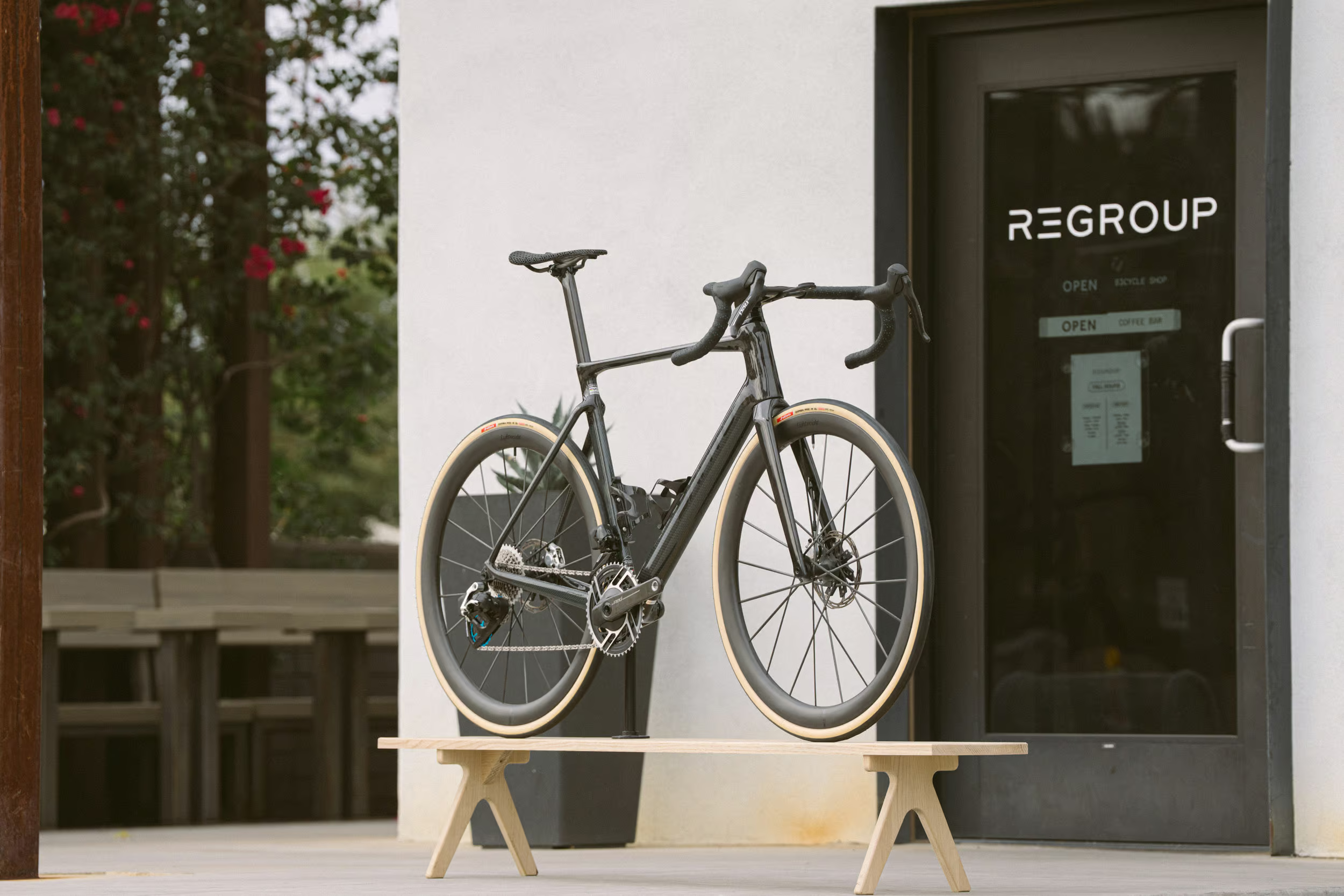
Adam's 'First Fit' Parlee Z-Zero GT
What happens when you combine a pink CeramicSpeed OSPW, a love of American-made carbon and a Regroup FIT? A Parlee Z-Zero GT dream road bike.
March 6, 2026
visibilityINTERVIEW
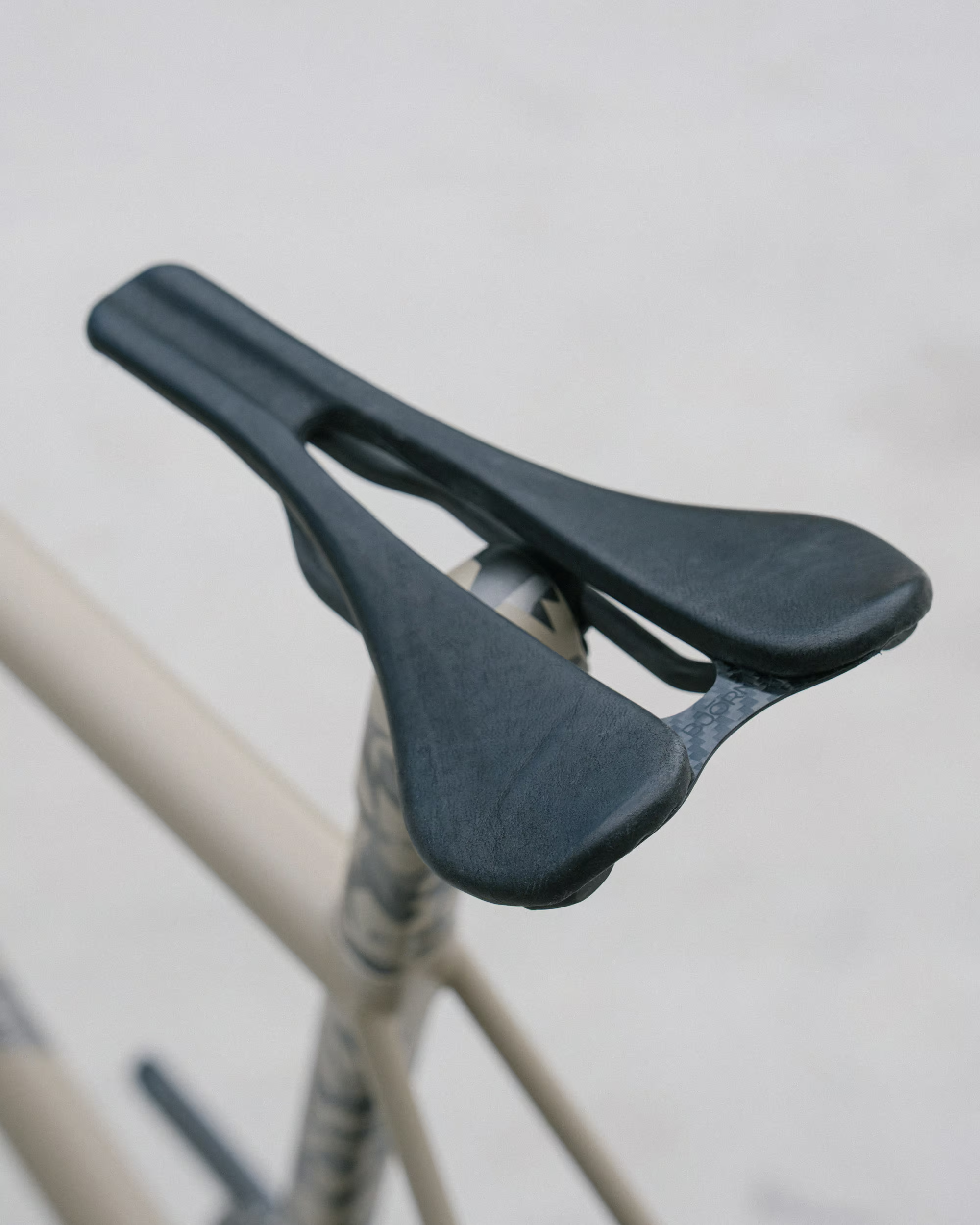
Mick Peel covers bicycle saddles in leather, which is a bit like saying Josef Albers drew squares. Both sentences are true. Both just touch the surface. In Mick's case, quite literally.
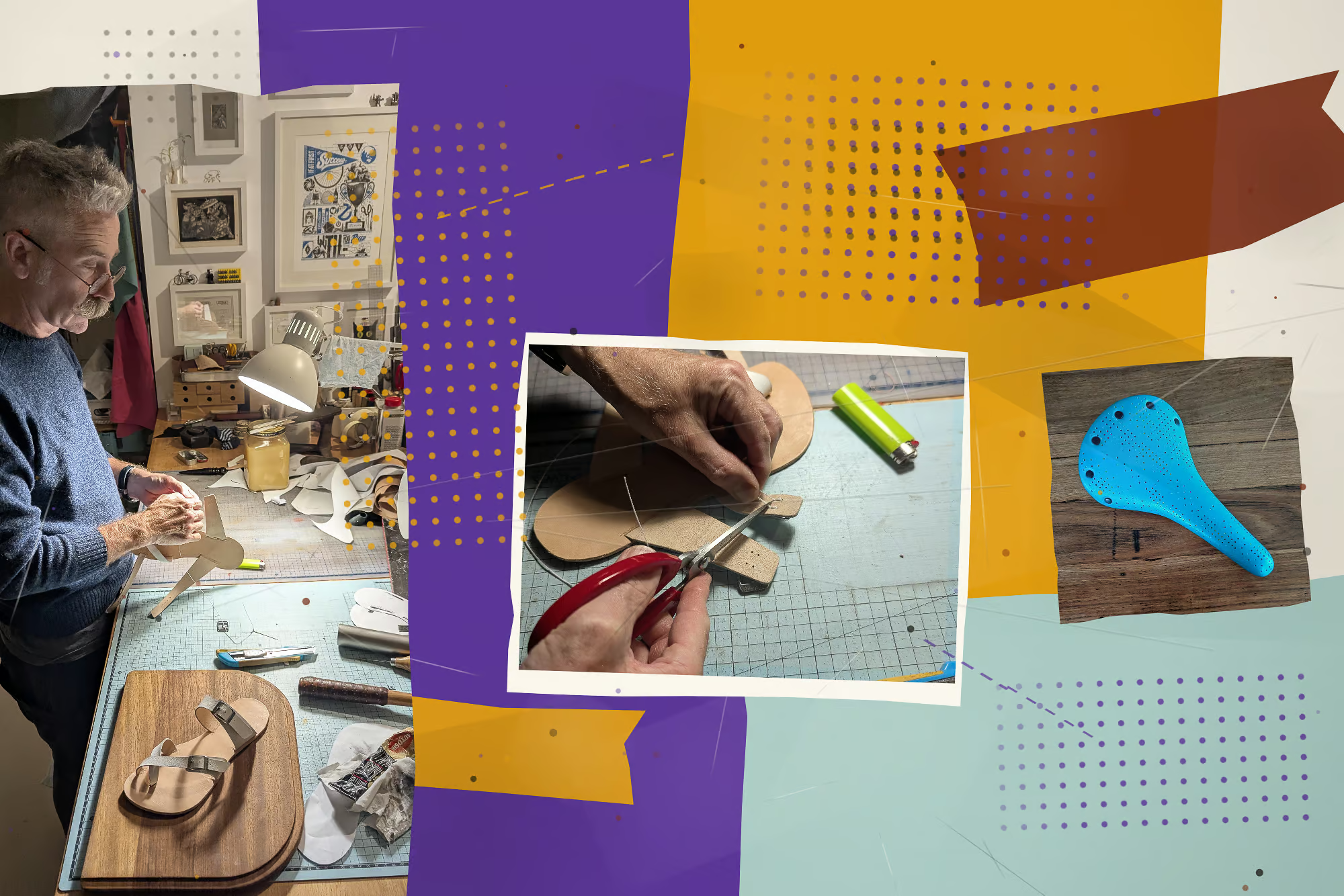
When I call Mick Peel, he isn't at his workbench in Melbourne. He's on the Aegean coast of Turkey, at his father-in-law's summer house, where he and his wife have set up a small roving studio for the trip. He's spent the holiday making sandals. Aegean-style, naturally.
“Flat, thin soles, a couple of layers of leather, strappy things — like the ancient Greeks would have worn,” he says, as though this were a perfectly normal way to spend a fortnight off. For Mick it is. “I’m treating it as a sabbatical. Getting away from the daily grind and just working on some new, different projects for myself.”
The daily grind, in his case, is Busyman Bicycles — the one-man Melbourne workshop that has spent the best part of two decades covering bicycle saddles, making bar tape, and the occasional workshop stool in hand-cut, hand-stitched, hand-punched leather. If you’ve ever seen a custom bike and thought of course the saddle should look like that — there’s a decent chance Mick made it look that way.
The leather didn’t come from nowhere. Mick grew up in a family where making things was simply what you did. Both parents were art teachers at the local high school; both kept studios at home. His father painted, threw ceramics, worked wood — he built the family house, and still lives in it. His mother taught textiles and did leather work of her own.
The school offered leather work as a course, so Mick took it. By fourteen or fifteen he was making his own clothes. University meant fashion design, then jobs at fashion companies, then brands of his own with friends and with his sister — “so much hard work” — and eventually a return to RMIT in Melbourne, where he taught fashion design for the better part of twenty years and rose to head of the department.
“Somehow it’s part of my DNA,” he says. “The drive to be creating and making, the textiles, the clothing — and the leather work kind of flipped around it all.”
What’s striking, talking to him, is how directly the tailoring feeds the saddles. Setting a sleeve into a jacket means moulding fabric over a shoulder; wrapping a modern saddle, with its cutouts and compound curves, means the same spatial thinking in a less forgiving material. “I need to make complex patterns, and then understand how much I can mould the leather to fit the shape without adding seams,” he explains. Fewer seams isn’t just an aesthetic preference, either. “A seam changes the surface, so it’s more susceptible to abrasion — like on a pair of jeans, where the seams fade first. If I can do it with one piece of leather, no panels, no seam, then I’ll do that.”
Busyman began, as so many good things did around 2008, with a fixie.
Mick was commuting to RMIT and, mid-PhD — a research-through-practice doctorate the university required of senior academics — one of his professors gave him a piece of advice that would prove quietly explosive: just do a project. There’s something in the unpacking of every project.
The project at hand was an old steel road bike. Derailleur off, powder coat on, Brooks saddle fitted, bars wrapped in leather, toe straps made by hand. He enjoyed it so much he built a second one, and this time thought: why not take an ordinary saddle and cover it in leather myself?
So he did. Then he did one for his wife. Then his sister, his brother. He put the work on a blog, and the requests started arriving — first a trickle, then a flood, amplified by an Instagram that was still, in those years, a chronological place where nice photographs of nice bicycles found their people. The waiting list stretched to nine months. The PhD, meanwhile, was going nowhere.
“I was like — you know what, I’m going to withdraw,” he says. “One of my good friends and colleagues said, this is professional suicide.” Six months later he quit the university job too, and in 2014 Busyman became the whole job. It has been ever since.
The craft itself sits somewhere between tailoring and shoemaking, with techniques quietly borrowed from both. A traditional shoemaker will sometimes stretch wet leather over a wooden last with pliers and tacks it in place while it dries. Usually it’s done dry. Mick had to find a way of doing the same thing without hammering nails into the underside of someone’s saddle.
His answer: wet the leather to make it supple, stretch it over the saddle’s form — and the rest is a trade secret! The leather takes the shape and — this is the near-magical property of the material — keeps it. It doesn’t pull itself back. Once dry, the cover is glued to the base with contact adhesive, and the saddle looks, at its best, like it was never anything else.
Every saddle starts with removing the factory cover while preserving the foam beneath — a job the manufacturers make harder every year. “That’s changed over the period I’ve been doing this,” he says. “Each new model presents a new challenge. Am I going to be able to work with this or not?” The old classics came apart willingly. The new injection-moulded designs, with covers fused to foam, very much do not. “But so far I have figured out how to do it.”
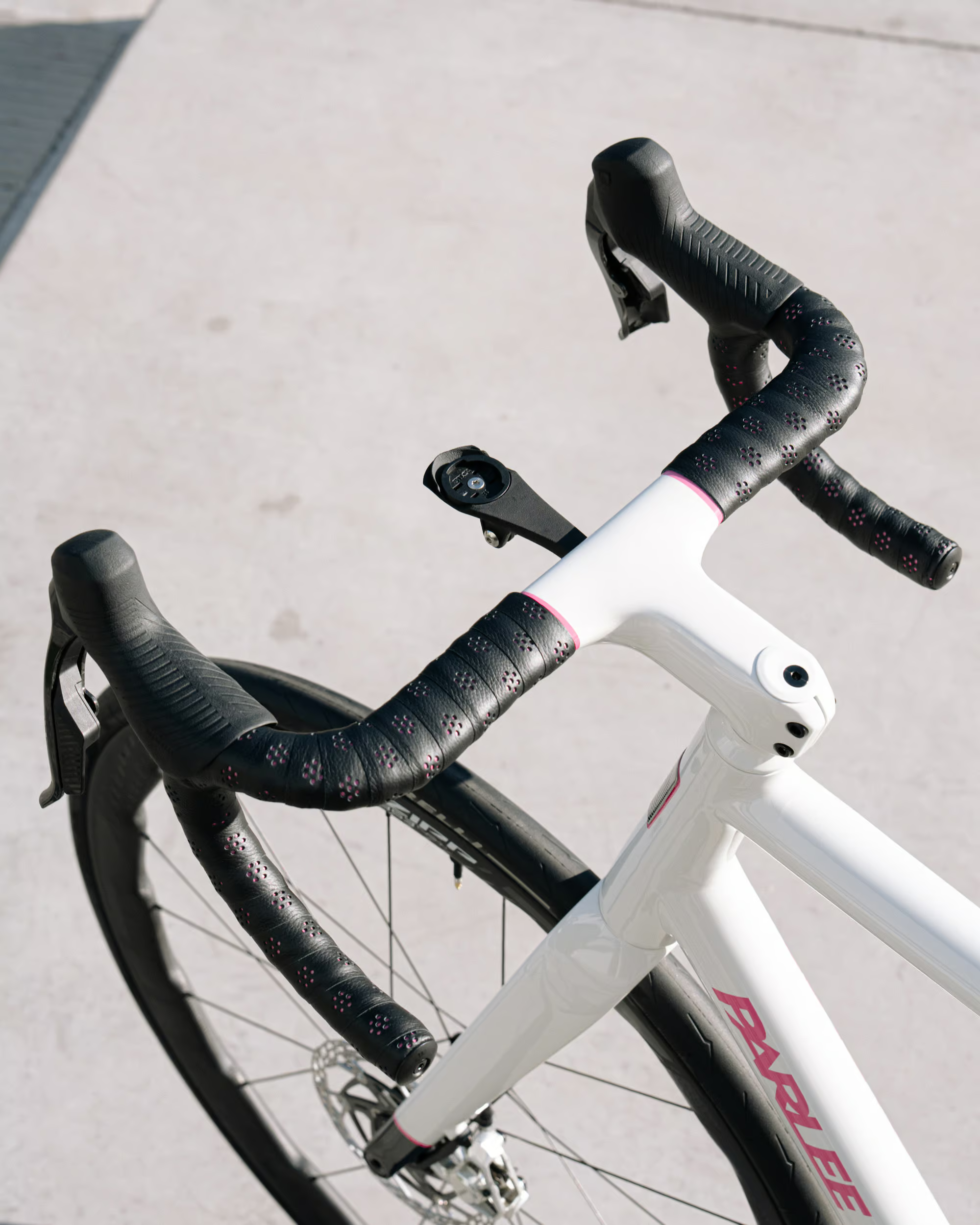
The bar tape, incidentally, is perforated entirely by hand. Every hole, punched individually.
MICK PEEL
The work is bespoke in the proper sense: it starts with a conversation, not a configurator. Some clients arrive with something exact in mind; others want Mick to present directions. All of them are asked for at least a photograph of the frame, or rendering (if the frame isn’t yet made).
Sometimes the frame does the talking. For Pegoretti’s hand-painted Ciavete finishes — those gloriously unrepeatable riots of colour — Mick has developed ways of designing saddles that pick up and answer the palette. Sometimes it’s the opposite discipline: a black bike with tan tyres, wanting one quiet note of leather to agree with them. “Sometimes it’s quite classic-looking, and sometimes it’s completely out there,” he says. “And sometimes the brief presents a technical challenge where I need to get out of my comfort zone — which is always great, because it extends the repertoire of what I can offer.”
Not everything is leather, either. He’s been working lately with Alcantara, the synthetic suede — occasionally for vegan clients, but more often, wonderfully, for clients with a particular sports car in the garage and a wish for the bike to match the upholstery. Everyone’s different.
Ask Mick about finishing a piece and you get an unexpectedly honest answer about what it feels like to make things for a living. When a client emails shortly after delivery, his first instinct, still, is dread — there’s something wrong with it, they hate it. Ninety-nine times out of a hundred the message says the opposite.
“When I started this, I was striving for perfection,” he says. “I wanted it to look factory-made — like it was made by a robot, nothing out of line. And I could never achieve that. It was frustrating. But over time, the imperfections kind of disappear. Only the maker notices them.”
The turning point came, fittingly, from his mechanic — Dan Hale (now, Dan Knives), formerly of the legendary Shifter Bikes and now Superbe Velo Service, the best mechanic Mick says he’s ever known, and a man he describes with affection as needing everything exact. Mick was considering buying a machine to perforate his bar tape, to replace all that hand-punching. Dan told him not to.
“He said: people love that it’s handmade. That’s the beauty of it. And it was then I thought — it doesn’t matter if there’s one little discrepancy. That’s the beauty of the imperfection. It’s what tells you it’s handmade.”
High praise for the wobbly line, from the straightest edge in Melbourne.
None of this is museum work. A saddle top may be the hardest-wearing few square inches on a bicycle — years of movement, friction, and whatever your bib shorts happen to be made of. It’s why Mick keeps seams away from the wear surface, and why he’ll cheerfully tell you that leather, like a good pair of raw denim jeans, may give up a little colour in its first outings. Hand-dyed finishes especially. Best not to pair a fresh saddle with white shorts, is the general wisdom — a lesson at least one customer has learned more vividly than he’d have liked.
Over the years the work has travelled well beyond Melbourne. For several seasons Mick collaborated with Sacha White’s Speedvagen in Portland, designing saddle treatments to answer each season’s new paint schemes and palettes — stock designs in spirit, but unique in every execution, because no two saddle models and colour combinations ever quite repeated. “That was great,” he says simply. “Really good, working with them.”
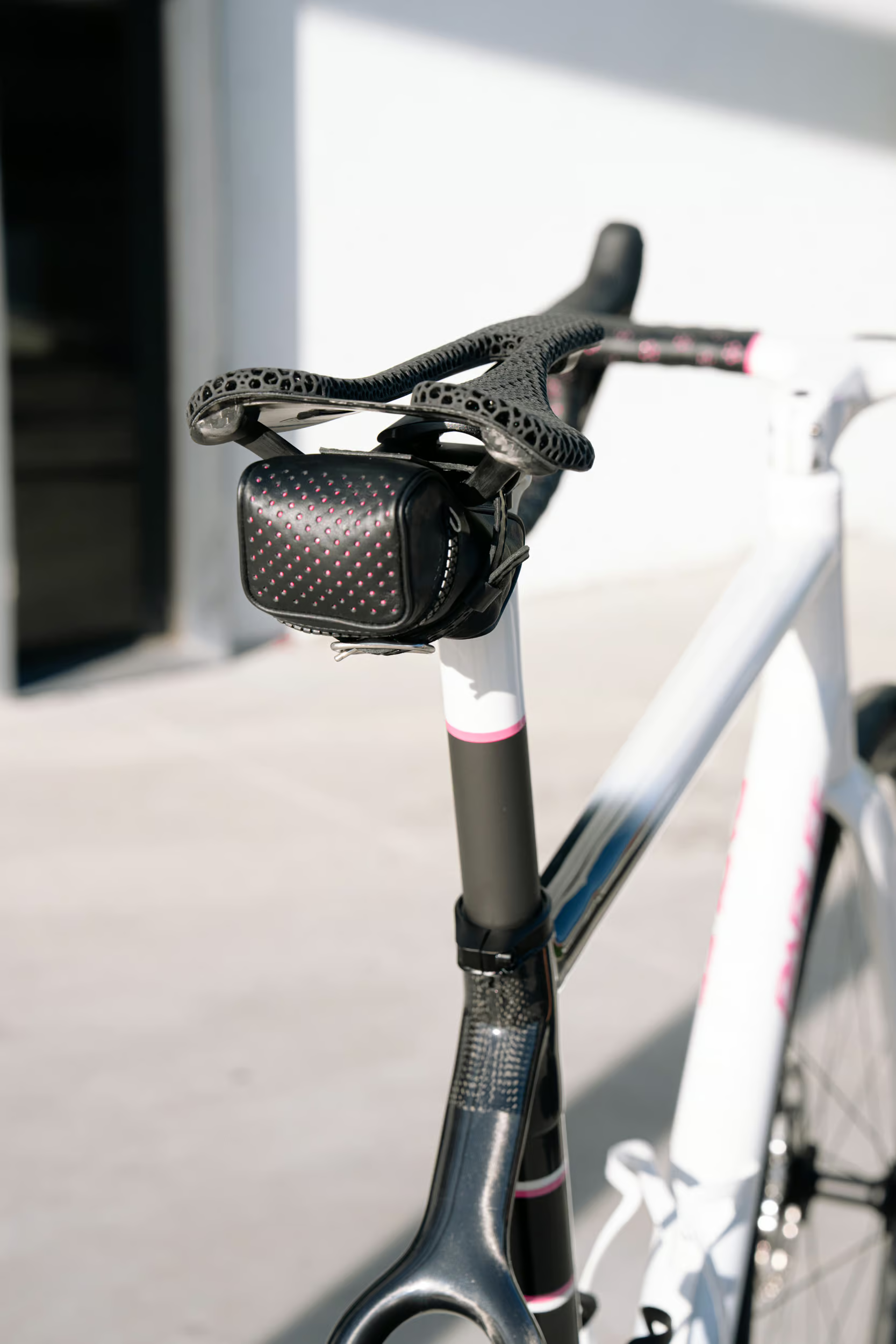
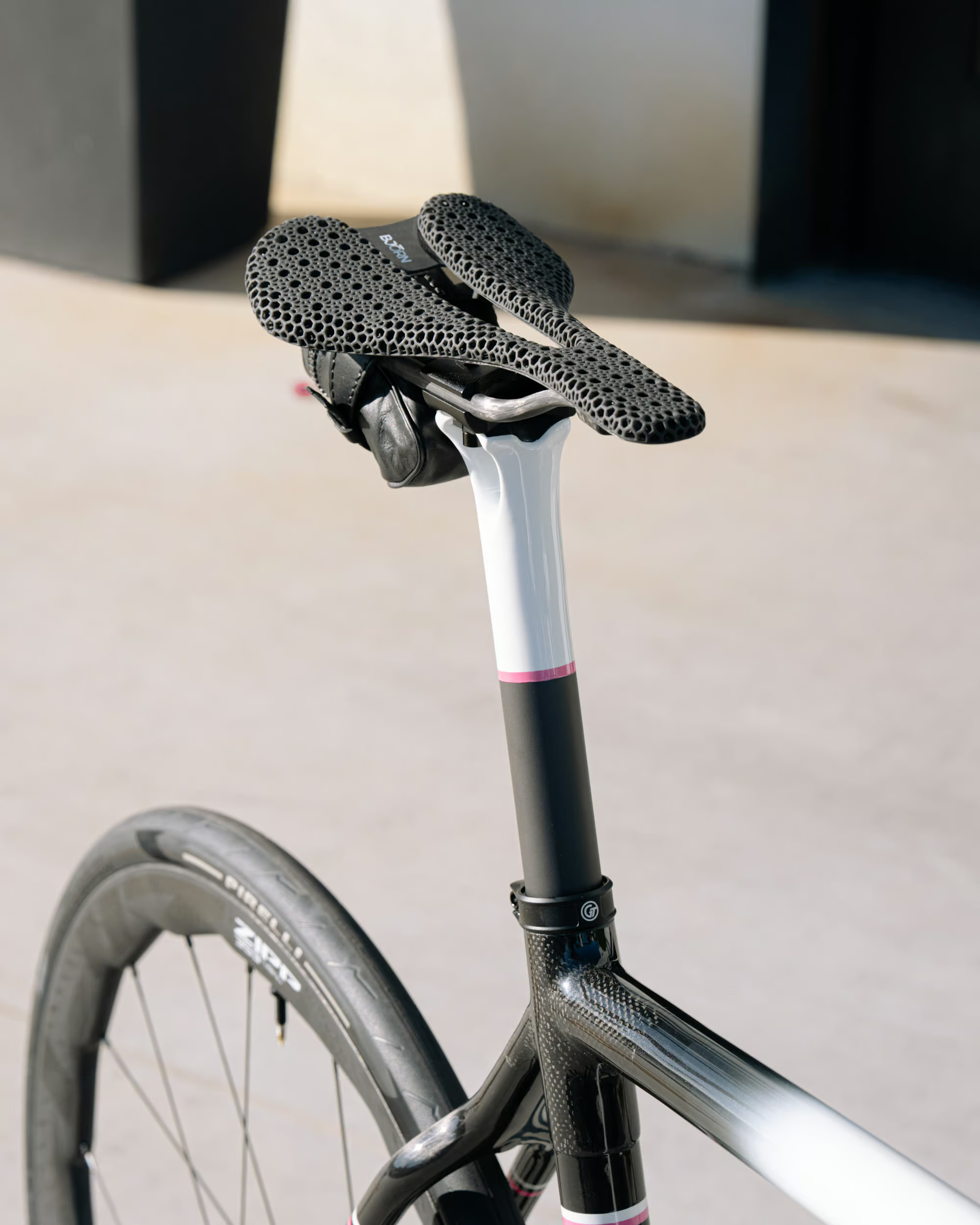
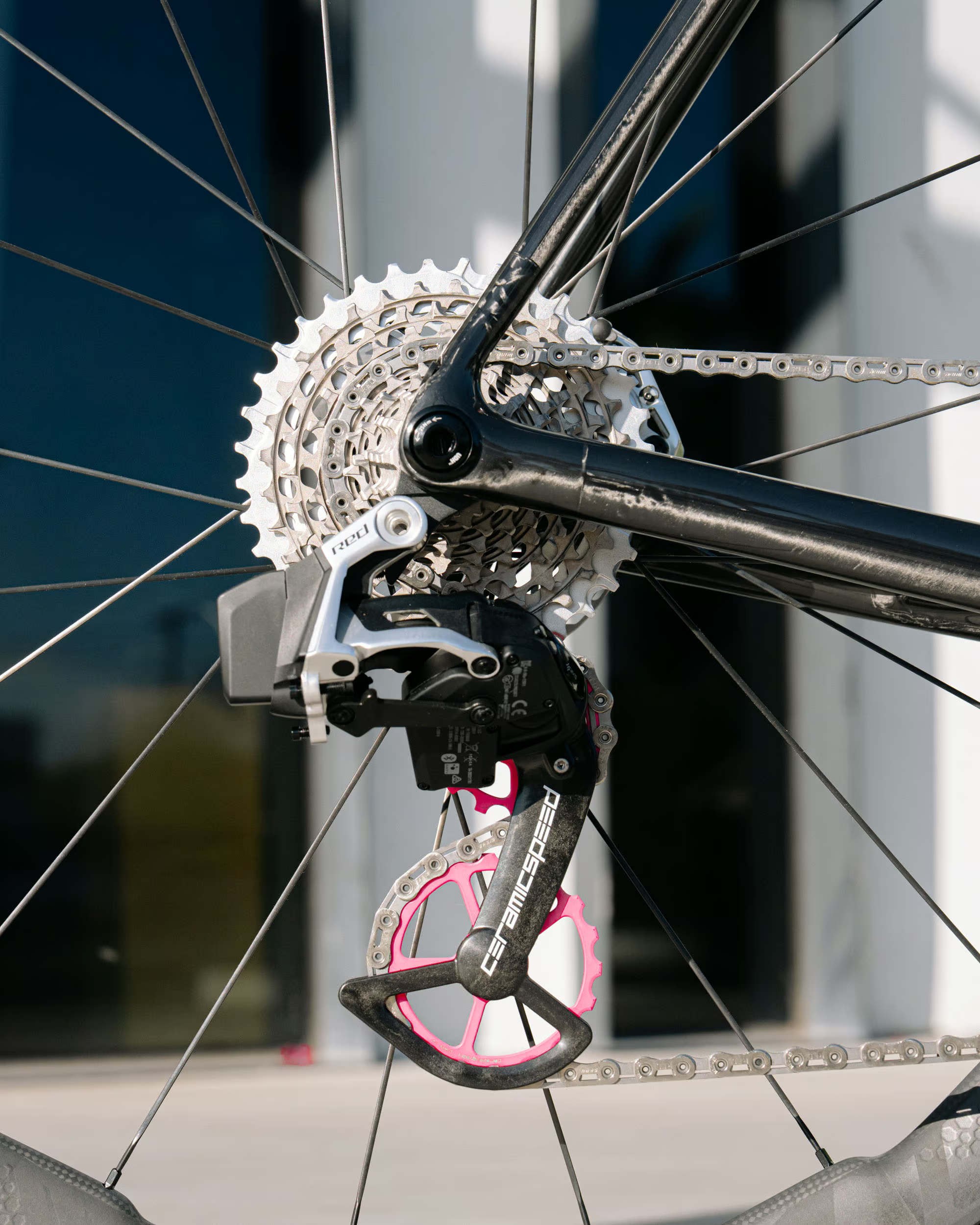
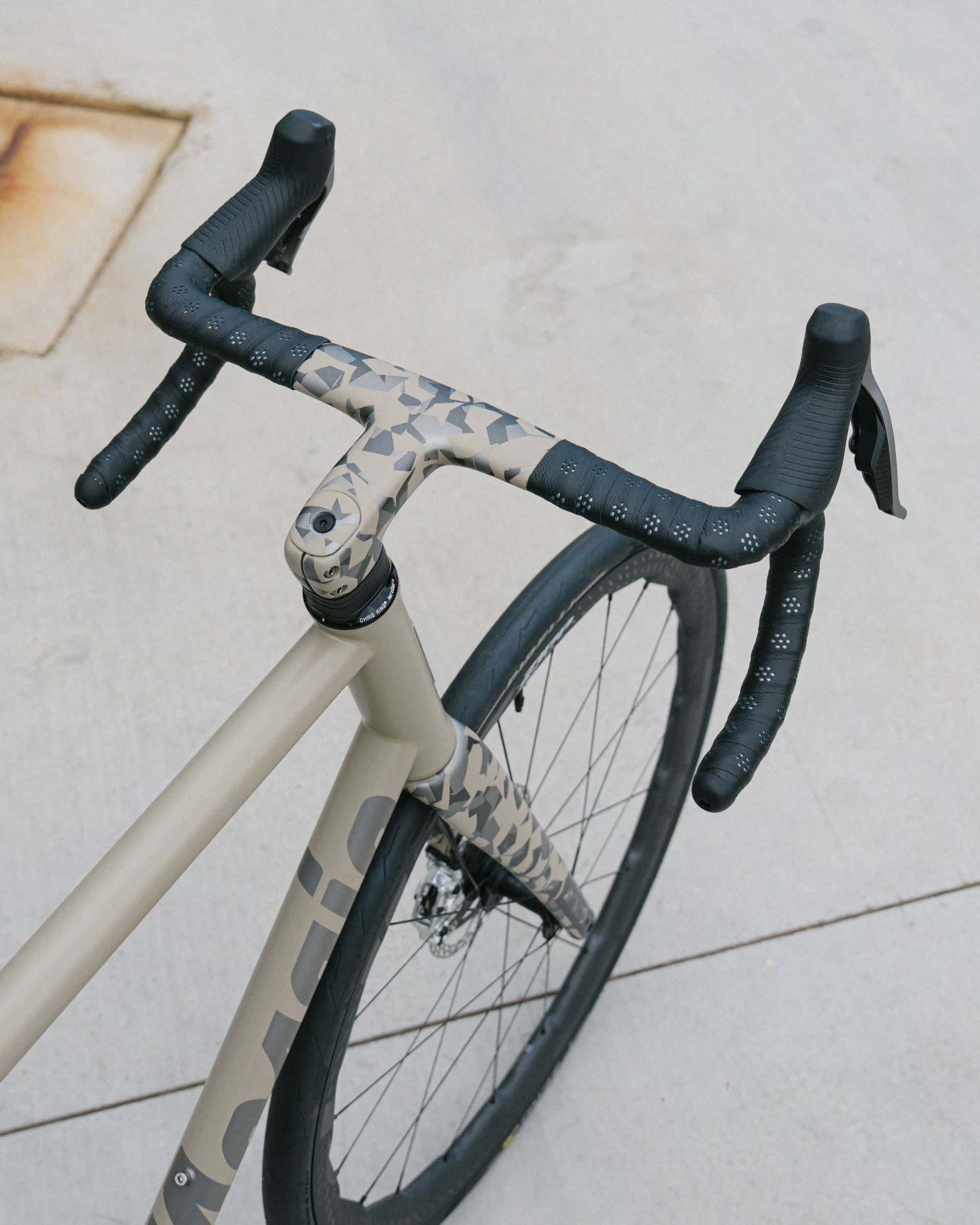
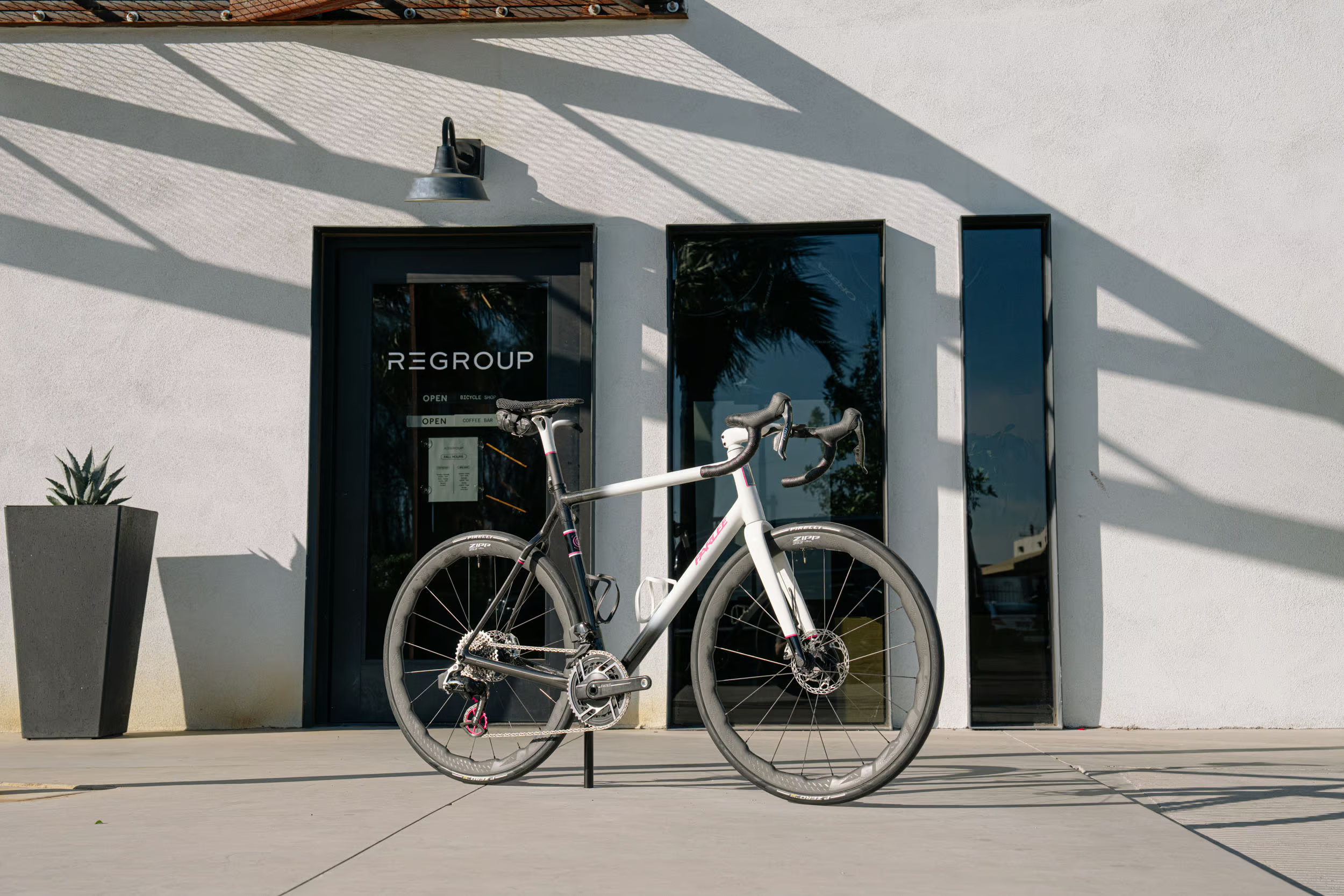
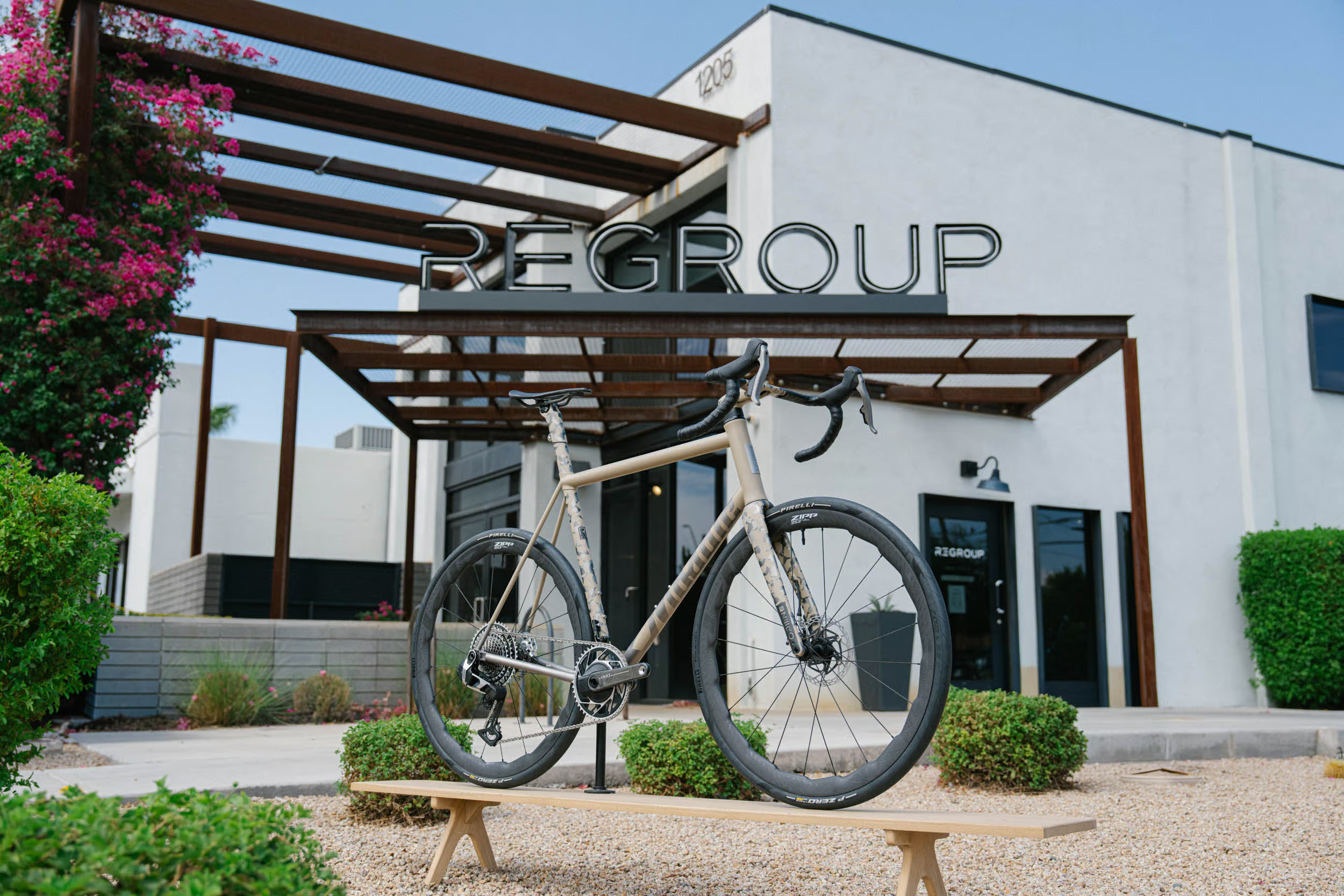
It has travelled to Tempe, too. Regulars will have spotted Busyman leather on recent Regroup Custom builds — not least Adam’s own Parlee Z-Zero GT, where Mick’s custom bar tape, with its pink underlay answering the CeramicSpeed OSPW, does exactly what his work always does: makes the whole bike agree with itself. A matching saddle bag and rear bag complete the set. Totally extra, entirely by design.
As for how long a commission takes — the honest answer is that the drawing and the designing come first, then a day or two of proper bench time, and that his hourly rate, by his own laughing admission, “is not that wonderful.” Few of the good ones ever are. The enjoyment is king.
By the time you read this, Mick will be back in Melbourne, the sandals finished, the Aegean workroom packed away for another year. “And then,” he says, “back to the leather work.”
Busyman Bicycles takes commissions for saddles, bar tape, saddle bags and more — busymanbicycles.blogspot.com. Dreaming of leather touchpoints on your own build? That’s exactly the kind of detail a Regroup Custom project is made for — drop us a line.