
GEAR DIVE

The Cima Question

Enrico Sarto on the quiet confidence of replacing a modern classic — and why his new road bike had to feel lighter, not just read lighter on a scale.

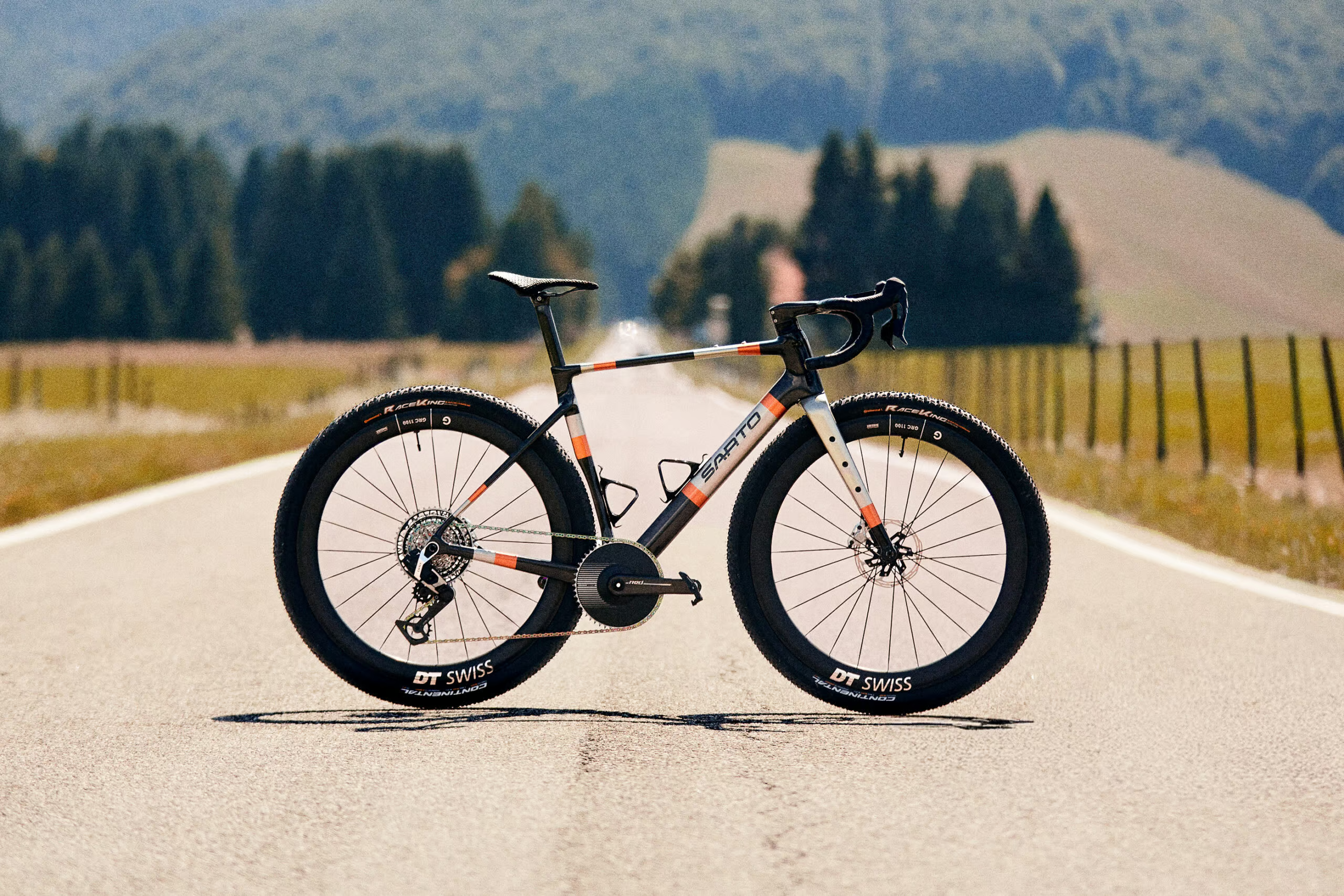
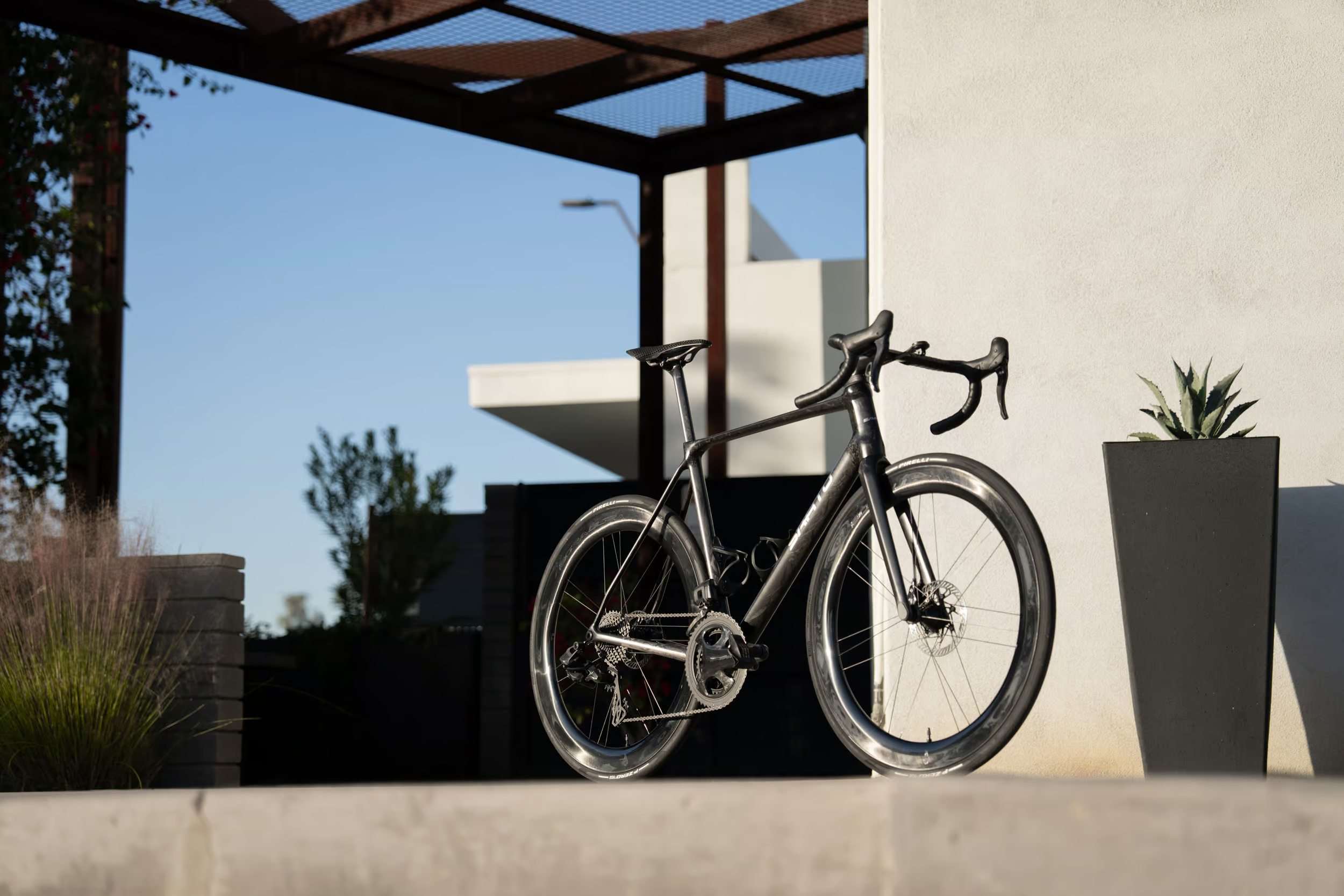
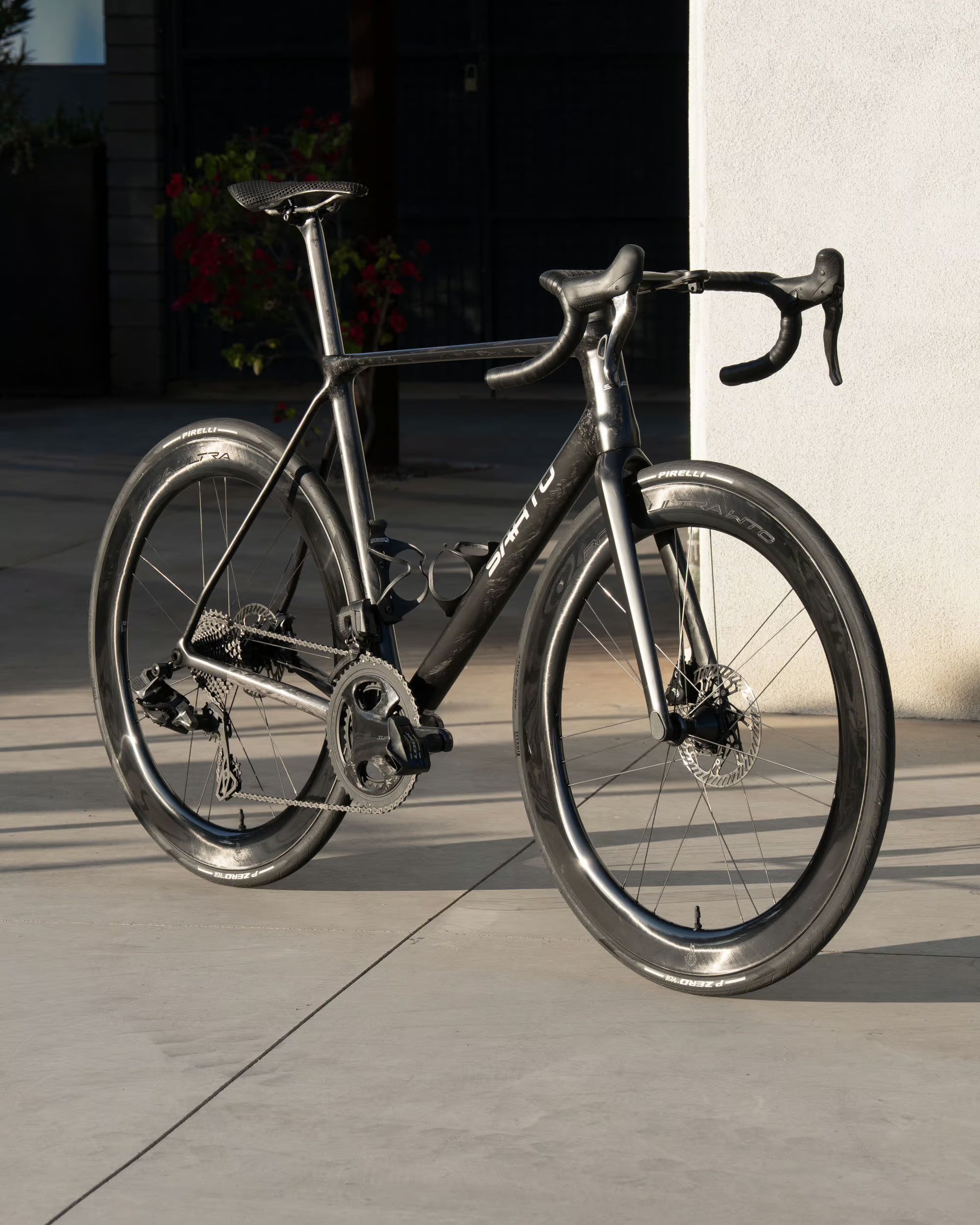
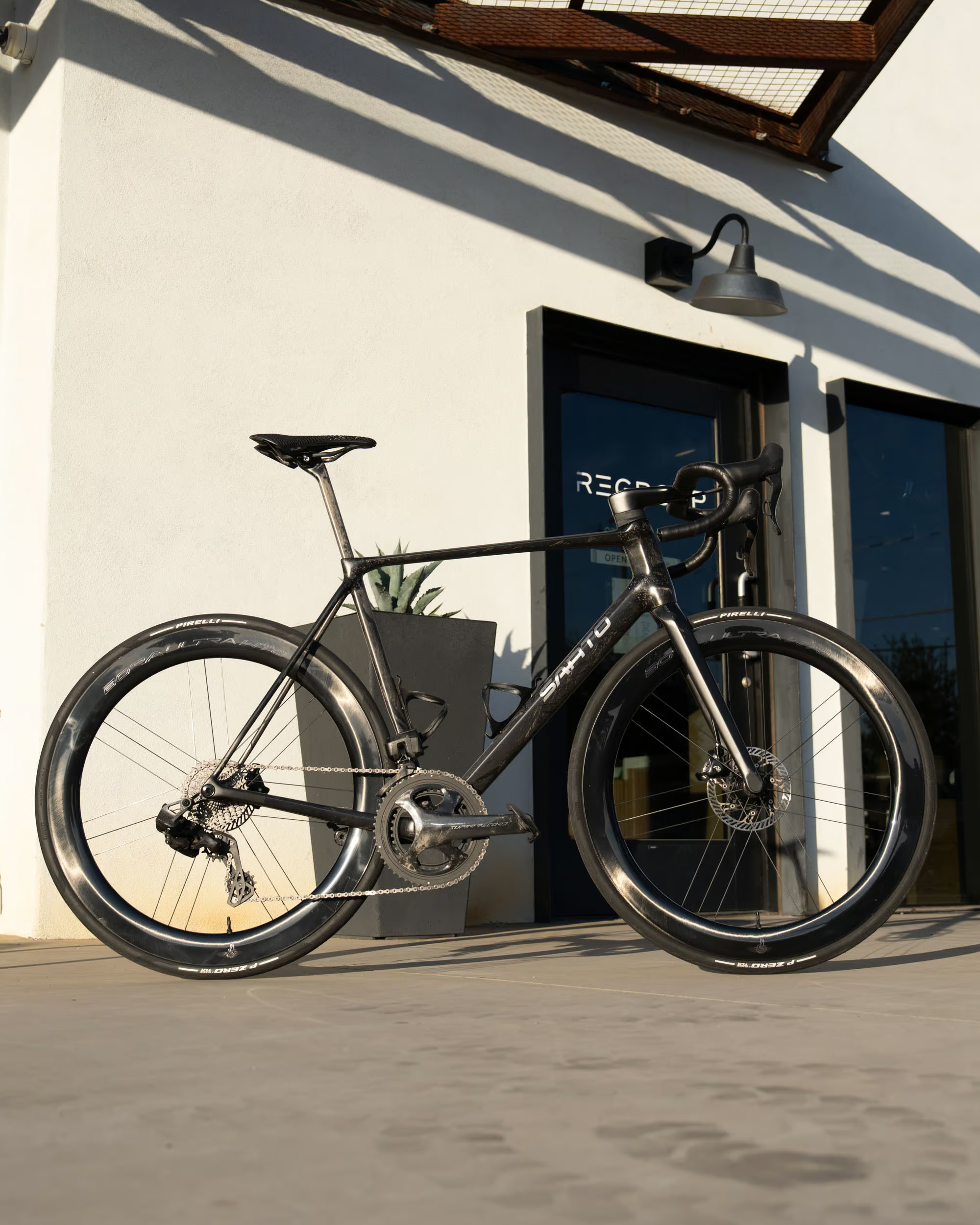
The Sarto Cima Road Bike, handmade in Venice, Italy

WORDS

Peter Harrington

PHOTOS

Daniel Koeth

It's mid-morning in Oxford and a little later than that in Venice, and Enrico Sarto is on my screen looking as jet-lagged as a man who has just flown home from Arizona ought to. Today, he's back in the saddle at Sarto after flying over to attend our Regroup in the Desert bike show. We do the bit about sleeping on the plane, we do the bit about the Taiwan trade show coming up at the end of March, we do the bit where I try, and fail, to say ciao in a way that sounds authentically off-hand. And then we get to the reason for our call. A bike, of course, the Cima — Sarto's new road model, successor to a frame the brand has been quietly selling to quietly devoted customers for long enough that, when Enrico told some of them that a new model was coming, a handful responded by asking to stay with the old one. That, in a sentence, tells you something about Sarto. Nobody at Venice HQ is in a rush to orphan a bike that still rides the way its owners want it to ride. The Seta Plus, Enrico confirms, isn't going away yet. It will simply, in his words, slow down. "It's what I did with the Lampo Plus," he says. "You introduce the new one, and slowly the orders from the old one stop."

So why now? The honest answer, when I push him on it, is a very Sarto answer: the Seta Plus is old. Not tired — old. And Enrico, who has been making bikes for long enough to remember when building a steel frame meant leaving three millimetres of space between the seat tube and the tyre, has a restless kind of relationship with his own catalogue. When he sees new materials on the market, he wants to use them. When he sees his competitors all converging on the same aerodynamic shape — “Everyone is using the NACA now,” he says, a little disdainfully — he wants to go the other way. And when a customer turns up at the factory and falls in love with a model that’s about to be replaced, he doesn’t want the awkward car-showroom conversation that follows.


So the Cima arrives not as a rupture but as a continuation, a refinement, a next step. It is, he tells me, a blend — a bit of Seta, a bit of Lampo, a bit of Raso. More aero than its predecessor in the head tube, the down tube, and the seat tube. Lighter than the Seta Plus and the Raso, but not by much (Sarto would still like you to sit safely on the top tube at the lights – some brands do not).

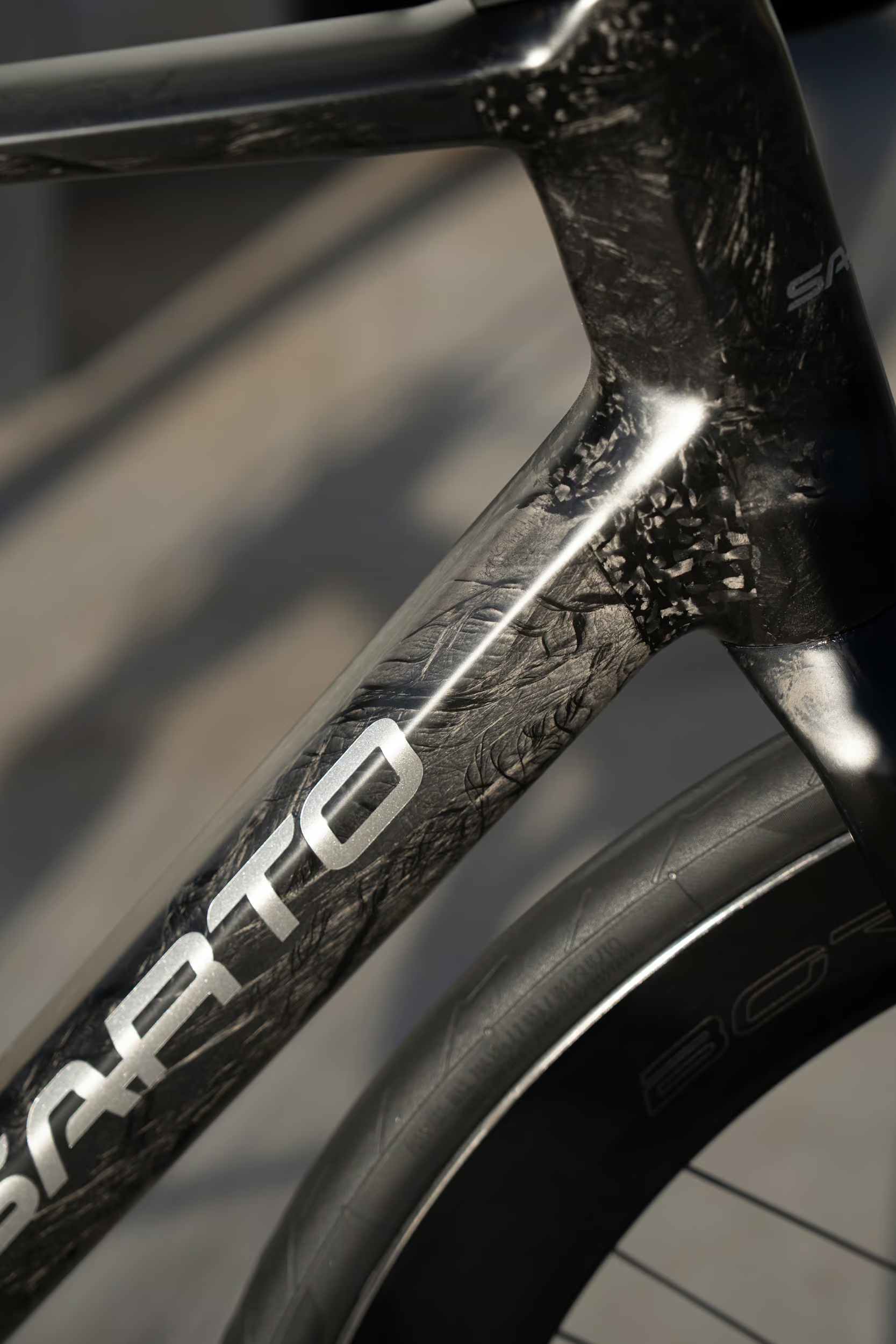
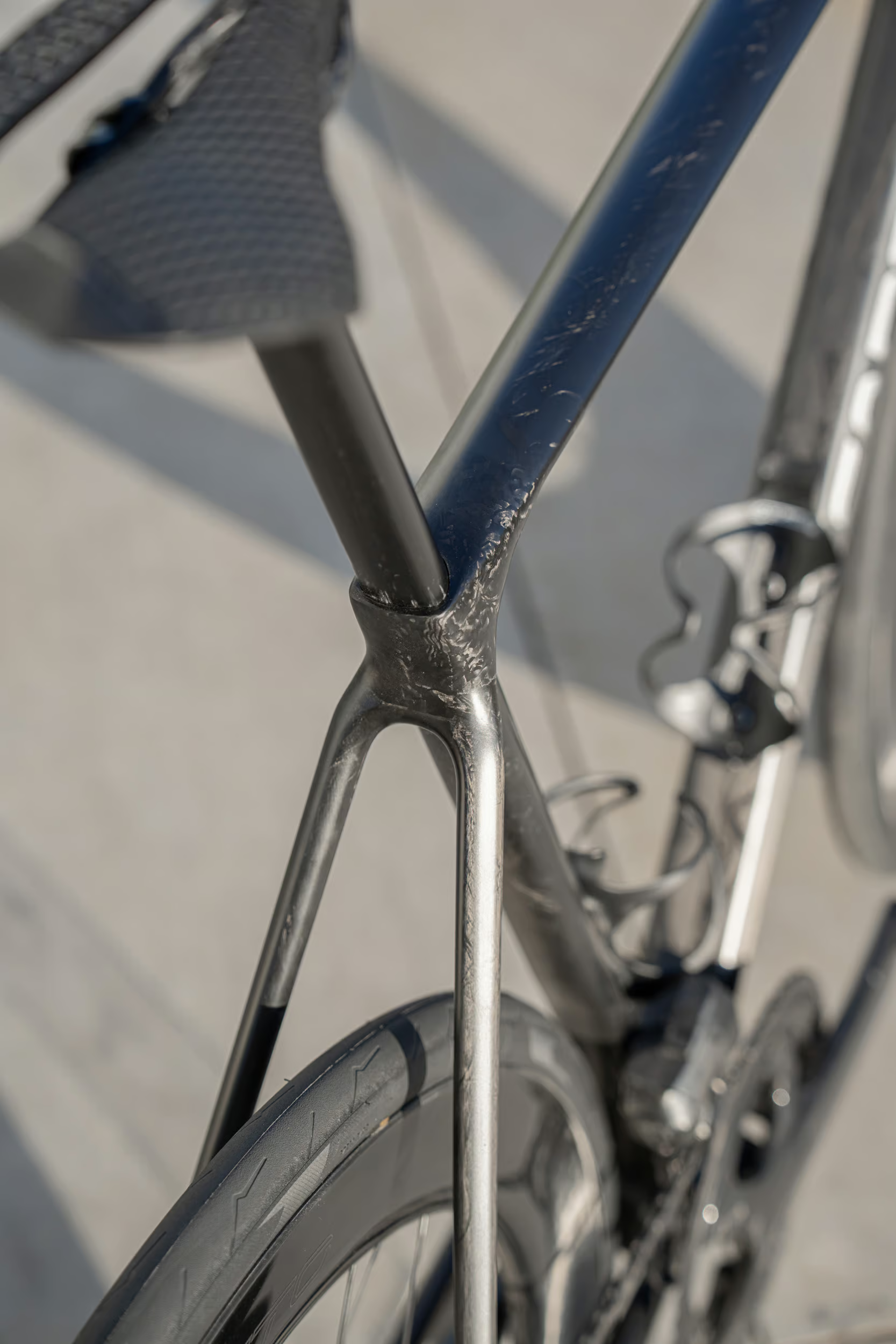
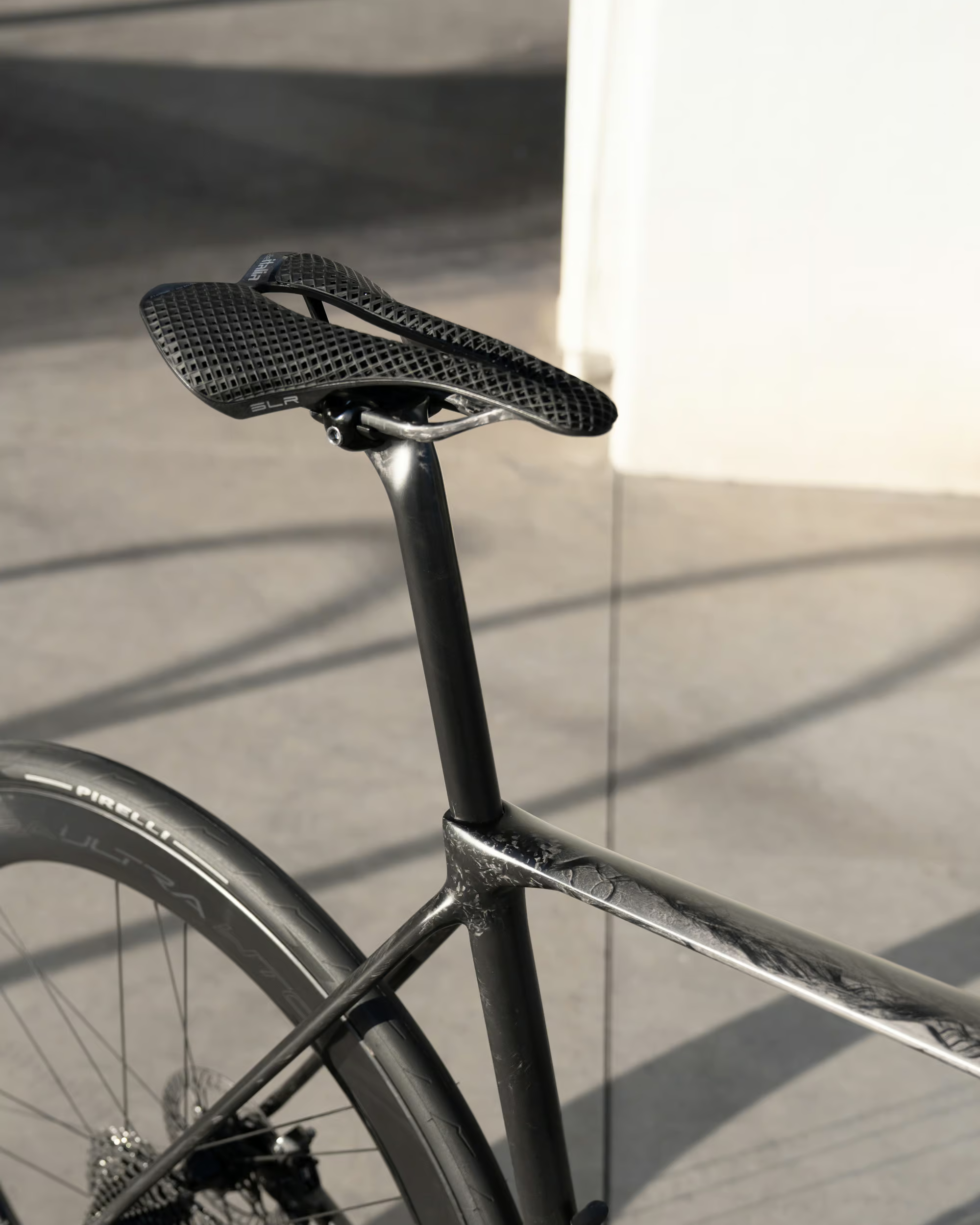
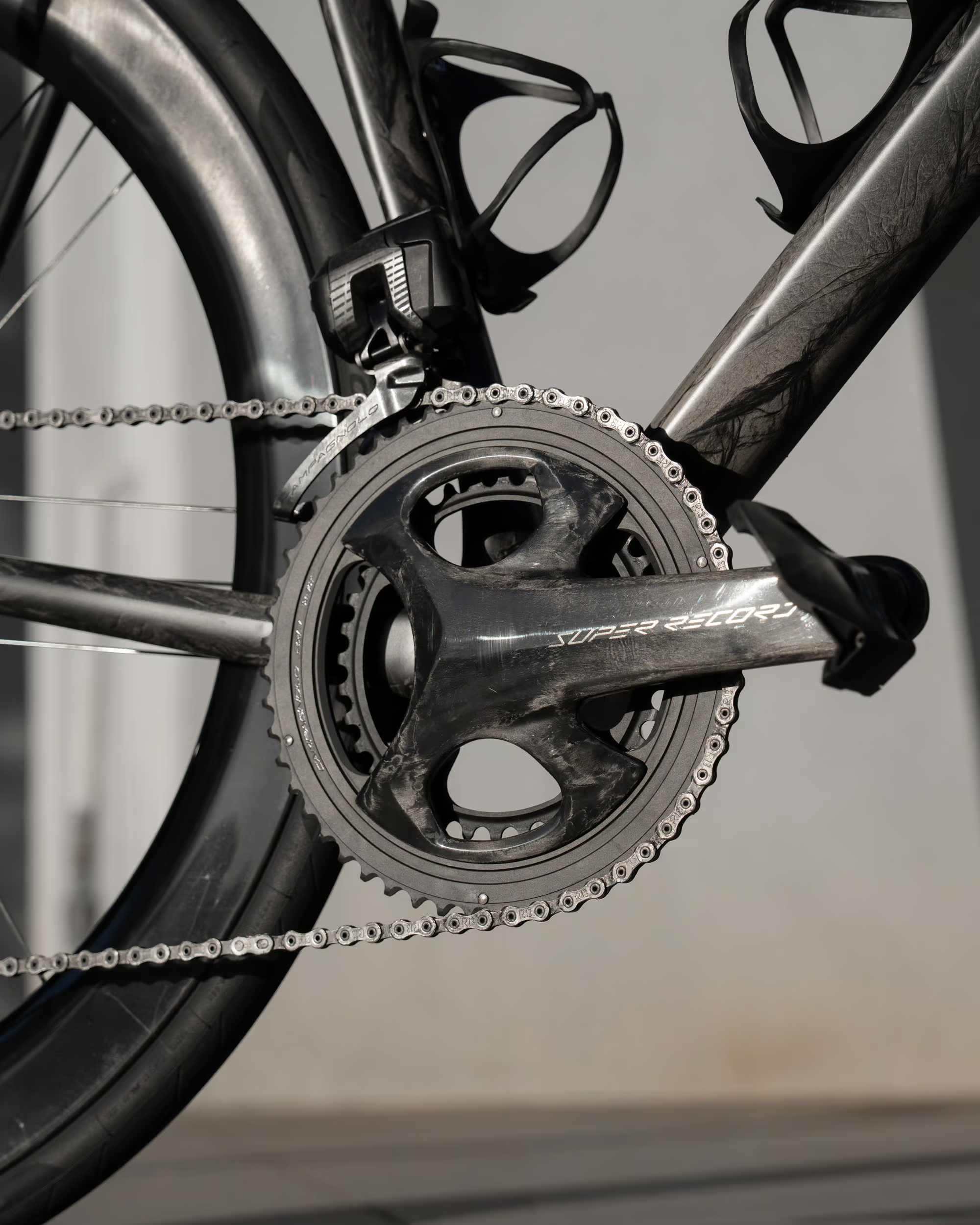
The Cima's finish is extraordinary

The character of the thing

If someone walked into the Regroup showroom tomorrow, I ask, and stood between a Raso and a Cima and said Enrico, which one should I get, what would he say? He doesn’t hesitate. “This one is more for climbing,” he says. “Lighter. More reactive when you push, when you climb.” He’s been testing it himself. He’s been handing it to other riders — some of them experienced enough to have ridden half the bikes on the market — and the feedback has been, in his understated way, pretty happy. “He’s falling in love with this bike,” Enrico says of one tester. “Made a lot of climbs. So I’m happy too.”


The reactivity comes from a combination of things, none of them revolutionary in isolation, all of them adding up. Shorter chainstays — down to 400mm, easily, thanks to a triangular section on the seat tube that gives the rear tyre room to breathe without pushing the rear axle out. Very stiff chainstays, paired with that short length. A new head tube, not integrated with the fork like the Raso’s, which Enrico insists is the right decision on weight and serviceability grounds, even if the Raso’s approach looks cleaner on paper. And a new grade of carbon which allows him to reduce tube-wall thickness by a tenth of a millimetre here, a fifteen-hundredth there. It sounds like nothing. But as Enrico points out, it adds up.

A climber's soul

The shape of a diamond

The Cima has a look. You notice it first on the head tube, which isn’t round, and you notice it again on the down tube, which isn’t round either. Both tubes have flat-ish faces that meet at soft edges — a diamond shape, Enrico calls it, and the word is deliberate. “Diamond is the inspiration,” he says. “When I started to make the drawing, the inspiration was the diamond, especially for these two tubes.” The down tube, he notes, also generates its own aerodynamic effect. But the driver, first, was aesthetic. He wanted a shape that didn’t look like a student project.


On aerodynamics in general, Enrico is refreshingly unromantic. In a wind tunnel with a rider aboard, he points out, 70% of the drag is the rider. Of the remaining 30%, the majority is the wheels. The frame is a small slice of what’s left, and its advantages only really accrue over 40 or 45 kilometres an hour, on the flat, in isolation. Most of us, most of the time, are doing none of those things. So the Cima is not an aero bike, not in the way the Raso is an aero bike. It is a road bike that has been quietly, intelligently aero-tuned where the aero-tuning doesn’t cost you anything — and left alone where it would.

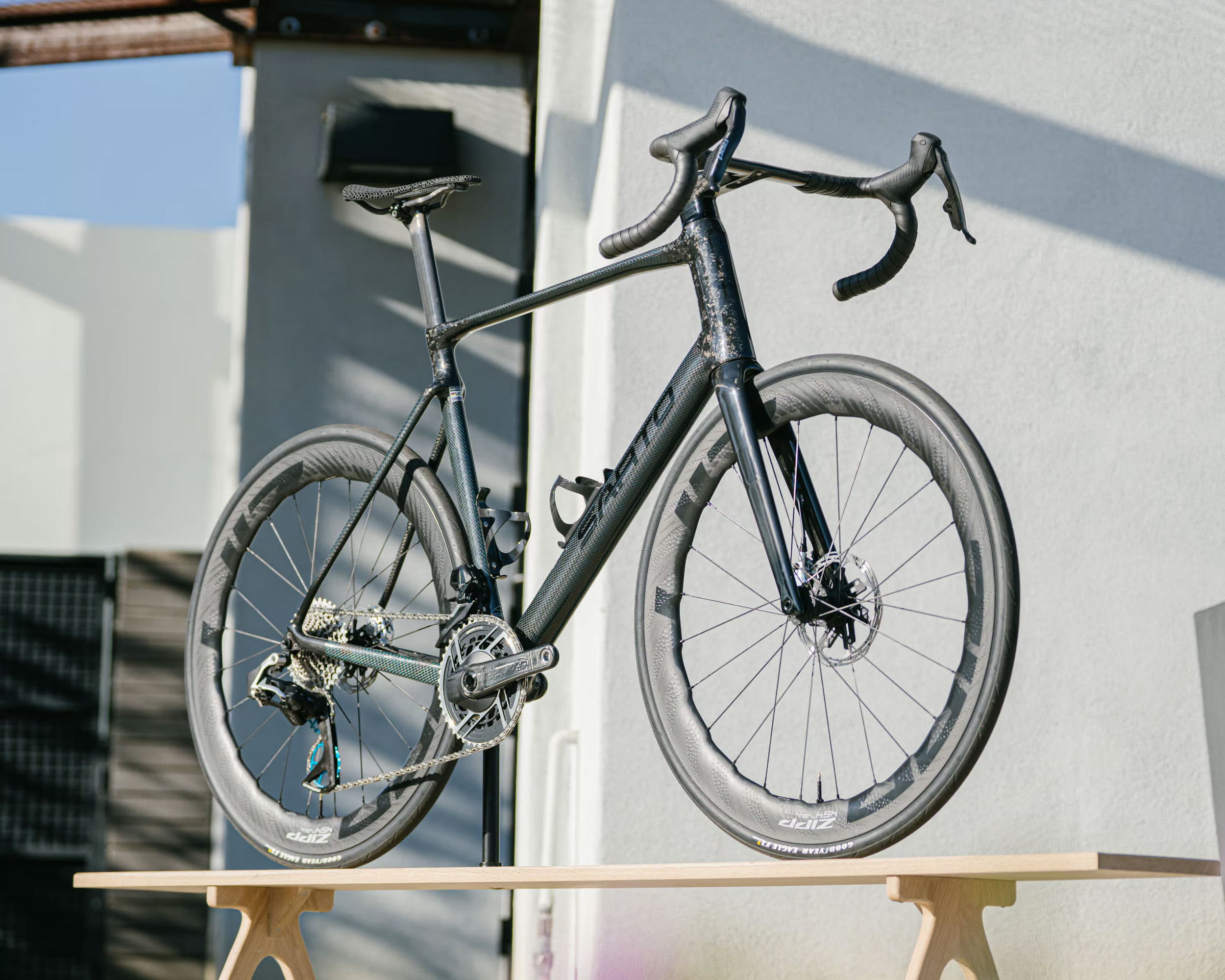
The Cima - svelte seat stays and those lines.

Why the tube-to-tube bike rides the way it does

There is a phrase I keep coming back to in conversations with Enrico, and it came up again today: feels lighter. A bike, he says, can weigh the same on a scale as another bike and still feel lighter on the road. The difference is in the handling, the reactivity, the way the frame responds when you ask something of it. And a lot of that, in his telling, comes down to construction.


The Cima, like every Sarto, is built tube-to-tube. The tubes are formed, the lugs are wrapped by hand, and the whole thing is bonded together in a way that — crucially — interrupts the path of vibration through the frame. A monocoque, he says, is a kind of continuous loop: vibration enters at the contact patch, travels up the stays, round the bottom bracket, along the top tube, and into the rider’s hands and back. A tube-to-tube frame, with lugs made by hand and saturated with a specific resin, stops those vibrations at the junctions. “They reach a point,” he says, “and they stop.”


It’s a philosophy that has currency beyond Sarto — I’ve had similar conversations with builders using metal lugs for exactly the same reason — but what’s striking is how foundational it is to Enrico’s thinking. He is, in his own words, not an engineer. He does not calculate comfort on a spreadsheet; he rides the bike and he asks his riders to ride the bike, and he compares notes. “Calculating the comfort on a frame, for me, is impossible,” he says. “You need the result from the ride.”

The details

A few other things, briefly. The Cima gets UDH — a first for Sarto on a road bike, and a nod to the reality that the standard has arrived and there’s no point pretending otherwise. It takes tyres up to 35mm, same as the Raso, which means the road-versus-all-road distinction is less about clearance than about character.


The fork is new, non-integrated, and sized at 1.5 inches rather than the 1 and 1.5 combination Enrico briefly considered — a decision made on weight grounds and a very Sarto reluctance to reinforce things that don’t need reinforcing.


Steerer tubes come long (350mm) so the frame can accommodate the kind of tall head tubes some of his bigger custom customers ask for.


The seat stays are thin and beautifully shaped — a pragmatic choice that reduces weight at a low-stress point on the frame, allows air to move between the stays and the rear wheel, and accommodates bigger rubber. Seatpost setback comes in three flavours: zero, 15mm, and 25mm, which means if a customer’s position evolves, the Cima can evolve with it.


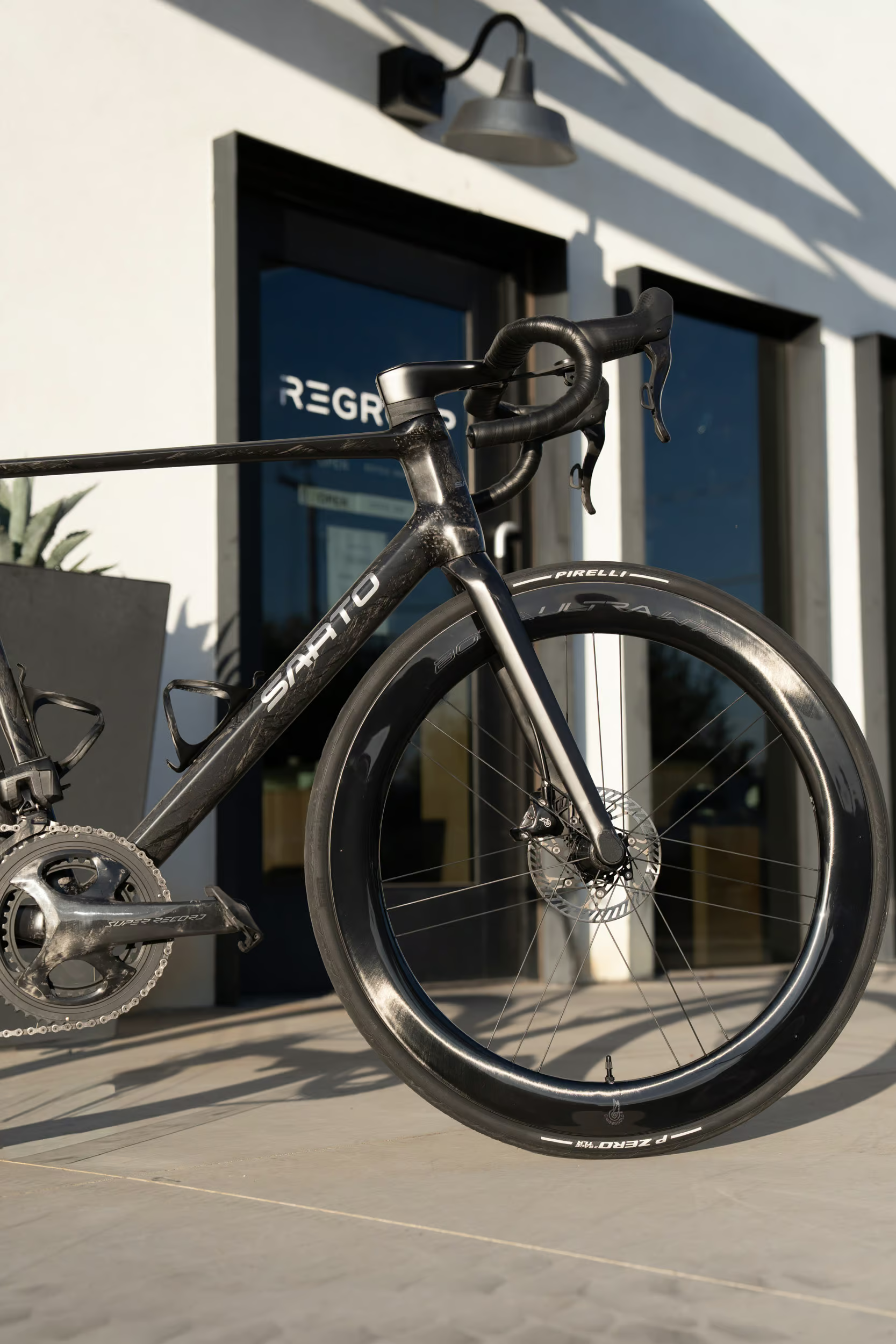
The cockpit is a new narrow Ursus bar — 38cm at the hoods as standard, with a 40cm mould on the way that Enrico has already put money into. If 42 or 44 is what you need, the headset is common enough that you can run a Raso bar, or an Enve, or a Black Inc, or whatever else. “Whatever people want,” as Enrico puts it.

The front end of the Sarto Cima

A bike that doesn't need to convince you

Towards the end of our call, I try to get Enrico to sell me the Cima, and he refuses, politely, by talking about carbon suppliers. His best pre-preg comes from Tuscany, from Milan, from the Veneto. He sits down with them and talks openly about what he’s trying to achieve, and they tell him what’s new, what’s in development, what might be worth trying. This is how a Sarto gets made — not from a PowerPoint deck, not from a marketing brief, but from a long conversation between a man who has been working with carbon fibre for twenty-five years and the people who produce it.


Which is perhaps the best way to understand the Cima. It is not, on Enrico’s own account, the lightest frame on the market. It is not, in any strict sense, an aero bike. It is not trying to be anything in particular. It is simply the next bike a small Italian factory has decided to make, because the last bike was old, and the materials are better now, and there are a few ideas the founder has been quietly turning over in his head about diamonds and chainstays and the handling of something that descends the way a Sarto should descend. “If I use my bike and I take one of these,” he says, at one point, talking about a very capable carbon superbike he tested last year, “for me it was impossible. Really dangerous.” He is laughing when he says it. But he is not really joking.


The Cima will be available at Regroup in tri-composite and unidirectional versions, with the unidirectional launching first and the tri-composite following a few months later with new colours and a new fabric pattern in place of the familiar cross. If you’d like to start the conversation, you know where to find us.