PEOPLE

Tunnel Vision

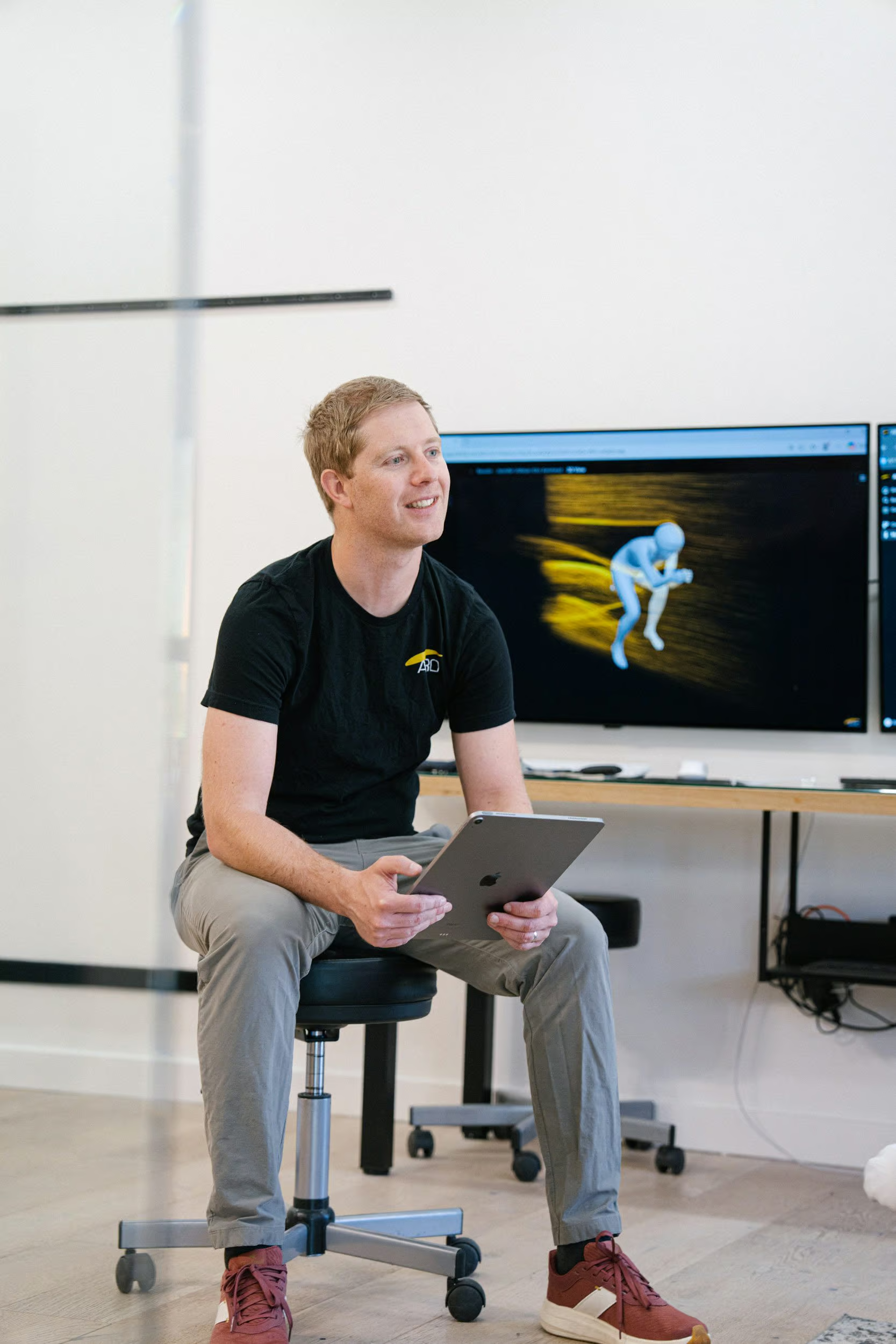
We caught up with the fast-moving Ingmar Jungnickel, the mind behind the AI app Airo, to find out how he built a wind tunnel that fits in your pocket.

We caught up with the fast-moving Ingmar Jungnickel, the mind behind the AI app Airo, to find out how he built a wind tunnel that fits in your pocket.

WORDS

Peter Harrington

PHOTOS

Daniel Koeth

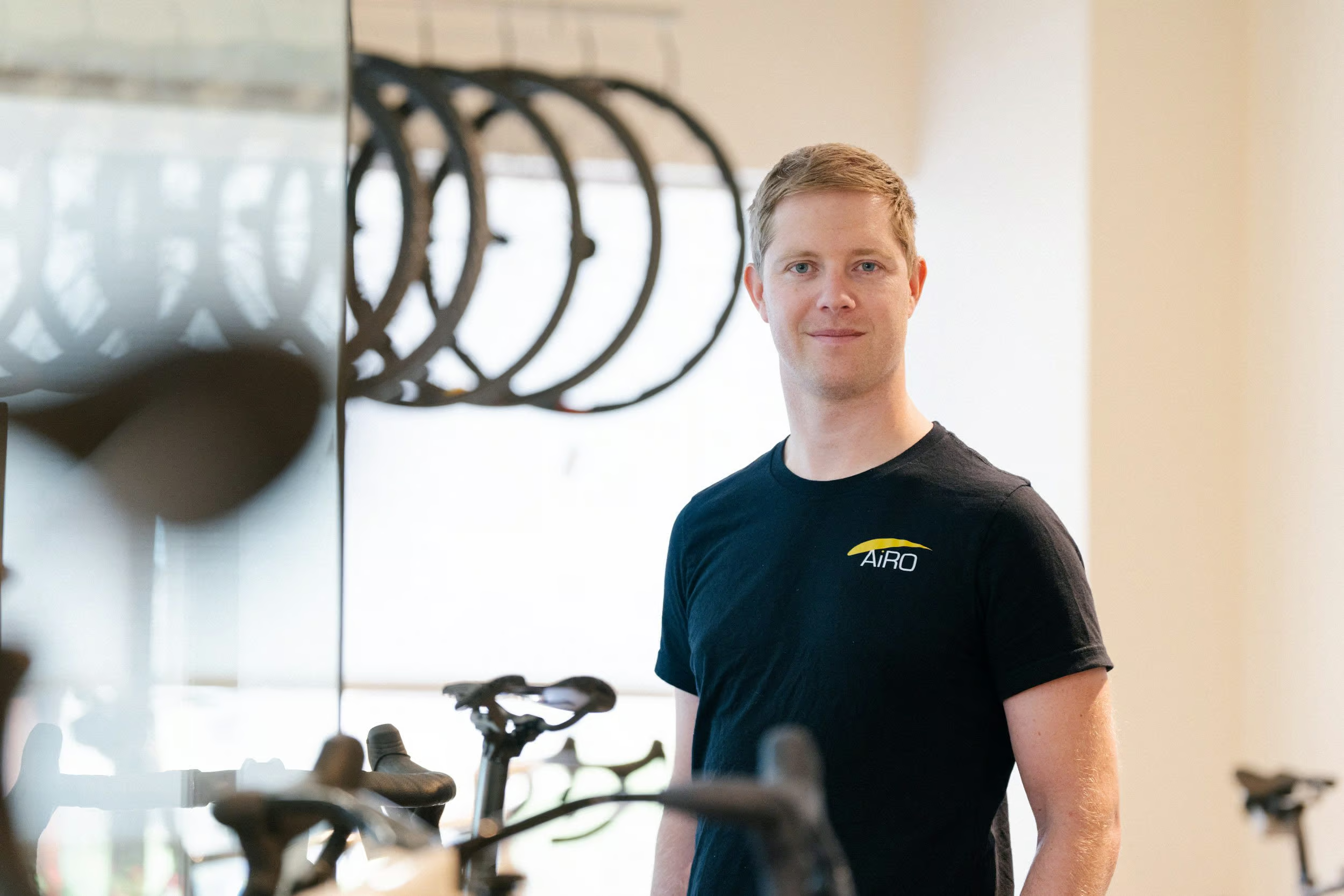
There is a moment in every serious cyclist’s life when physics becomes personal. You are crouched low on the drops, legs turning a gear you can sustain but barely, and the wind — the invisible, indifferent opponent that nobody talks about at the café stop — is stealing watts from you with every pedal stroke. You can feel it. You just can’t see it. Ingmar Jungnickel has spent the better part of fifteen years trying to make that invisible force visible. Not in the abstract, not as a textbook equation, but as something a bike fitter can hold in their hands — or, more precisely, on their screen — and use to make a rider measurably, provably faster. His company, AiRO, is the product of that obsession. It is also, depending on whom you ask, either the most significant development in cycling aerodynamics since the wind tunnel itself, or a very clever piece of software that hasn’t yet proven it can replace one. The truth, as Jungnickel would be the first to tell you, is more interesting than either extreme.

The backstory begins not with bikes but with boats. Jungnickel grew up in Germany and got into competitive sport through a friend at fourteen — kayak racing, of all things. He went to nationals, did everything wrong, finished last, and emerged with two convictions: he was done with kayaking, and he was fascinated by the science behind athletic performance. Cycling had been his cross-training. Now it became the main event.


“Everybody was talking about the weight of bikes,” he tells me over a video call from his home in the United States, with the easy cadence of someone who has told this origin story many times but hasn’t grown tired of it, “when the physics clearly showed that aerodynamics would be the biggest resistance.” He pauses. “And the rider is seventy per cent of that.”


That last observation — the one the bike industry has spent decades trying not to foreground, because you can sell a more aerodynamic frame far more easily than you can sell a more aerodynamic human — became the axis around which Jungnickel built his entire career. He decided in high school that he wanted to become a cycling aerodynamicist. He built his engineering degree around it. He reached out, while still a student, to the handful of people in the world who did this work for a living: Mark Cote at Specialized, Josh Poertner at Zipp. They all told him the same thing. “It’s a terrible idea. This doesn’t exist as a job.”


There were perhaps five people worldwide doing it at the time. Jungnickel became the sixth. Or maybe the seventh. The exact number matters less than the single-mindedness it took to get there. While still at university in Dresden, where he worked as a research assistant in the wind tunnel, he co-founded a company building software and hardware for velodrome and outdoor aero testing. They sold the technology to the German Cycling Federation. The German team got substantially faster. Specialized, who had previously been polite but uninterested, suddenly had a job offer.


“I didn’t even have an engineering degree yet,” Jungnickel says, with a kind of marvellous self-awareness that feels earned rather than performed. “There were many things going against me. But it flipped once I could prove results. We told them, ‘At the next World Cup, you will go 3.6 seconds faster.’ They went 3.3 seconds faster. From that moment on, everything fell into place.”

Jungnickel moved to the United States and joined Specialized, where he spent eight years — first doing race support for the WorldTour teams riding their bikes (Boels-Dolmans, Quick-Step, Astana, Tinkoff), then taking over the aero department and leading R&D on production bikes. The Specialized Venge, perhaps the most recognisable peak in the brand’s aero efforts of the last few years, was the first bike he led development on. It was built largely through computational fluid dynamics — computer simulation — and when they finally put it in the wind tunnel, it surpassed every target on the first run.
That experience planted a seed. If CFD could design a bike frame with that level of fidelity, what else could it simulate?


But Specialized was, by his own admission, the dream job. He’d arrived. He shut down his first company. And then, gradually, he began to feel the edges of the box. “I’d done everything I wanted to do within Specialized,” he says. “And I missed the professional sports side.”


There is something in the way Jungnickel describes his career that reminds me of what you hear from the objective best, irrespective of their fields: a restlessness that isn’t dissatisfaction but rather an inability to stop asking the next question. The wind tunnel at Specialized was ridiculous. The data was extraordinary. But the question that nagged him was whether all of that precision could be liberated from the tunnel itself — made portable, affordable, accessible to the people who needed it most and could afford it least.

"I didn’t even have an engineering degree yet. There were many things going against me. But it flipped once I could prove results. We told the German Cycling Federation, ‘At the next World Cup, you will go 3.6 seconds faster.’ They went 3.3 seconds faster. From that moment on, everything fell into place."

Ingmar Jungnickel, Airo

The answer came, of all places, from the ice. While still at Specialized, Jungnickel had begun consulting with U.S. Speed Skating on a voluntary basis. Speed skating translated well from cycling — same physics, no conflict of interest with his employer. What started as a side project became the proving ground for everything that followed.


He built a computer model of the team pursuit that fundamentally changed how the sport is raced. The conventional wisdom had always been that skaters should take turns at the front, just as cyclists do in a paceline. Jungnickel’s model showed that three athletes staying in a tight formation and physically pushing the skater in front of them was substantially faster.


The U.S. team went from eighth in the world to first. They broke the world record. At the 2022 Beijing Olympics, every medal in the team pursuit was won using the new technique. The Dutch team — which had three individual world record holders — was the only squad that refused to adopt it. They finished fourth.
“The results are hard to argue against,” Jungnickel says, with the measured cadence of an engineer who has learned that the most persuasive argument is the stopwatch.


Buoyed by those results, the U.S. Olympic Committee approached him with funding through their Tech and Innovation Grant programme. The pitch was elegant: develop a digital aerodynamic twin technology for speed skating, give Team USA a competitive edge, and retain the commercial rights in other sports. Speed skating would keep its advantage. Jungnickel could commercialise the platform in cycling and triathlon. Everyone wins.


The technology worked. At the 2026 Milan Winter Olympics, the U.S. men’s team pursuit — the squad Jungnickel had been working with, the team that had won every race that season by more than two seconds in a three-minute event, the team that held the world record — took silver, edged out by a brilliant Italian squad racing on home ice. It was a reminder that sport is not a controlled experiment. But the trajectory was unmistakable: from eighth in the world to the Olympic podium, powered in part by software that could see what the naked eye could not.


If the speed skating story is about what AiRO can do, the story of Jungnickel’s first company — the one he shut down when he joined Specialized — is about why it nearly didn’t happen at all.


That earlier venture had been technically excellent. They measured tire temperatures. They had banks of sensors. The accuracy was superb. And it failed, completely, to find a market beyond national cycling federations. “It failed not because of accuracy,” Jungnickel says. “It failed because of complexity and cost.”


This is the sentence that, if you listen closely enough, contains the entire philosophy behind AiRO. The young engineer had believed that the path to making people faster was maximum precision. The older, wiser engineer learned that the path to making people faster was maximum practicality. The tool doesn’t need to be perfectly accurate. It needs to be accurate enough, fast enough, and affordable enough — and then, crucially, it needs to be used.


He frames this as a counter to the ‘marginal gains’ philosophy that has dominated professional cycling for a decade. Jungnickel calls his approach ‘Pareto Gains’: the pursuit of the big wins that come not from optimising what you already know, but from looking in entirely different places. “Small gains you find by optimising the things you already know about. Big gains you find by looking in different places. You need a tool that can be more experimental and exploratory. It doesn’t actually need to be as accurate as people think.”


This is a provocative claim in a sport obsessed with marginal improvements. It is also, when you think about it, obviously true. An average AiRO aero fit saves twenty-six watts. That is more power saved in a single session than most riders gain through training in an entire season.

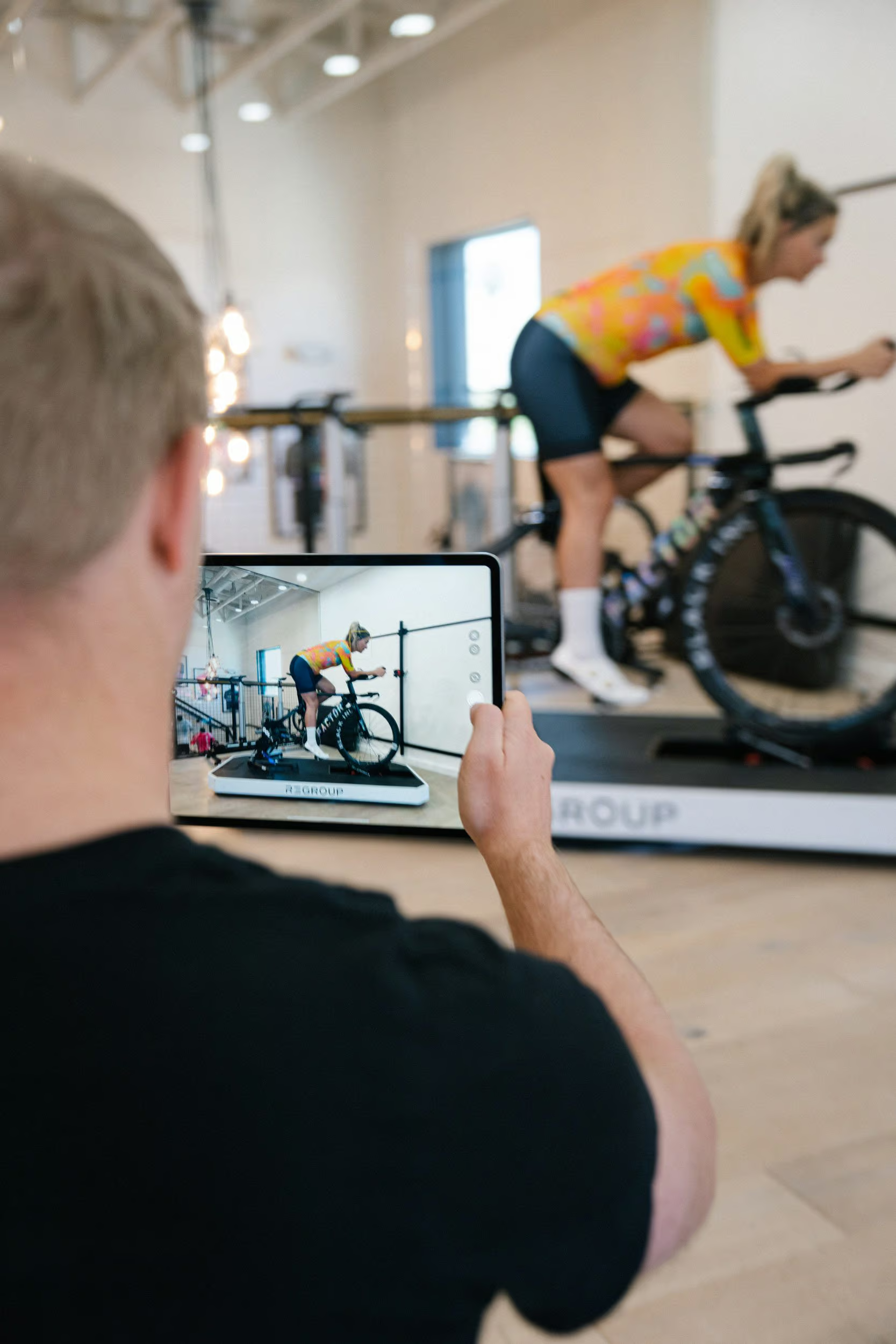
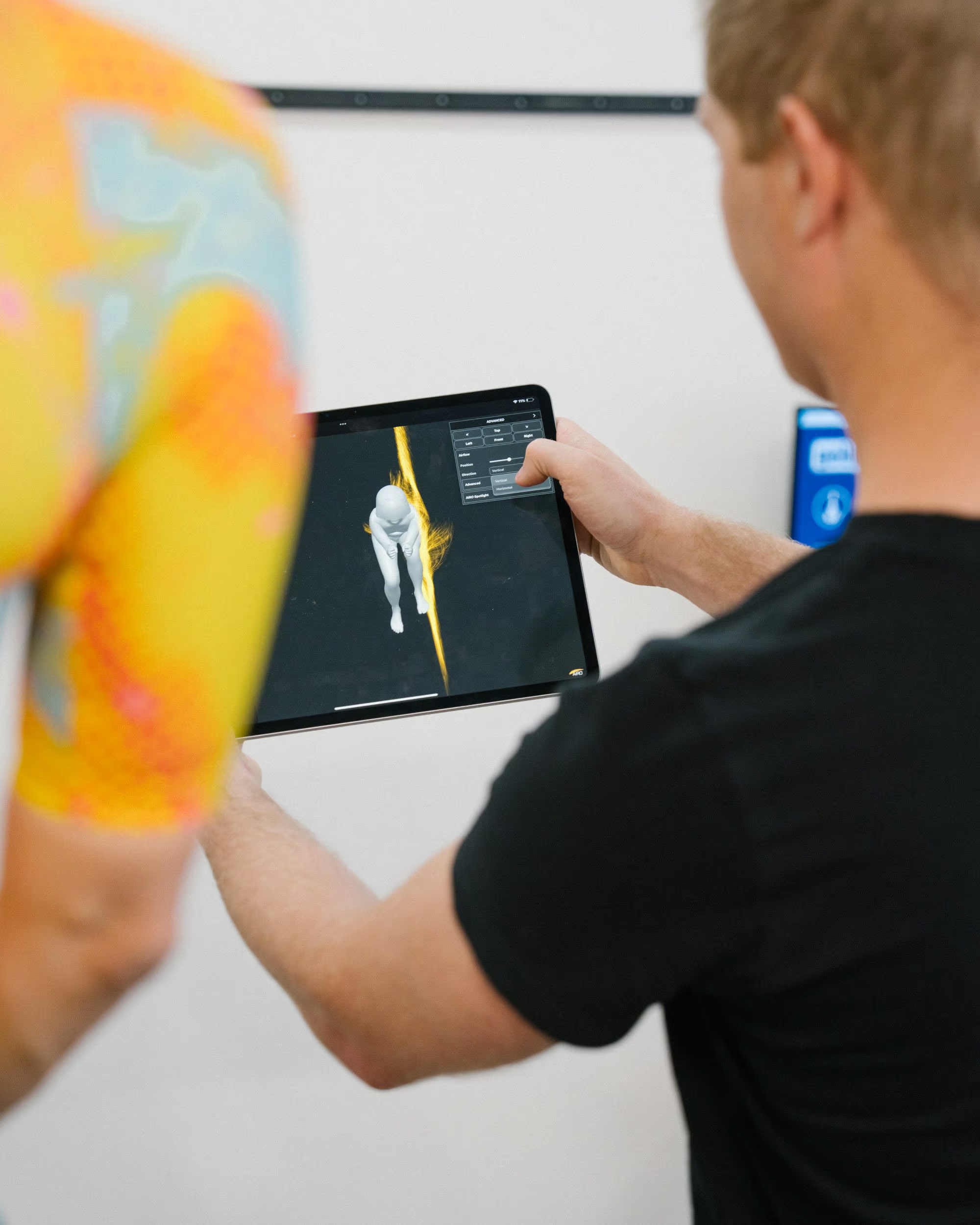
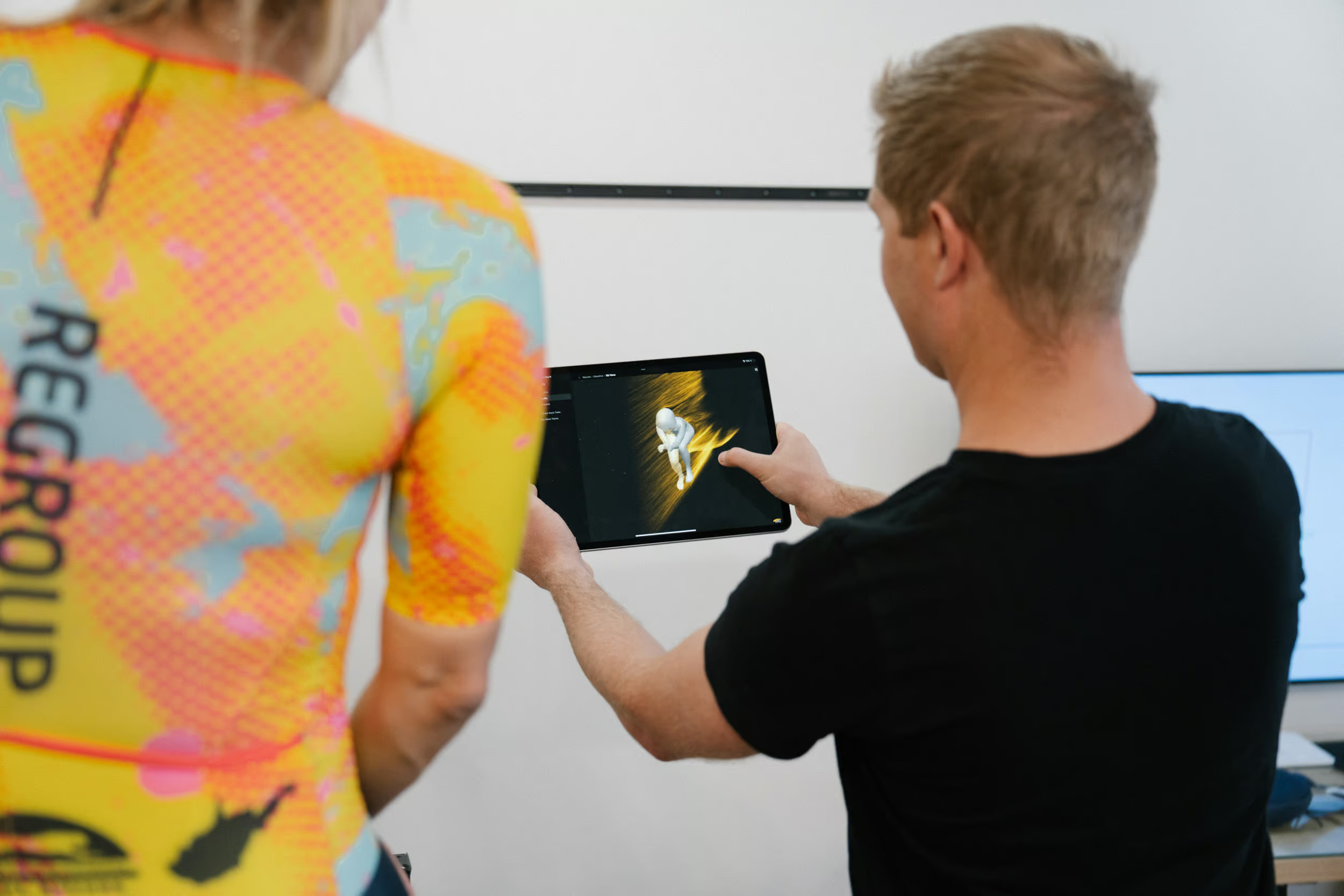
Ingmar from Airo capturing another 'wind tunnel in your pocket' at Regroup.

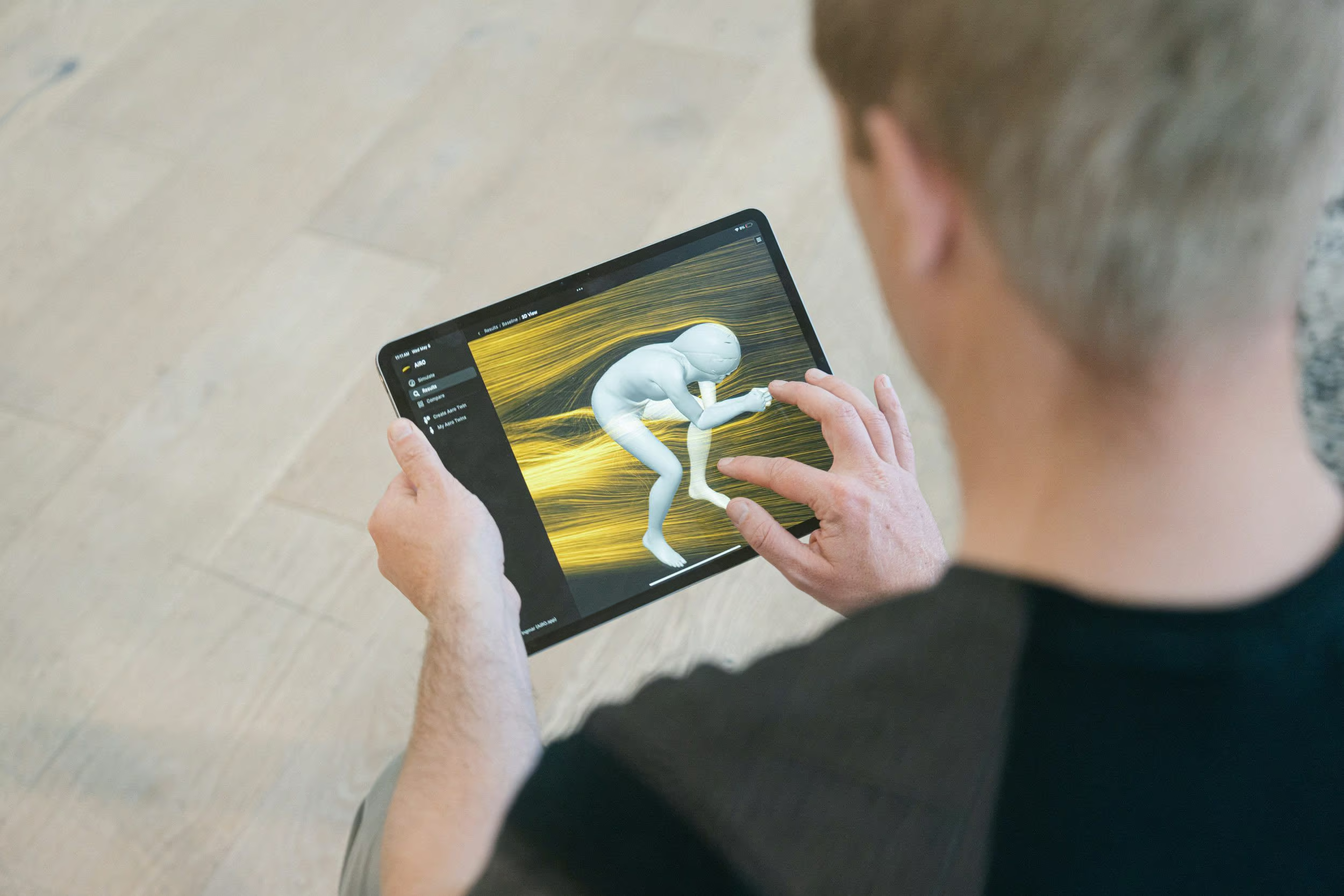
The technical breakthrough at AiRO’s core is what Jungnickel calls a parametric human model: an adjustable digital person whose proportions can be tuned across hundreds of variables — height, weight, limb length, bicep diameter, calf definition — until it matches the real rider with sufficient fidelity to produce meaningful aerodynamic data.

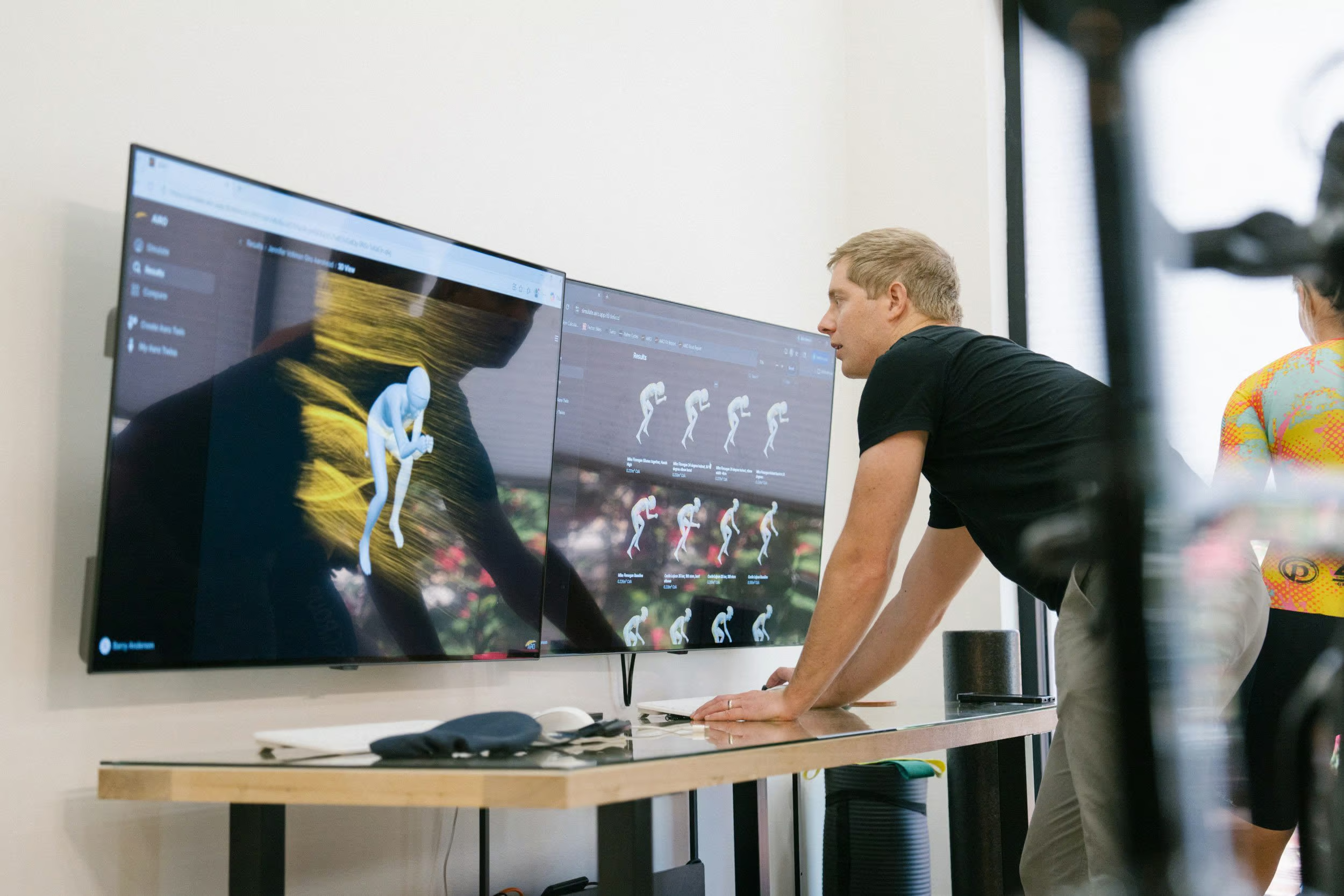
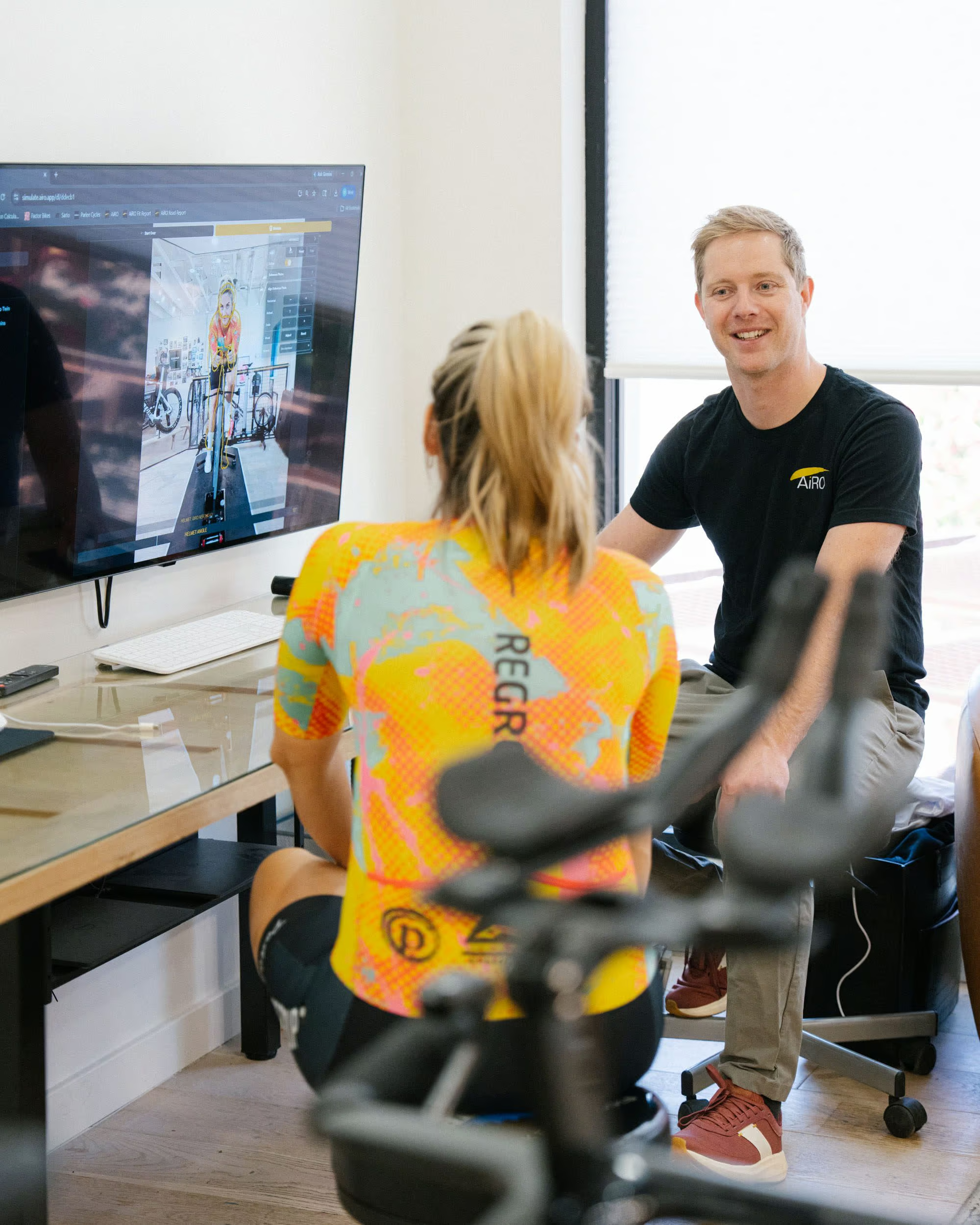
The process is disarmingly simple for the fitter. Take a photo of the client. Enter their height and weight. AiRO’s AI engine fits the 3D model to the rider automatically in twelve minutes. The result is what Jungnickel refers to as a Digital Aero Twin: a virtual you, sitting perfectly still in a virtual space, ready to be blown by virtual wind.


Sitting pretty, perfectly still matters more than you might think. In traditional wind tunnel testing, the single largest source of error is not the tunnel itself — it is the rider’s inability to hold a position with perfect repeatability. You fidget. You shift. Your head drops a centimetre. AiRO’s digital twin does not budge. Its repeatability is, by definition, perfect. CFD has its own challenges, but the one that plagues physical testing simply does not exist in the digital space.


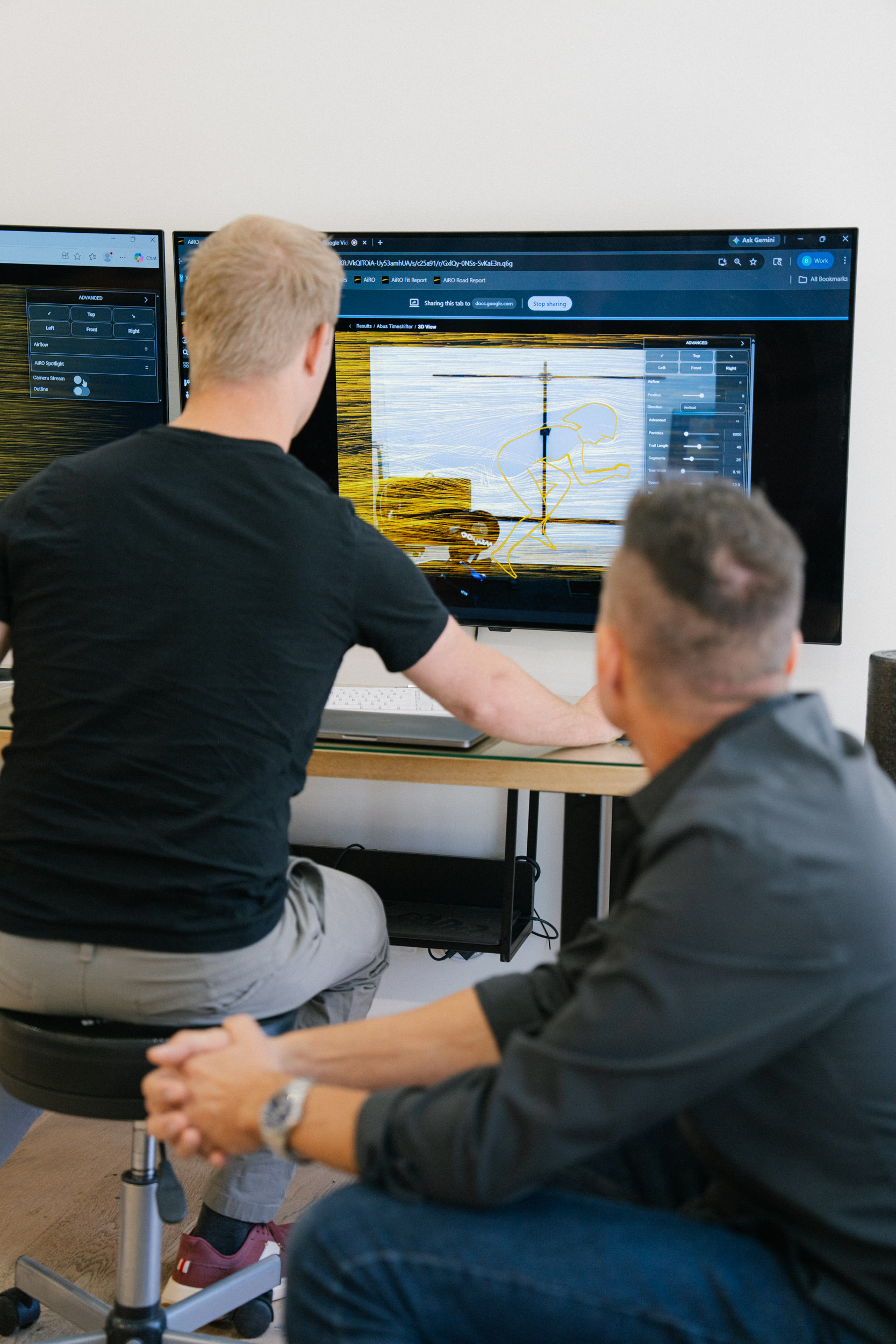
The fitter then uses sliders to recreate the client’s real-world position, overlaying an image for reference. Each simulation runs through AiRO’s cloud-based supercomputers — 192-core machines running academia-grade computational fluid dynamics — and returns results in seven minutes. A typical session tests ten positions. The whole aero assessment fits inside a single hour. The cost is more than ninety per cent less than wind tunnel testing.


Crucially, AiRO does not tell the fitter what position is ‘best.’ It simply reports whether a given position produces higher or lower drag. The interpretation, the holistic judgment about what a rider can sustain, what their injury history permits, what their event demands — all of that remains with the fitter. “We offer one ingredient,” Jungnickel says, “and we try to offer that ingredient really well. It’s on the fitter to bring all the other ingredients and put this together into a holistically good position.”


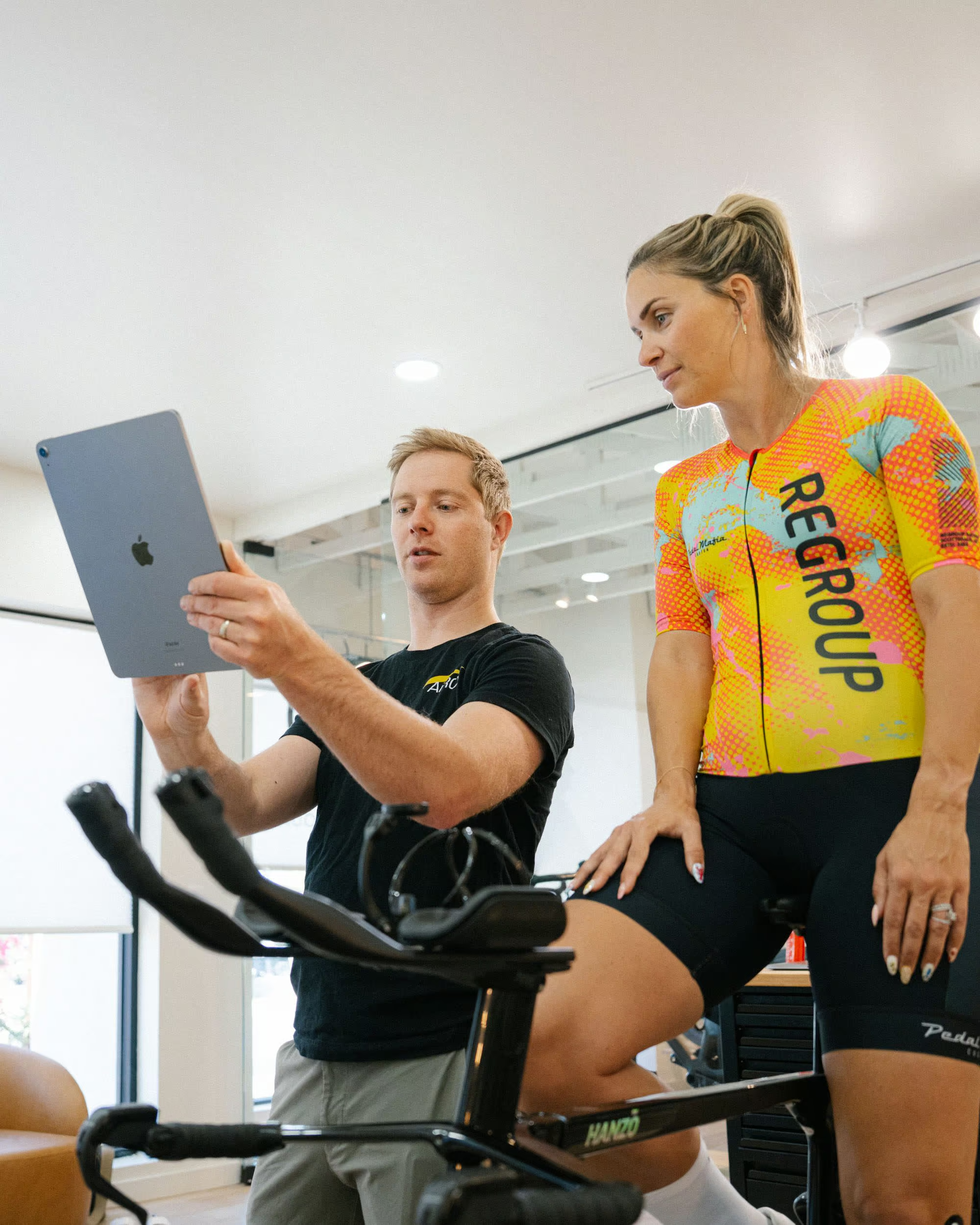
This philosophy — that AiRO is a tool, not a replacement for human expertise — is precisely why the platform is distributed exclusively through trained and certified fitters rather than sold direct to consumers. And it is why the partnership between AiRO and Barry Anderson at Regroup FIT in Tempe, Arizona, makes so much sense.


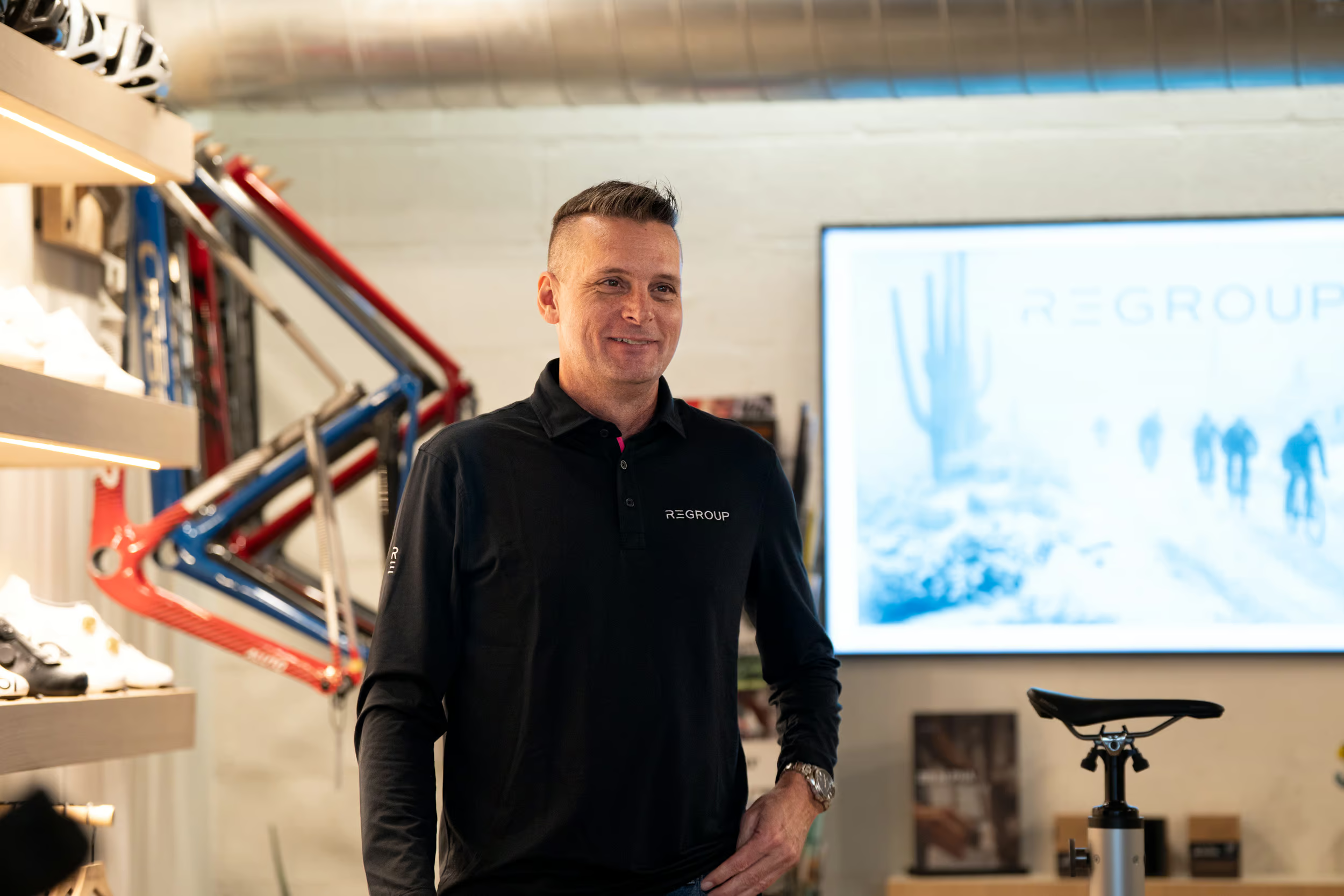
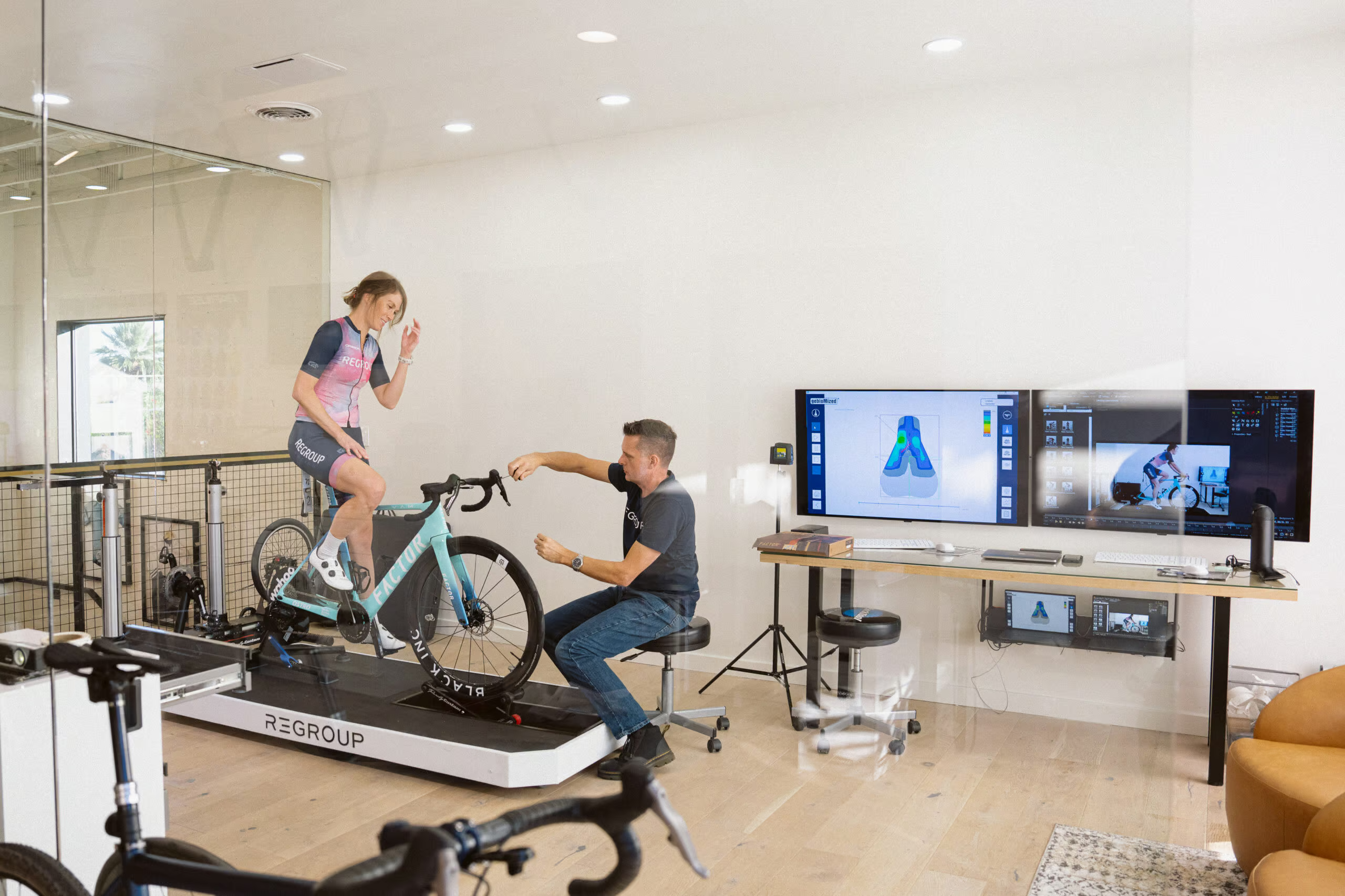
Barry is Regroup’s Director of Fit and Biomechanics, and if you have spent any time in the world of serious bike fitting, you know the name. His approach has always been holistic: power output, comfort, injury history, the rider’s ability to sustain a position over the duration of the event they’re training for. What Barry has not previously had access to, at least not without flying a client to a wind tunnel for a weekend and writing a cheque for several thousand dollars, is reliable aerodynamic data generated inside his own studio.


Jungnickel lights up when he talks about working with fitters of Barry’s caliber “Barry is a great example of these very high-end bike fitters we love to work with,” he says. “What Barry wants is to make his athletes more successful. And to do that, he has to balance many things: power, aerodynamics, comfort, the ability to hold the position, the ability to look up the road. Barry brings most of that expertise himself. What we give him is the one piece he couldn’t previously access in a practical way.”


The result, when the two disciplines converge, is something greater than either alone. Barry fits the rider to their body. AiRO fits the rider to the air. The combination — the marriage of a fitter’s decades of human intuition with an aerodynamicist’s digital precision — produces a position that is not merely comfortable, not merely powerful, but provably faster.


For anyone considering a fit at Regroup, the addition of AiRO represents exactly the kind of evolution that has always defined Barry’s practice: the relentless pursuit of every available advantage, applied with the judgment to know when to take it and when to leave it on the table.

What makes AiRO’s position in the market potentially unassailable is not the software itself — clever as it is — but what the software produces: data. At the time of our conversation, AiRO had completed roughly five thousand aerodynamic simulations of airflow around a human body. Jungnickel expects to reach a hundred thousand by the end of the year. This dataset, he says, simply does not exist anywhere else. In his entire decade of work before AiRO — the German federation, Specialized, the Olympic programme — he estimates he completed around three thousand tests.


The implications are significant. Every simulation feeds an AI model that gets better at predicting what makes riders faster. Every fitter who joins the network generates more data. The moat widens with every test. “It would be very hard for another company to come in and compete,” Jungnickel says, “because they would first have to get to a hundred thousand simulations.”


This is not the language of a cycling geek. It is the language of a founder who has spent enough time in Silicon Valley — he lived in the Bay Area during his Specialized years — to understand what a proprietary dataset means in the age of AI. AiRO is not a wrapper around someone else’s model. It owns its data. It owns its insights. And the training data for airflow around human bodies is, as Jungnickel puts it with engineer’s understatement, “such a niche that this doesn’t exist” anywhere in the big AI companies’ datasets.


The roadmap, inevitably, extends beyond position testing. Custom product recommendations — helmets, for a start — are on the horizon. The long-term vision is to do, as Jungnickel puts it, “all the things that make riders faster.” The fitter network, which reached fifty-three studios worldwide within five months of launch, is growing. And every new fitter, every new client, every new simulation adds another brick to the wall.


I ask Jungnickel, at the end of our conversation, what he would want a rider to take away from all of this. He pauses. “The biggest resistance you face on a bike is something you can’t see,” he says. “And for most people, that’s been the end of the story. You couldn’t see it, so you couldn’t do anything about it. What we’ve done is make it visible. And once you can see it, you can change it.”


It is the sort of sentence that could sit on a marketing page and sound like copy. But from a man who told the German national team how many seconds they would gain and then watched them gain those seconds, who changed how an Olympic sport is raced from a voluntary consulting gig, who built a wind tunnel that runs on a tablet and costs less than a decent set of wheels, it does not sound like copy at all.


It sounds like a promise that has already been kept.


To learn more about AiRO and aero bike fitting at Regroup, visit our FIT page or contact Barry Anderson directly to book a session.