Down the Rabbit Hole: Max's Green Tri-Composite Sarto Cima
Max's first Sarto was a happy accident. His second is a commission: a Cima in green Tri-Composite, and as far as we know the first of its kind in the US.
August 28, 2026
visibilityINTERVIEW
Max bought his first Sarto more or less by an accident that was really serendipity in disguise. His second, a green Tri-Composite Cima built to his own geometry, was a different proposition altogether — thoroughly thought out and specced down to the last detail. A week and a hundred and twenty miles in, we called to ask how it rides.
When I call Max, he's driving into the office through the tail end of a monsoon that arrived the night before and hasn't let up. It is the first week he has spent properly on his Cima. He has put a hundred and twenty miles on it. He is, it becomes clear within about a minute, smitten.
Some background, because the bike, like most bikes, makes more sense in context of what came before. Max was a mountain biker from college onwards, “kind of everywhere”, and stayed one right up until he moved to Arizona a few years ago, at which point he sold the mountain bike and bought a Specialized Tarmac SL7 almost on arrival. A big change. Then came the first dream bike, a Colnago Y1Rs, which he still owns and still loves. With reservations.
“My Y1Rs is a science project,” he says. “It changes every single week. My body changes, I lose a couple of pounds, and that bike kicks my ass.” When it clicks — when rider and bike line up in perfect sync — “it is such a special bike. When you want to lay it down, it’s a rocket ship.” And when it doesn’t click? “It’s a miserable bike to ride.”
He met Adam from Regroup about a month after buying the Colnago, looking for a fit that would make the science project behave. He had never so much as brushed against the custom-bike world. Then one day he brought the Y1Rs in for another session, just before Regroup in the Desert, and the entire Sarto team happened to be in the shop. It was the first time he saw the Cima.
“Adam was just becoming a friend,” Max says. “Maybe a little bit of an enemy, because I knew it was going to be a dangerous relationship for me. He likes the finer things in life, like I do.”
A sensible person would have gone home and thought about it. Max went home and did some research, decided that before another road bike he really ought to own a gravel bike — Adam runs all these great gravel rides with the Regroup team — and started eyeing Sarto’s Raso Gravel in its launch colors: black, gold and copper, a scheme he found faintly automotive. “Coincidentally, Adam caught me after a few drinks, in a very vulnerable position,” he says. “Two days later I was picking up my Raso.”
That was the bike that told him what he’d been missing. “It was the first time I got a bike, looked at it and thought: there are levels to this game. The raw carbon, all the joints. I don’t know what it is. That bike just makes me smile. It’s so smooth, it’s fun to ride, it’s easy.”
By April, he and Adam were talking about the Cima.
The brief this time was more than happenchance. Max wanted something that was his, and to understand what he means by that it helps to know he is a gearhead of the four-wheeled kind, too. He loves old 911s. There is a resto-modded ’67 fastback in the family. “Cars with character,” he says. “I wanted a bike that had its own DNA. Its own specialness.”
He also missed having a single-quiver bike, the one that does it all. So the Cima was specified around a very particular picture: winter in Arizona, sixty, seventy, eighty-mile rides, a group heading off all over the place, and a bike that would be “badass in every single thing it does”.
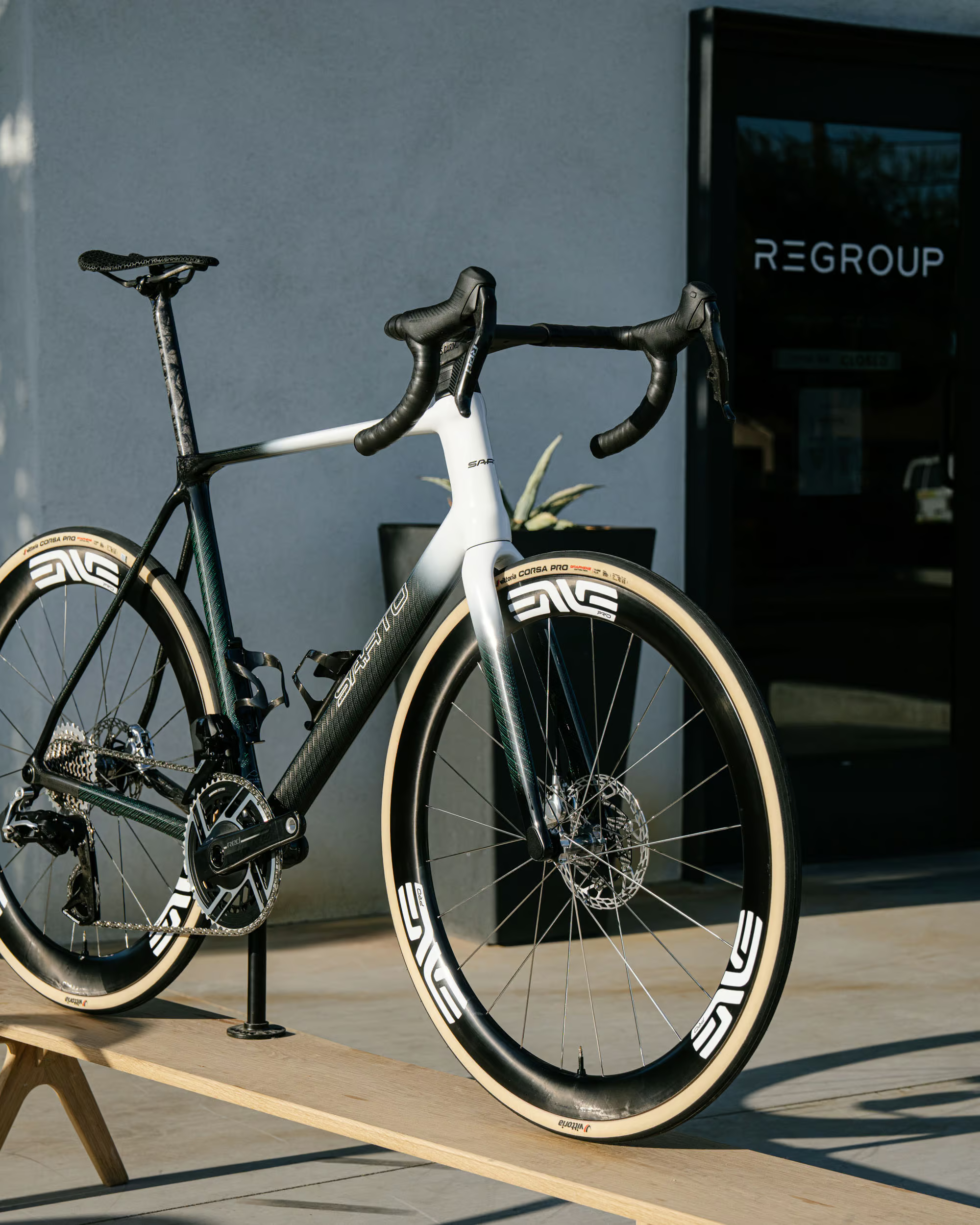
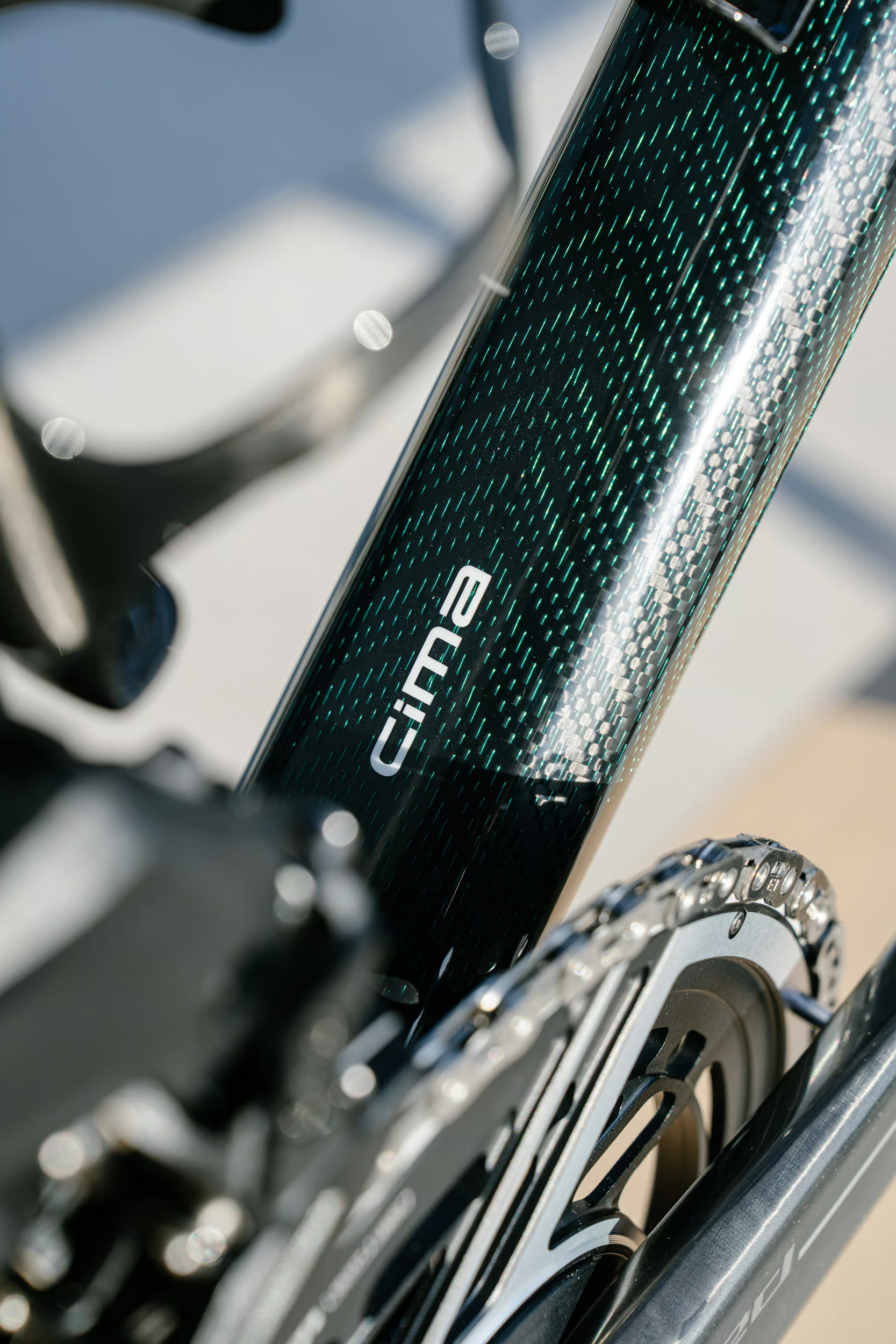
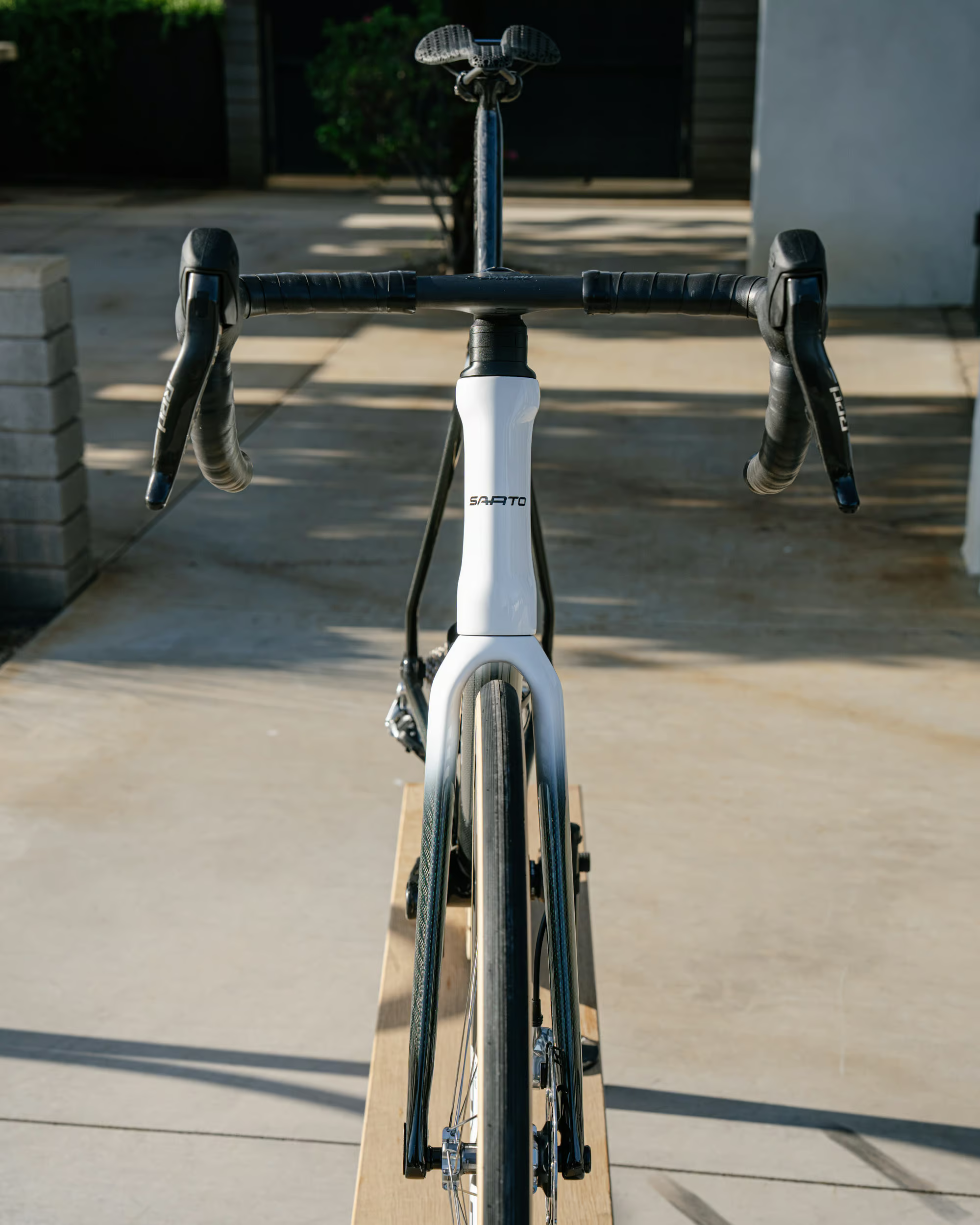
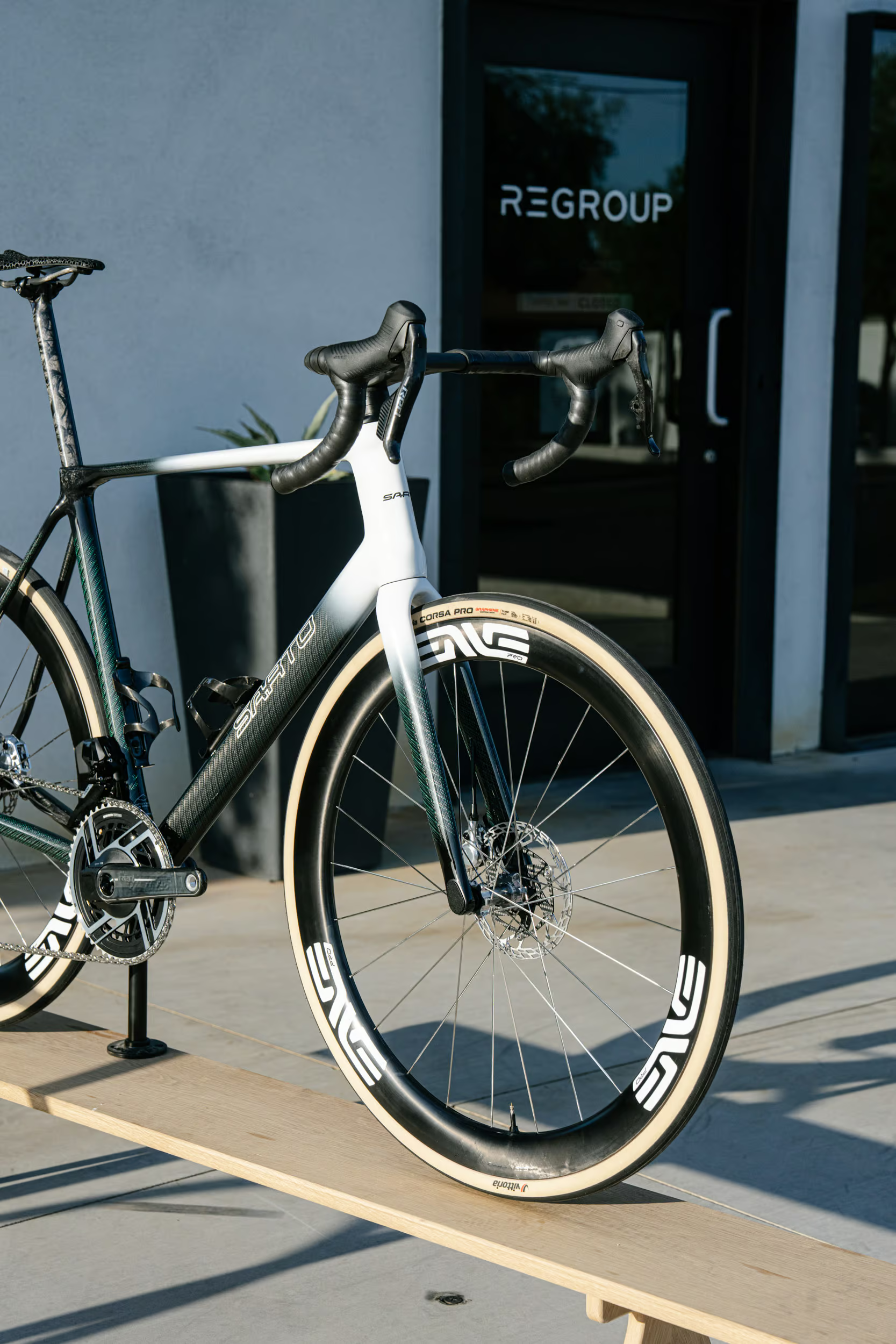
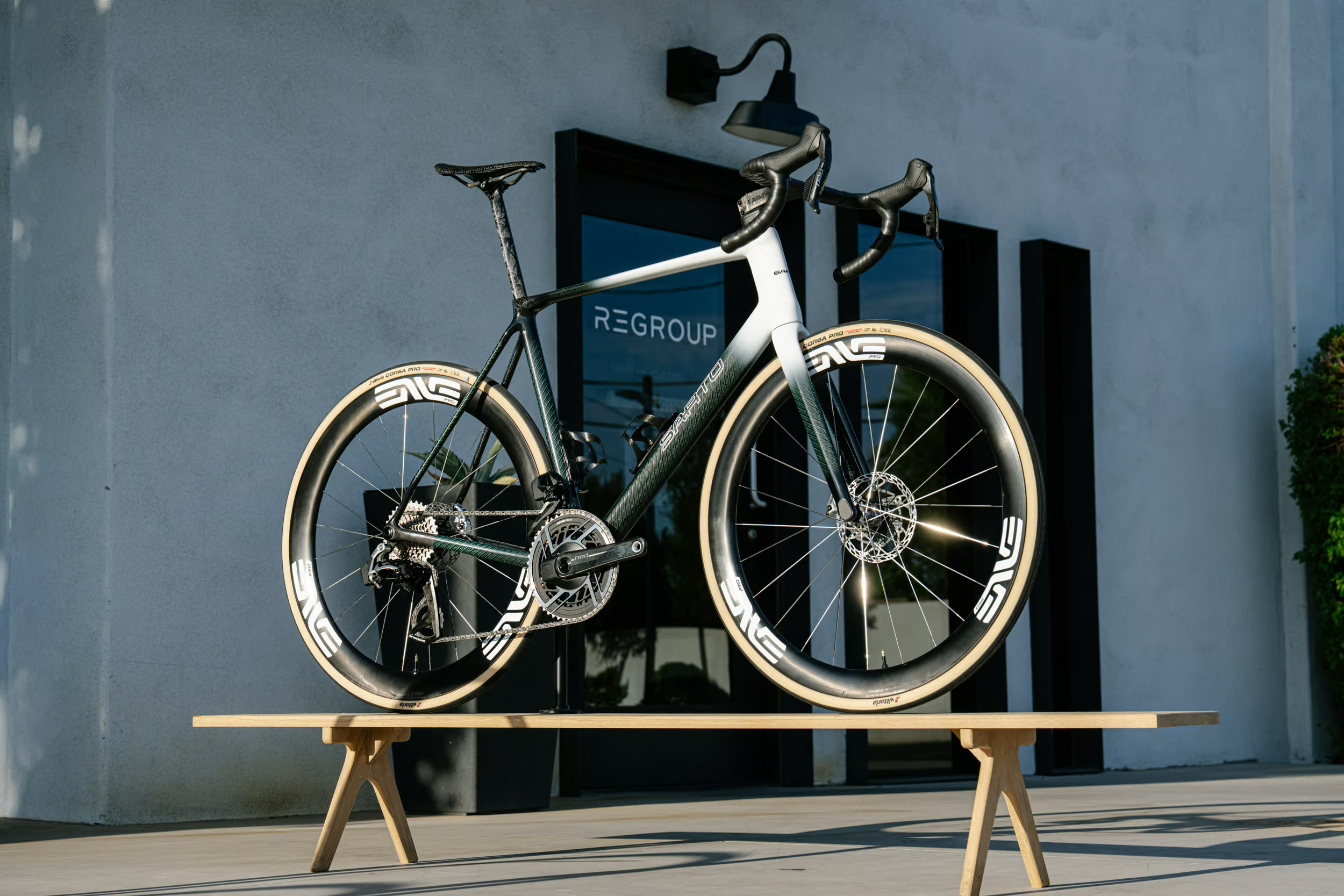
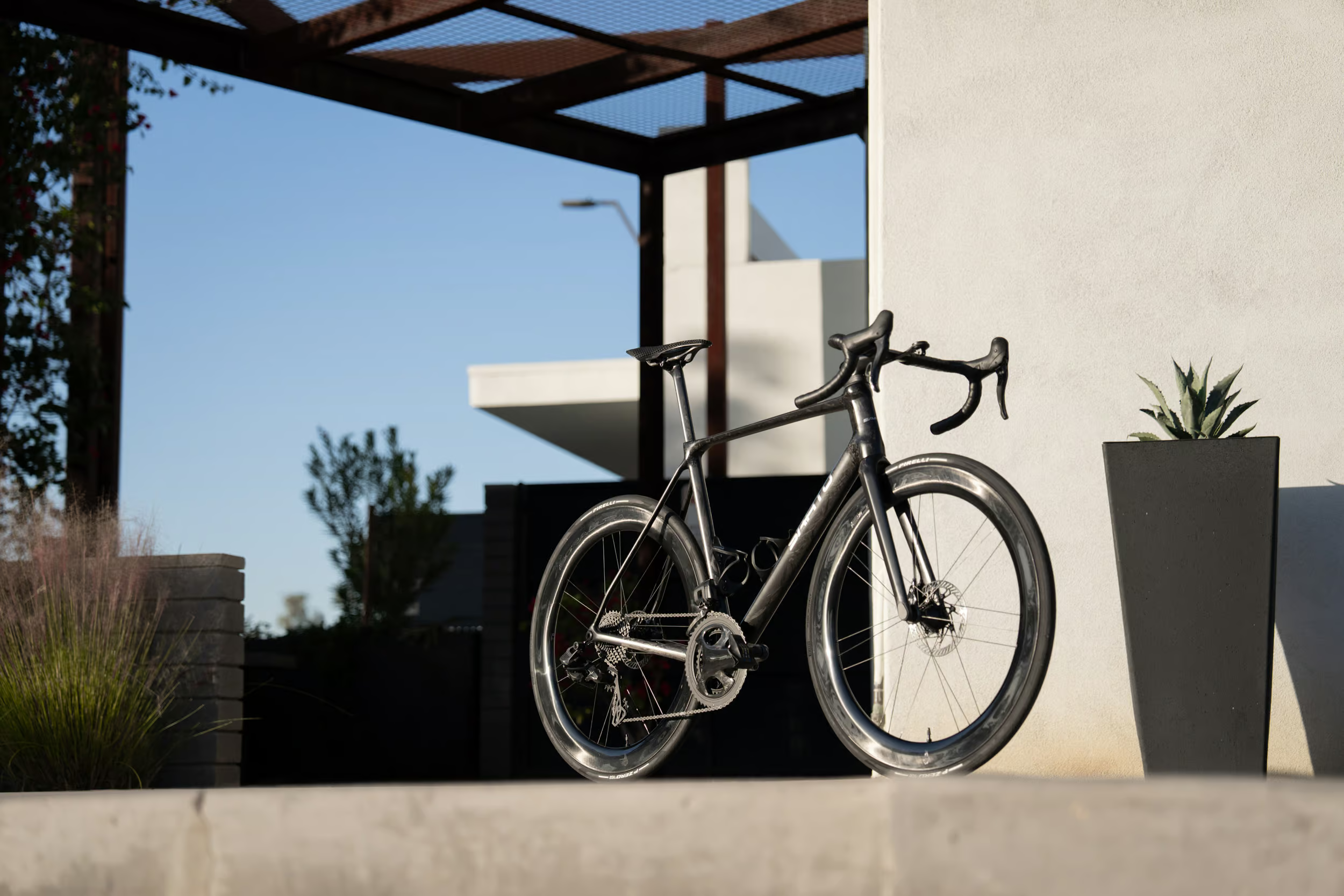
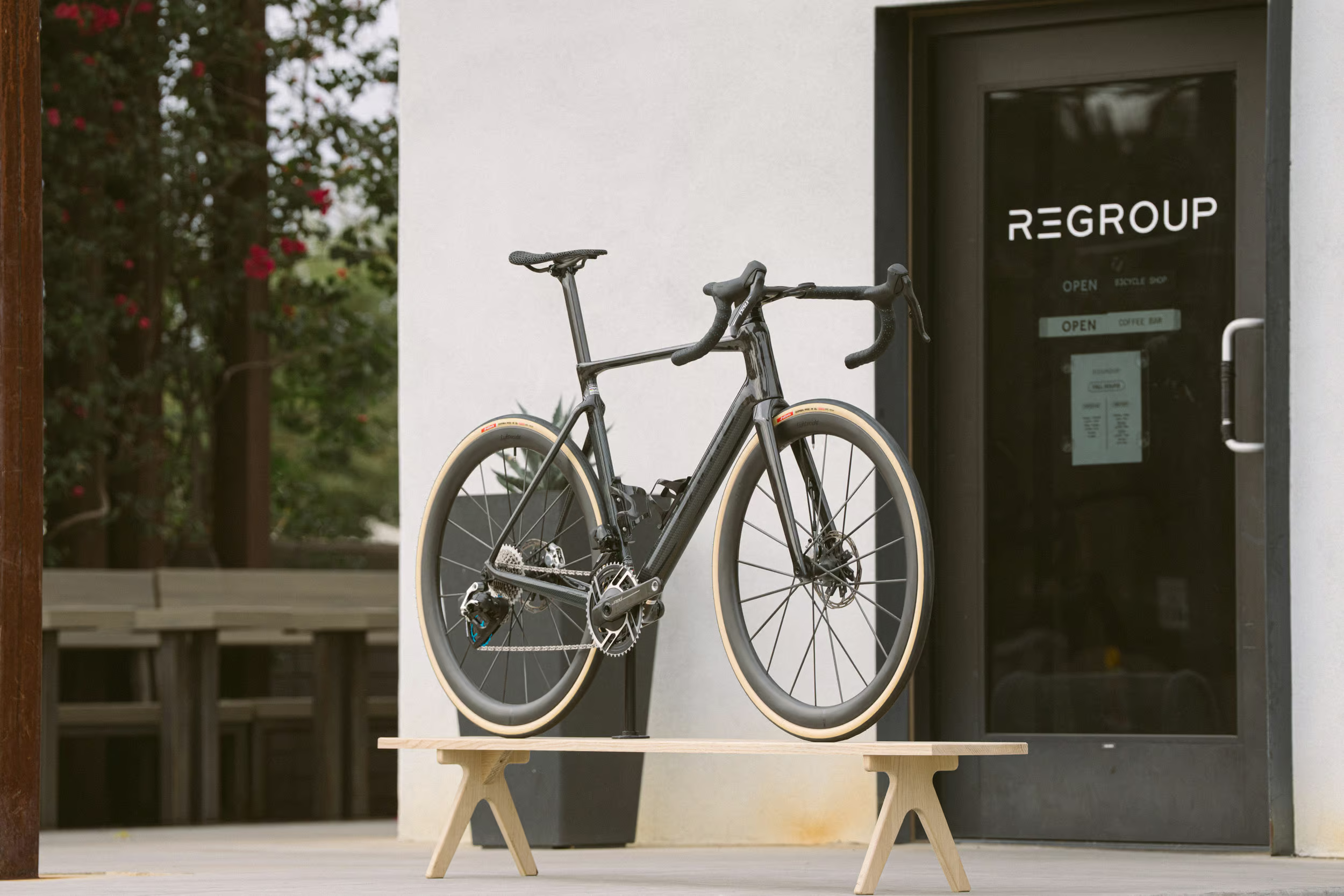
Sarto’s Tri-Composite layup was the starting point — colored filaments woven through the carbon itself, in green — and a full custom build followed. CeramicSpeed bottom bracket and OSPW. SRAM Red AXS. Carbon-Ti rotors. Darimo cockpit, ENVE wheels, gumwall Vittorias. (The complete sheet is in our build post.) “Everything I could have wanted to do to a bike is done on this one,” he says. He did draw one line. He had toyed with SRM cranks in place of the SRAM ones, then thought about parts availability and what would happen if anything broke. “I had to say no at some point.”
Which brings us to the first week. “Last week I put about 120 miles on the bike. I called Adam on Saturday, in the middle of the ride, smiling ear to ear. Because it’s just so damn fun.”
The word he keeps coming back to is smooth. “I hit a bump on my Colnago and my skull jiggles. The Cima is just so smooth. And it’s interesting, because it’s a fast bike. It’s not a slouch. It’s a quick, snappy bike that makes you smile.”
Then there is the climbing. Max is a big rider by his own description — 195 pounds and, in his words, a strong guy — and climbing was something he was decent at and quietly dreaded. “This thing just wants to go up the mountain,” he says. “It’s so quick and snappy. You can tell it just wants to go up the hill.” It is two and a half pounds lighter than the Colnago, and it is the first bike he has ever owned that was built around his geometry rather than adjusted towards it. Still plenty of drop, at his own request. “I’ve always ridden with way too much drop and broken myself into it.”
MAX
The measure of a bike, to my mind, is going up and then coming down, so I ask about the descents. Max likes very stiff bikes, and as an ex-mountain biker he knows what a bike should feel like beneath him at speed. On Saturday he hit 48 miles an hour on the Cima.
“It was so solid,” he says. “It handled speed really well, and it corners — aero bikes are notoriously precise in the corners, and this is a very stiff bike, but very forgiving at the same time.” He plays a lot of golf, and points out that forgiving and stiff are not two words you usually find in the same sentence. “Very stable on descents. Very predictable. When I hit a bump at forty, it doesn’t shake my skull. It’s not throwing you off.”
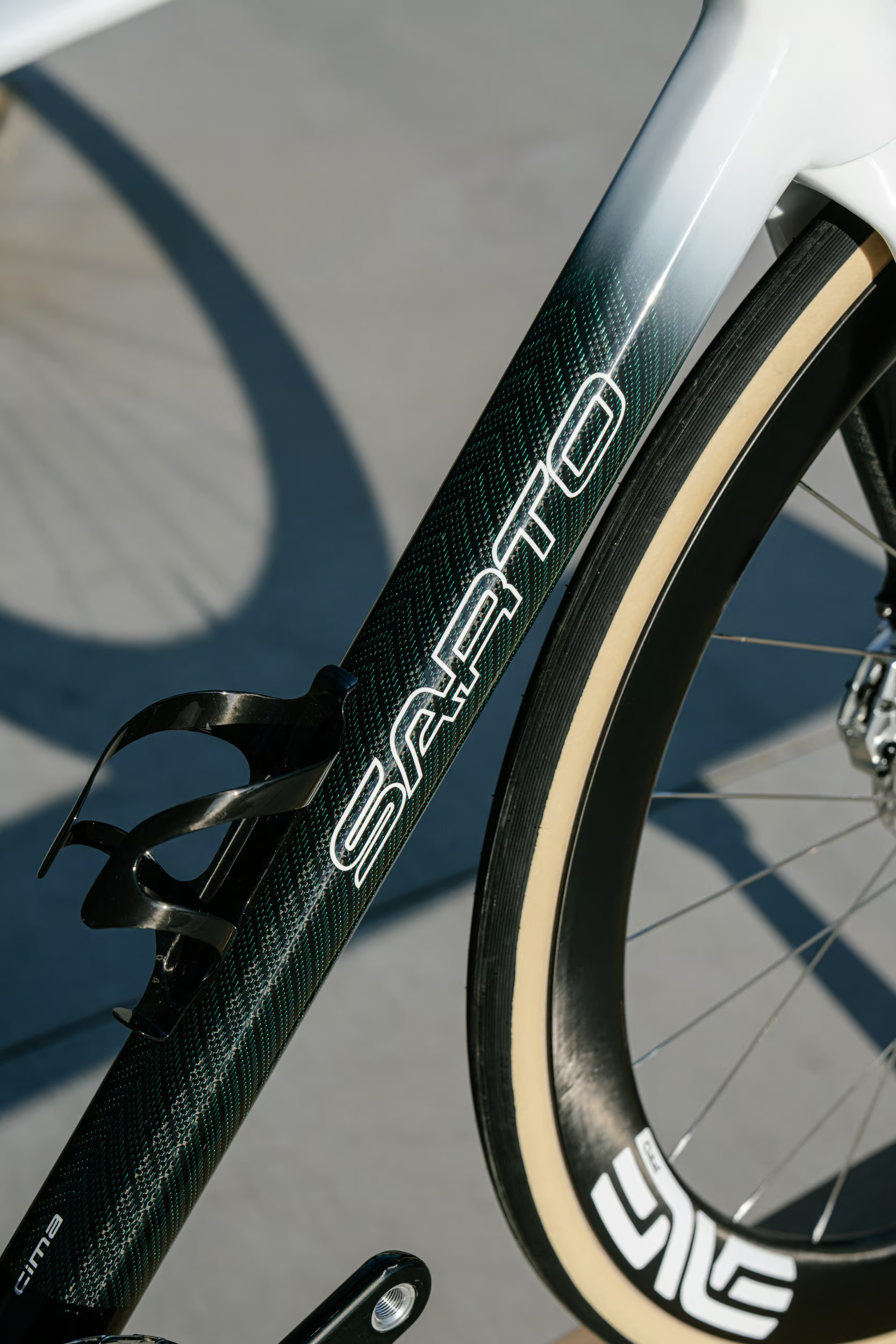
Then there is the finish, which is where the 911s come back in. The paint on Max’s Cima is a fade: white at the head tube, giving way down the frame to the bare green weave, with the Sarto logo in outline. Deliberately restrained. “I’m flashy, but in a weird way,” he says. “I don’t like loud bikes. There’s a reason people love the old 911s, and the reason they’re going through the roof is that timeless designs are always here. They have so much character. It’s a different level of sexiness.”
“I didn’t want to overwhelm the design. The Tri-Composite is the thing to look at. From afar, people say, oh, that’s a really cool bike. Then they get up close and it’s, wow, that thing is nuts.”
He showed it to his dad at the weekend, who declared it the coolest bike he had ever seen in his life. A riding buddy on a brand-new Cervélo S5 watched it turn green in the sun and pronounced it annoyingly cool. “It’s a different bike in the sun,” Max says, “versus when we’re riding in the dark.”
Having visited the factory in Venice and watched the work that goes into every frame, I can’t pretend to be neutral about this. It is lovely when the details they sweat over reveal themselves on the road, to someone who notices.
Max started cycling to lose some weight. Then he fell in love with it, and then, he says, the bikes made him fall more in love with it. “You want to love what you ride. You want to look at your bike. My bikes used to live in the garage. Now they’re inside. I don’t know if my wife fully appreciates that. But I was walking out this morning and I just looked at my Cima, and it makes me smile.”
The stable has sorted itself into roles. The Raso is for ripping gravel, weekly if he can manage it. The Colnago comes out on Wednesdays, when he and his friends want to “melt our faces off and try to kill ourselves on our bikes”. And the long days, the fast days, the hill days and the interval days belong to the Cima. “It climbs better than anything. It’s smoother. It rips downhill. It’s snappy, it’s quick. It’s everything my Colnago is, and more. It just makes me want to ride my bikes more.”
It has also, he admits, cost him. Two Sartos in six months is a lot of Sarto. “I told Adam, who’s a dear friend, that I’ve instituted a three-year ban on Regroup. He said, no, no, no. I think we’re just getting started!” Max runs a business, and there is talk of another bike when it hits a certain number. Adam is lobbying for a Bastion. Max is thinking a trip to Italy and another Sarto might be more his speed. Meanwhile, his friends have started turning up at the shop: one has just ordered a Factor, another an Open gravel bike. The ban, it seems, is not contagious.
What he says about the shop is worth repeating, because it’s what we would say ourselves if it didn’t sound like advertising. “A lot of people just want to sell you a bike. Adam falls in love with your bike with you. The reason I go to Regroup is sheer love of the game. Those dudes love bikes.”
“The biggest misconception people have in cycling is that you go to the bike store, buy a bike, go ride, and it all comes together. Regroup has taught me it’s really a process. Start with a fit. Evaluate your options: how deep do you want to go? Custom geometry, something off the rack? Bike buying should be consultative, because you want to fall in love with it. If you don’t, you might hate your bike. And that’s a lot of money.”
Before he goes, I ask whether the bike has changed what riding does for him. He describes the week without one: the itch, the only thing he wants to do. And the ride itself. “It’s good to get out. It’s good to go and get a coffee and sit down and stare at your bike and be like, wow, that thing’s mine.” The previous Saturday he rode 35 miles solo in the heat, cranking old rock, sweating through it. “I was just like, I would rather do this than golf right now.”
Adam will no doubt make him bring the Cima to the next Regroup in the Desert, which gives the rest of us something to look forward to. In the meantime, if you have ever wondered what you’re missing, start where Max did. Book a fit. Then evaluate your options. We take no responsibility for what happens after a few drinks.