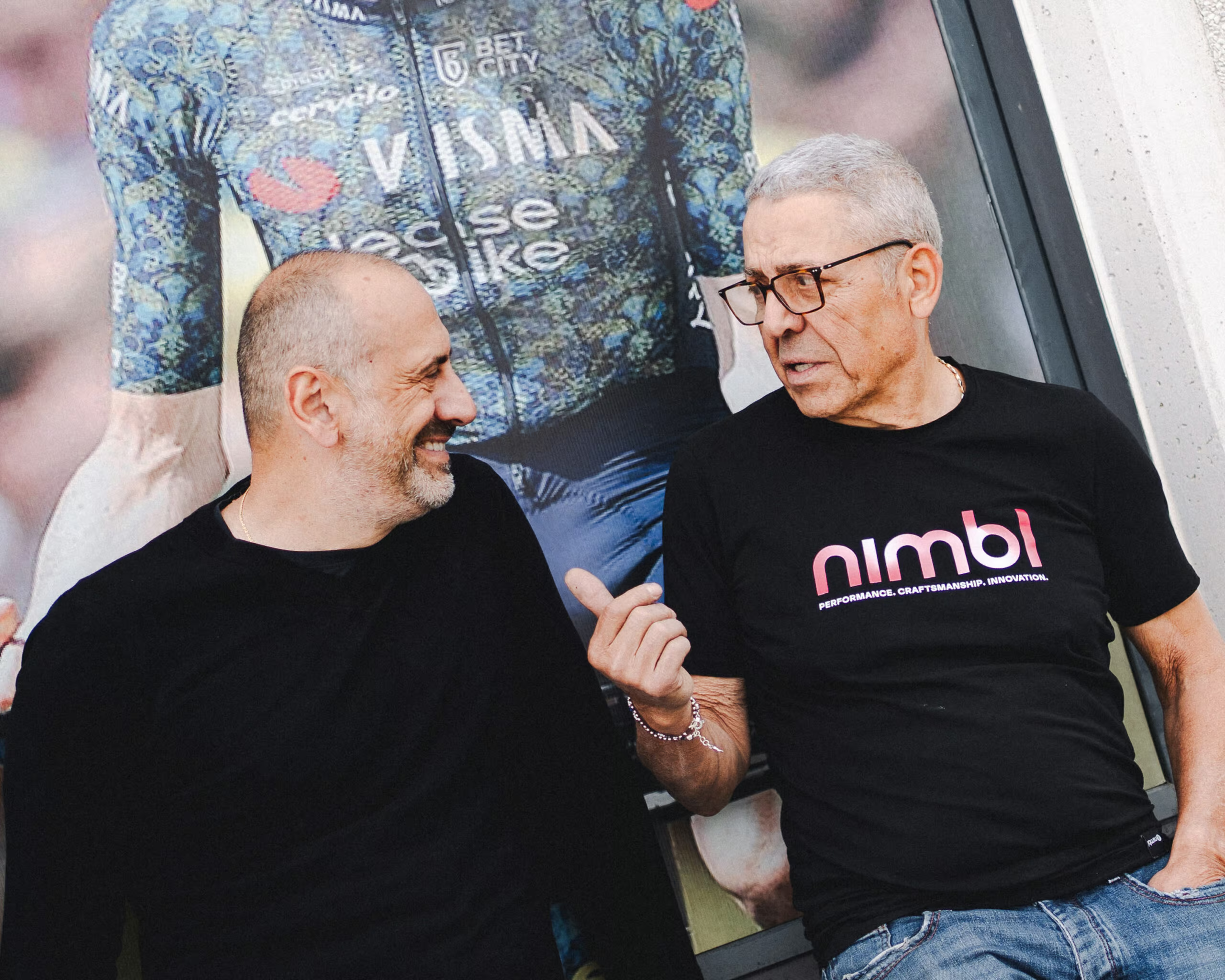
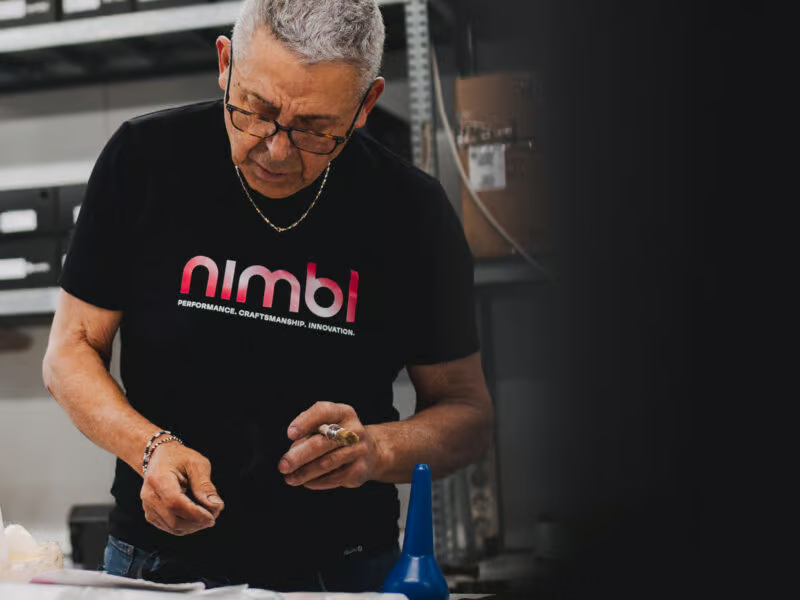
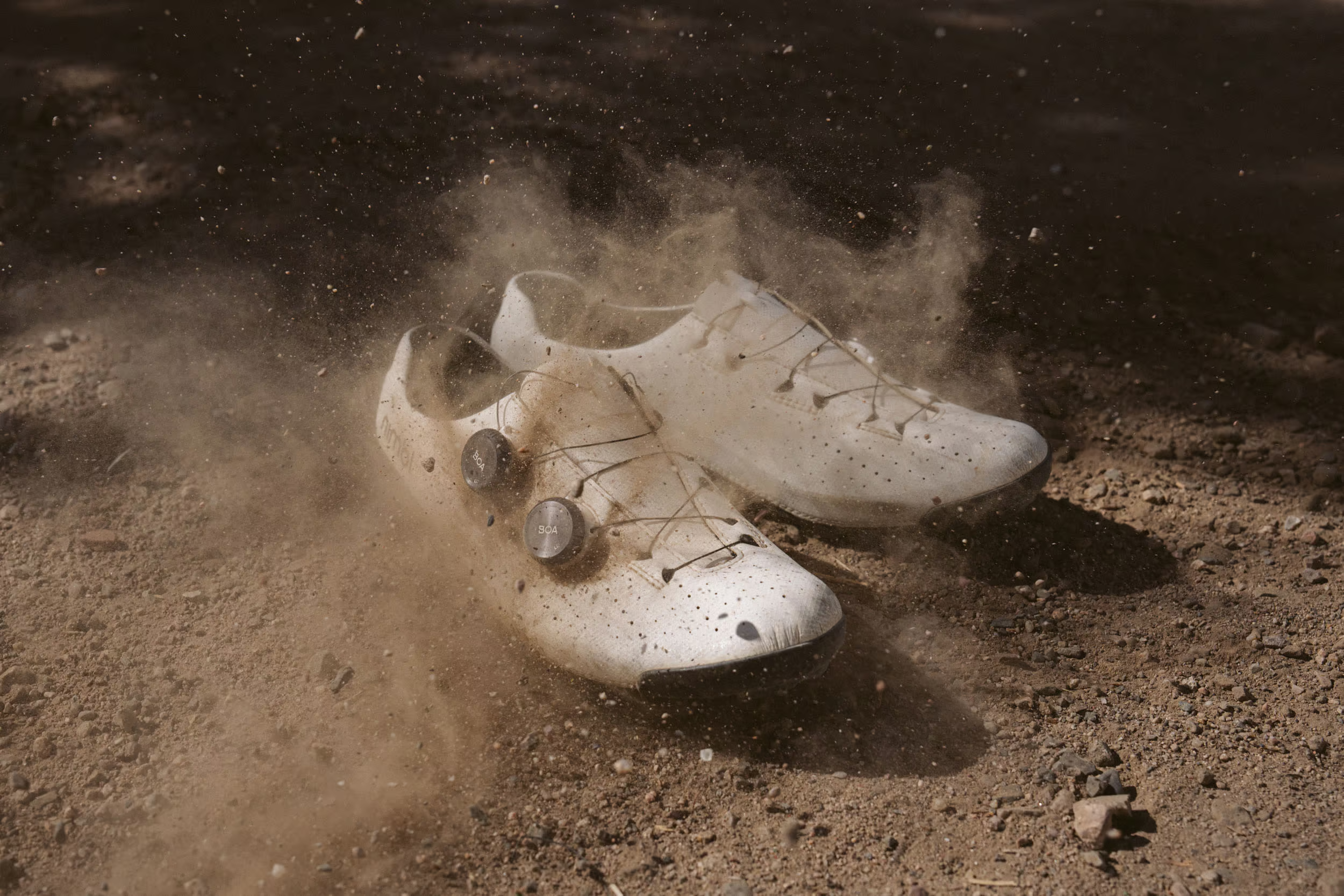
He had the shoe before he had a name for it. “I asked, How should we call it? And Luigino said, ‘I think I have a good name – nimble’. But does it mean nimble? I have no idea.” The room laughs. “My English, it’s not perfect. No, he said, ‘Nimble means agile, flexible’. Well, that’s what I want for my company! To be flexible and agile, you can go up and down without any problem. We don’t want to get backed into a corner by the market.” They knocked the ‘e’ off the end, and that was that.
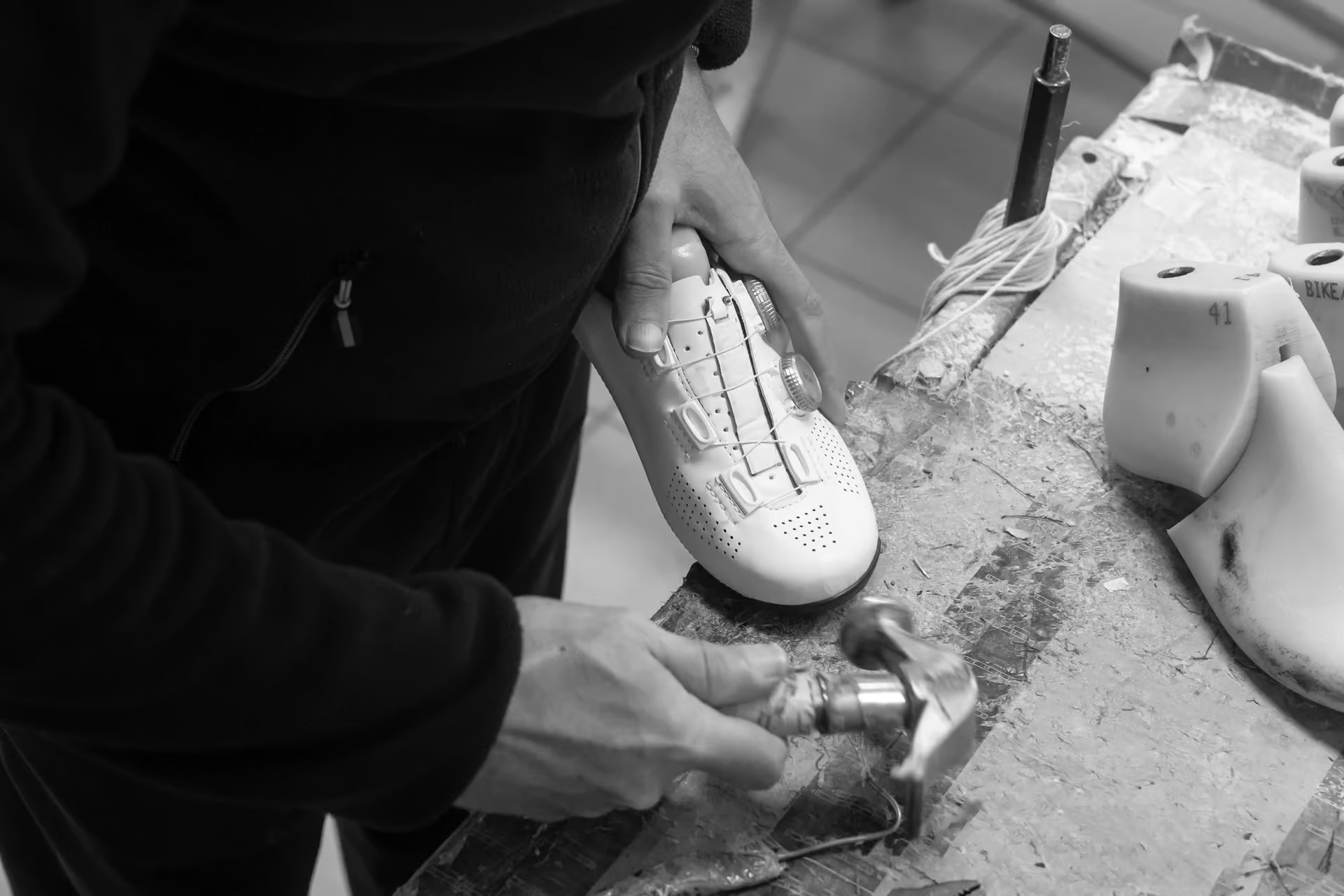
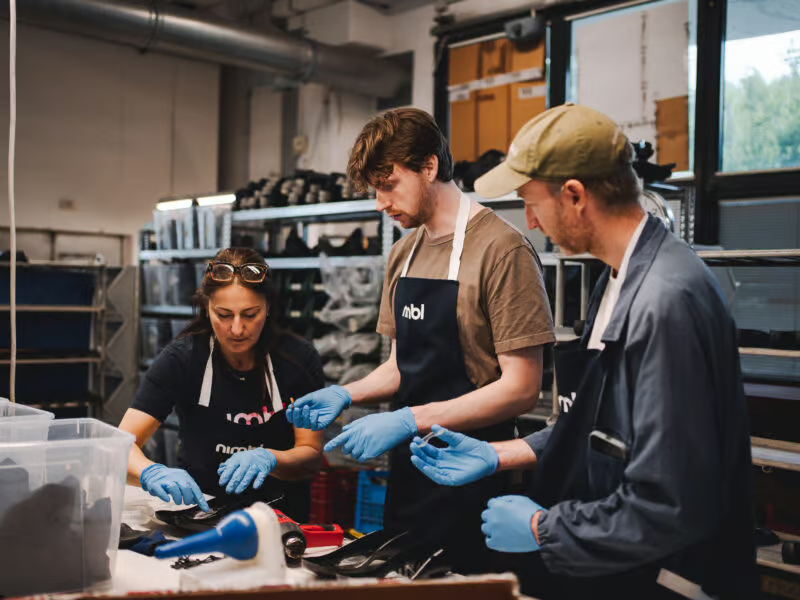
The name turned out to describe the factory as much as the shoe. If a part starts failing in the same place, Francesco changes the carbon, and the next ones are better — a thing he can only do because everything happens here, within reach. “If I go to Asia to make my shoes,” he says, “the time I tell them the shoes are broken, and it takes six months just to change the layup. In the meantime, everyone gets the broken shoes.” Made at home, he can put it right almost as fast as he hears about it. “That’s one reason we made the company here. One hundred per cent Italian. Agile — it reflects what we are.”
In cycling, the money runs one way — the brand pays the team to wear its shoes. At Nimbl, water runs uphill. Riders are given a pair at a reduced price, then come back and buy more, often several pairs a season, some of them already under contract to another brand. Francesco won’t say why; ask them, not me, is the gist. But the thing he’s proudest of needs no explaining at all. “In the first Olympic Games we won five medals, just in our second year,” he says. “People have stayed twenty years and maybe won one medal. And the best was that we never paid one single rider. This, for me, is absolutely beautiful.”
None of which would work if the place weren’t small. The factory is tiny, the storeroom essentially bare — a few cosmetic rejects on a shelf to make it look less empty — because whatever they make, they sell. Nimbl sits, on purpose, at the expensive top of a crowded market, and Francesco is content to let everyone else fight for the ground below. “Why do we do it?” he says. “Because we want to be the best of the best. And to be the best of the best, you have to get the best of everything.” These were never meant to be shoes for everyone, and he says so without a flicker of apology.
What he’s described, by the time he’s done, is two men in a garage who decided a cycling shoe was worth the same obsession everyone else was spending on frames and wheels, and proved it by discarding anything that did not meet their exacting standards. Nimbl’s many medals attest to that discipline.
It’s the reason a Nimbl hangs on our wall at all. The shoes are extraordinary — we could spend a happy hour on the carbon and the grams — but the part worth knowing is the garage, the two of them, Francesco and Luigino, and everything they were willing to leave behind in service of taste, performance and beauty.
Francesco could go on, and to his right his staff are beginning to hope he won’t, because there’s a clock that has nothing to do with the presentation. The reason surfaces soon enough: Prosecco, snacks, a punch somebody has clearly laboured over (and dropped a bottle of something very strong), and dinner behind it all. This is the part of Italian hospitality that never makes the spec sheet, where feeding you well and at length turns out to be the whole point, and the engineering was only ever the means to get you to the table.
So we surrender to the Prosecco, and Francesco lets his staff off the hook. Tomorrow there’s a piece of the Giro route to ride, which is a story for another day. For now, there’s a glass to fill and rather a lot of new models to explore.