PEOPLE

POV: Getting a Regroup Bike Fit

Will it hurt, and why the tomato? Regroup contributor Peter Harrington goes behind the scenes at our new bike fitting studio to see what it feels like to get a pro fit.

To prepare for his new bike, Regroup contributor Peter Harrington paid a visit to Regroup's new bike fitting studio to find out what getting a pro fit feels like.

WORDS

Peter Harrington

PHOTOS

Daniel Koeth

It's the tomato I can't fathom. Amidst the scene before me, it's the one thing that doesn't fit. Or seem to. Perhaps a home-grown tomato, as this one must be, over-large as it is, red-dappled green, healthy in its hue and obviously free of pesticides, is an essential part of the bike fitting process. I will soon find out. For now, I have an expectant Barry Anderson, Regroup's Director of Fit and Biomechanics, sitting opposite me, laptop in lap, ready to begin the session.

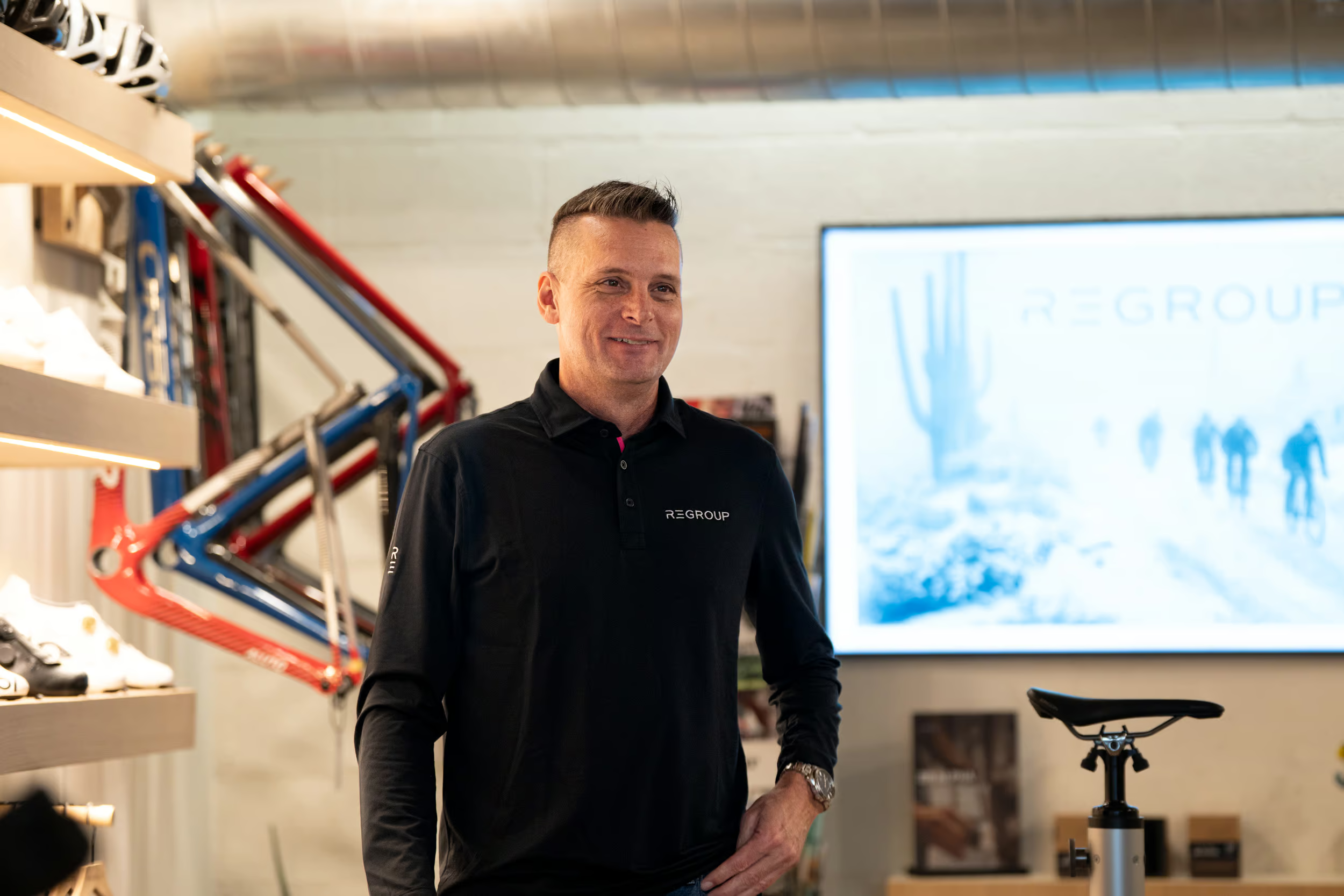
There’s something of the cheeky schoolboy about Barry, and I find myself liking him straight away. We’re upstairs at Regroup, in the brand’s new Regroup FIT studio. A large window behind me lets in warm, welcoming light, off-white on the walls, reflecting pleasantly off the large glass panels which section off the studio from the rest of the upstairs area. The rest is dedicated to bikes – and what beauties – stood on stands as if in an art gallery. It’s a lovely space to spend a few hours, and I should be here for three of them as part of my comprehensive bike fit on the Regroup size cycle – a bike that Barry will extend, raise, lower or otherwise adapt to my position throughout the session. I feel very looked after.


Before that, Barry has questions. He calls this the evaluation part of the fit. Imagine all of the many ways your body bends, twists and turns, your foibles, your injuries, age, how you feel in yourself – Barry wants to know it all. It’s like a doctor’s visit except Barry is laser-focused, listening like a Priest. He doesn’t even blink an eye when, overborne with confidence in our new intimacy, I tell him that I once cycled to a farmer’s field, scrumped an apple and blamed it on my sister. He understands. He writes something down. Sisters are a pain. What a guy.


“So, I hear you’re thinking about a new bike?” says Barry, as we begin the session proper. I tell him yes, a Pegoretti Elio, a steel bike. “And what will you use this bike for?” he replies. “Will it be for training, stress relief and general recreation?” All of the above, I say, but that I’d really like to be able to ride 80-100 miles without feeling completely shelled. As an explainer of sorts, my wife and I have two young daughters, so getting out regularly and for long periods of time is hard. I explain to Barry that, with careful planning, I would like to ride farther, even if it means heading out with the larks, to return at a reasonable time. Barry jots all of this down.


Age, weight and height come next, along with some tips on what to expect down the road as the years tick by and how to offset some of the downsides that come with going around the sun a few more times. Then Barry asks about my work day and whether I sit at a desk. Yes. He asks if there’s anything that aches after a long day. My neck, I reply, and shoulders. He even asks if I have ever played any asymmetric sports growing up – think tennis, or baseball. Yes to tennis. Then, other things – any injuries, significant illness, whether I visit a masseuse or a chiropractor. I’ve never had such a thorough examination.


Barry’s ears prick up when I mention I often get pins and needles in my hands while riding. “These two fingers,” he says, holding up his index and middle fingers, “or the side?” It’s always the side. Barry suspects an ulnar nerve issue. “It starts in between your shoulder blades and goes in a little channel between two ribs, and, depending on you and your parents, goes through up to three muscles, under your shoulder blade, into your shoulder joint, into your elbow joint, through your wrist and into those two and a half fingers. Along that path, anywhere that nerve is squeezed can make your hand go numb. So pins and needles in one place might not indicate a problem in that area, such as too much weight on the hands, but somewhere earlier up the chain.” I’m starting to understand the complexity of a bike fit. Barry continues. “With hand numbness, it’s incredibly rare that it’s your hand that’s the problem.”


From the hands to the feet, Barry asks about insoles and overall foot health, and eventually, whether there’s anything else about me he should know, and whether I have any questions so far. I glance at the tomato. Not right now.


Next, we move on to my existing bike, a Sarto Raso Gravel with a custom geometry informed by a quick bike fit session I had in the UK. The fit didn’t go beyond bare measurements, but it was effective, as the position feels good. “How does the bike feel at speed?” asks Barry. I tell him it’s super stable, road-like in many ways, very stiff, predictable, and highly comfortable. No surprises. “Is your position saddle-heavy, balanced or weighted towards the bars?” he inquires. That’s a good question. I feel planted, I reply. Perfectly balanced. Barry follows up with a query about which saddle I ride. He makes further notes.


Questions of cadence follow, how I spin, my confidence cornering and how my existing bike rides, descends, and then we get to the feet. Barry asks how they feel during a ride, whether I have insoles, and whether I have numb feet or pins and needles. Not usually, but I do have one foot one whole size larger than the other. Barry gets me to stand up, and he starts a visual examination – arms stretched, head turned, feet measured. Yes, one is a lot bigger and yes, my current shoes and insoles seem fine and a good match for my arch height, he confirms. All this, and I haven’t even started pedaling yet!

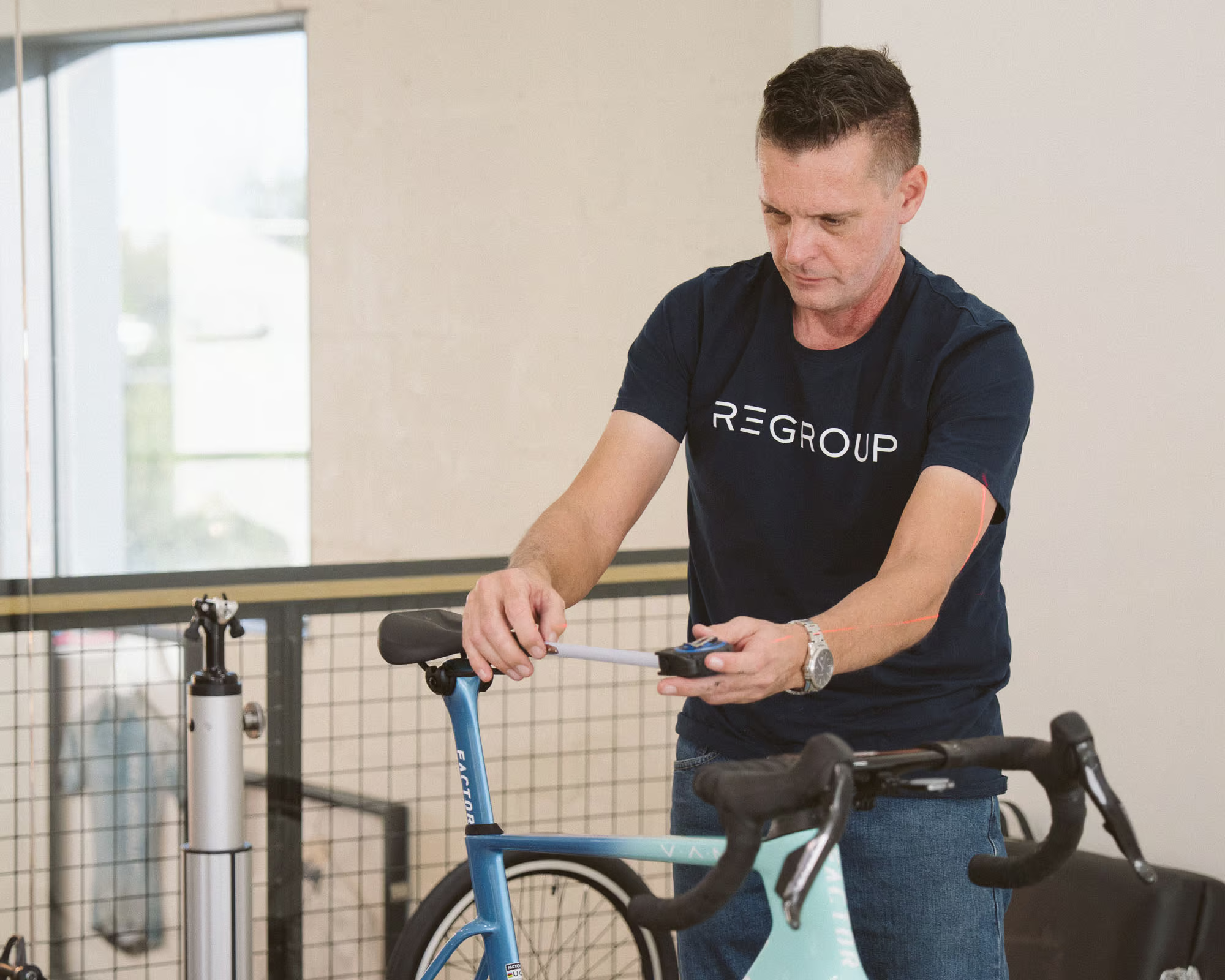
Barry checking the saddle reading during a bike fit session at Regroup FIT

But before that, Barry has news. “I’m seeing a pattern here,” he begins, referencing our earlier conversation, some of which I skipped over. “From how you told me you like to corner, your hand tingling, how you consistently point to your right foot when talking about your feet, which incidentally has a higher arch height than your left, and it’s larger, that you get neck pain on the right after long rides, and that your right calf always cramps first…99 times out of a 100, everything you’ve said points to an issue with how your pelvis is orientated.”


My what? It dawns on me that I’m not in a bike fit so much as a forensic examination of my cycling profile, not simply a session to take measurements. Truth be told, I’m a little surprised. I thought I was fine! Thankfully, Barry’s vibe is confessional and collegiate. He’s here to help. And at that, he continues. “Right now, sat down or standing, you’re in what we call an open chain – you can get out of your own way, and have complete freedom to move and accommodate,” he explains. “On a bike, you’re in a closed chain, a fixed position – attached at your feet and wedged against a handlebar. So all of that muscle tension is trapped. When you’re cycling, we can’t get rid of that load, but we can choose to have it live somewhere else, somewhere more highly adapted.” 


Then, Barry assesses the strength of my glutes and quads. After almost three decades of cycling, he’s not surprised that I’m well-adapted to pedaling, but it turns out I’m not great at controlling the strength that adaptation suggests. Barry recommends I use exercise bands to strengthen the muscles on the side of my butt, under the glute max – my glute med, and my glute min. “At the moment, you’re bleeding power by using some of your strength to move the knee across the pedal, which means the pedal isn’t moving. However, if you strengthen those two muscles, you’ll be able to control your quads better, put more power through the pedal, and ultimately, be a faster cyclist and enjoy the miles even more.” A few tips follow on when and how to use the exercise bands, which involve what I visualize as penguin-walking around the house. My kids are going to love that.


Barry whips out a table and asks me to get on it, face up. He assesses my hamstring flexibility, and hip mobility, and then dives into a deep explanation of the role of hips in crank length and how riding with the right size helps. Then it’s back to waggling my legs. “Hmm, I don’t know if you can see, but you have one leg longer than the other.” I do now! “Your right leg is shorter when you’re lying down, and longer on the bike,” he confirms. “It’s presenting as an anterior rotation on the right side of your pelvis – when you’re sitting, your right hip wants to live in front of your left hip. These rotations are almost always helpful; they are there to assist you with something you need to be crooked at.” I mention that I spend a lot of time carrying my kids. Barry nods. “That could do it. But now you want to cycle, so there’s tension when you’re locked into the bike and can’t get out of your own way. The solution is to find out what’s actually happening, and that is a job for a PT – one evaluation, and they’ll be able to give you a good overview, and some exercises to help you going forward.”


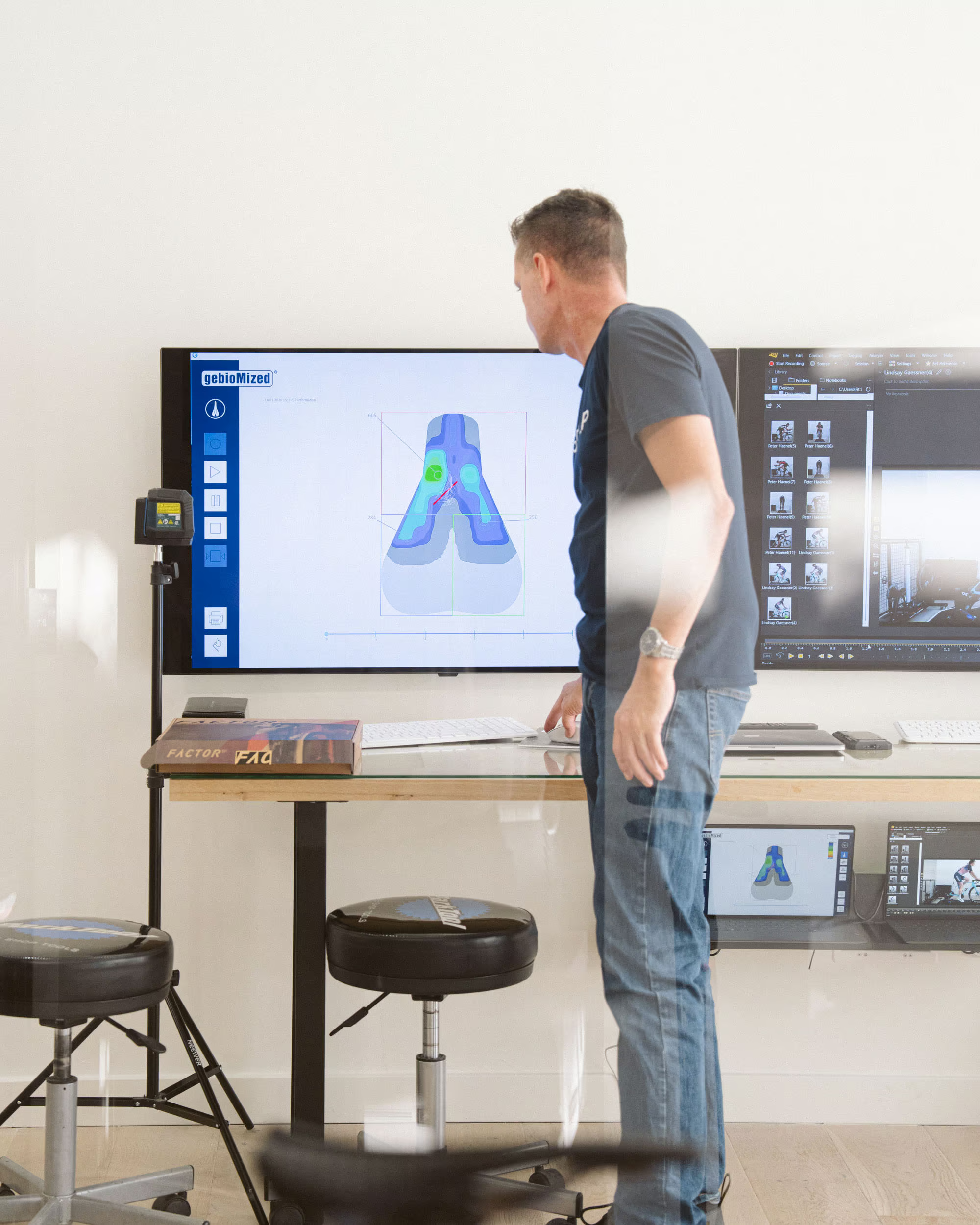
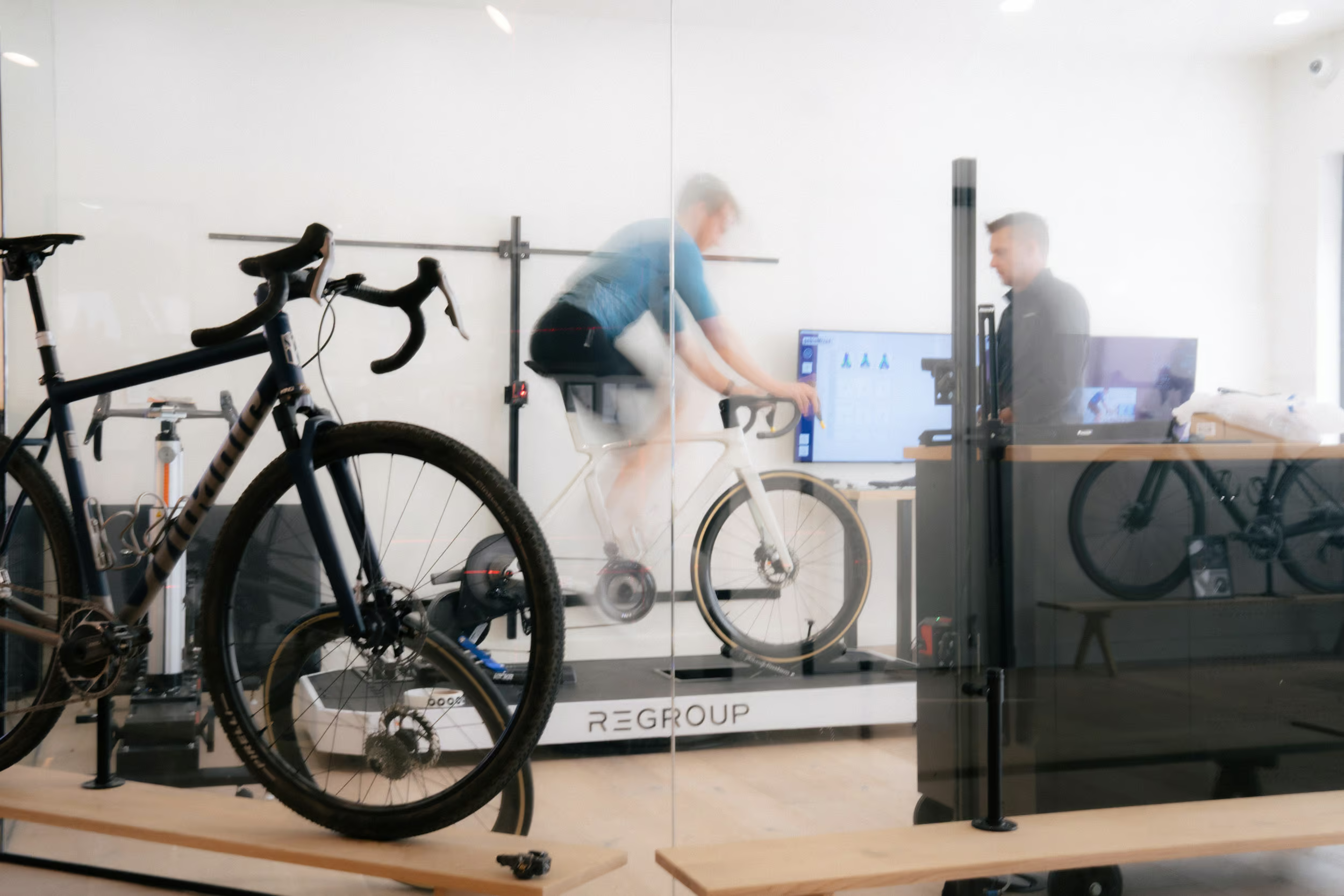
Now, things get a little more mainstream, as following the table, Barry has me get on the size cycle – a machine that looks and rides like a bike, but one in which every measurement can be changed in search of the perfect position. I’m sitting on my saddle, but it’s covered with a pressure-sensing system, and as I pedal, it’s broadcasting my butt to one of Barry’s enormous screens. Or at least, the outline of the saddle overlaid with colored pixels, which flicker in and out, dark blue, green, yellow and red in response to pressure. He also attaches some markers that his high-speed cameras will capture, all of which will inform the many measurements that comprise the final bike fit data, notes, and PDF he’ll send after the session.


Barry’s butt meter, for want of a technical term, tells him I’m a little lopsided, sitting more to the right of the saddle than the left. “There’s a reason why that might be happening,” he hypothesises. “It could be you’re shifting right to give your left hip more room. What might contribute to that is a low saddle height and an overlong crank, which combine to push your knee past what your hip can absorb.” He checks the camera replay. “The other possibility is that the saddle is slightly too narrow, and you’re choosing which side you have to plant on this thing, so you’ll sit there right until you get some negative feedback, and then you’ll move.”


After adjustments, we’re suddenly seeing fewer red pixels and a better overall balance. According to Barry, I’m now in much better shape for longer rides. The session continues, with one revelation after another (and yes, we even fixed the pins and needles in my hands!).


I’m going to need a coffee to think about everything that has happened over the past 3 hours – yes, it’s been three hours. I have measurements for my new bike, insights, recommendations, and something more—a connection. Barry is highly empathetic and so obviously knowledgeable without being overbearing or leading. I know I won’t forget this experience, Barry, nor what it will mean for my cycling. If only I could do my exercises without my children – and wife – laughing too much, but I know that’s impossible.


But before I leave, I have one last question. “The tomato?” I say, raising an eyebrow and waving my hand towards his desk. “What’s that for?” Barry smiles, and the light from the window seems to grow and brighten behind him. He reaches for the tomato, which takes two hands, and lifts it reverently towards me like a sacred relic. “I grew it at home! Want some?”