PEOPLE

Precision and the Business of Sweat

The secret to cycling success might be in your sweat. We spoke to Precision Fuel and Hydration’s Sweat Test Manager to find out how personalizing your fueling can change how you ride.

Precision and the Business of Sweat

WORDS AND PHOTOS

Peter Harrington

Promises, promises. Promises are everywhere. A promise that if you take this, you’ll feel better. Two of these, and fall asleep quicker. Down one and wake up wonderful. Companies sell certainty, and we are all keen believers. Because we’re not certain. But we’d like to be. That’s why when we find something that works, that actually carries through from its initial promise, we feel like we fall in love. Of course, we don’t. Not really. Still, in a world of false promises, it’s a relief to find something real. And it’s about things that are real, that work and work because they’re personalized, that we’re here today, talking to Lexi Kelson, a Sweat Test Center Manager for Precision Fuel & Hydration, a British brand that’s building a big name for its ability to work for you in ways that might just rock your ride.

As a registered dietitian, Lexi is no marketing mouthpiece. And as a major in journalism and former working journalist, she brings a healthy dose of critical thinking to bear on her work, all of which makes her the perfect person to answer our many questions as we find out what sweat testing is and why it matters, and what it does for your ride when you’re sipping Precision from your bottles.


Here’s our edited transcript.

Hey Lexi, nice to meet you. How did you end up at Precision?

Thanks, Pete. You too. I’m a registered dietitian who started out in private sports‑nutrition practice. I’d been following Precision for a while because I liked their messaging and products, so I emailed them with my credentials. They invited me to a call, and it turned out that they needed someone to cover the U.S. time zones for their one‑to‑one video consultations. So I said, I can do that and got plugged in from there. And that snowballed into a full-time gig with them as their Sweat Test Center Manager.

What does a “Sweat Test Center Manager” do?

I oversee the network of Precision’s Sweat Test Centers worldwide—about 120 to 130 locations. My day‑to‑day work includes selling, installing, and training staff on the testing equipment, scaling the operation, and troubleshooting any issues that arise. I also interpret the results for professional teams and individual athletes, helping them apply the data to their training and race strategies.

What is sweat testing, and why is it a key differentiator for Precision?

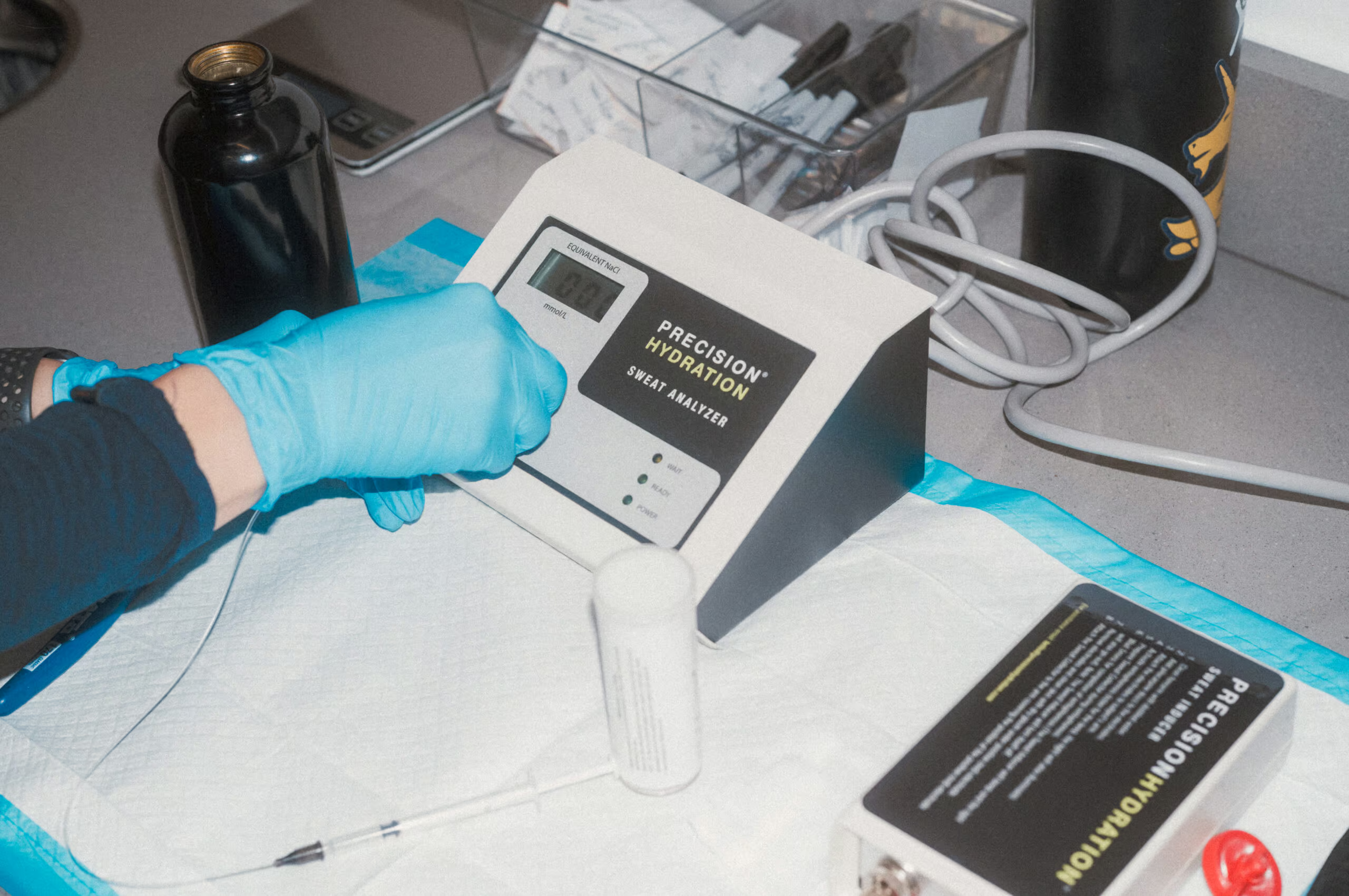
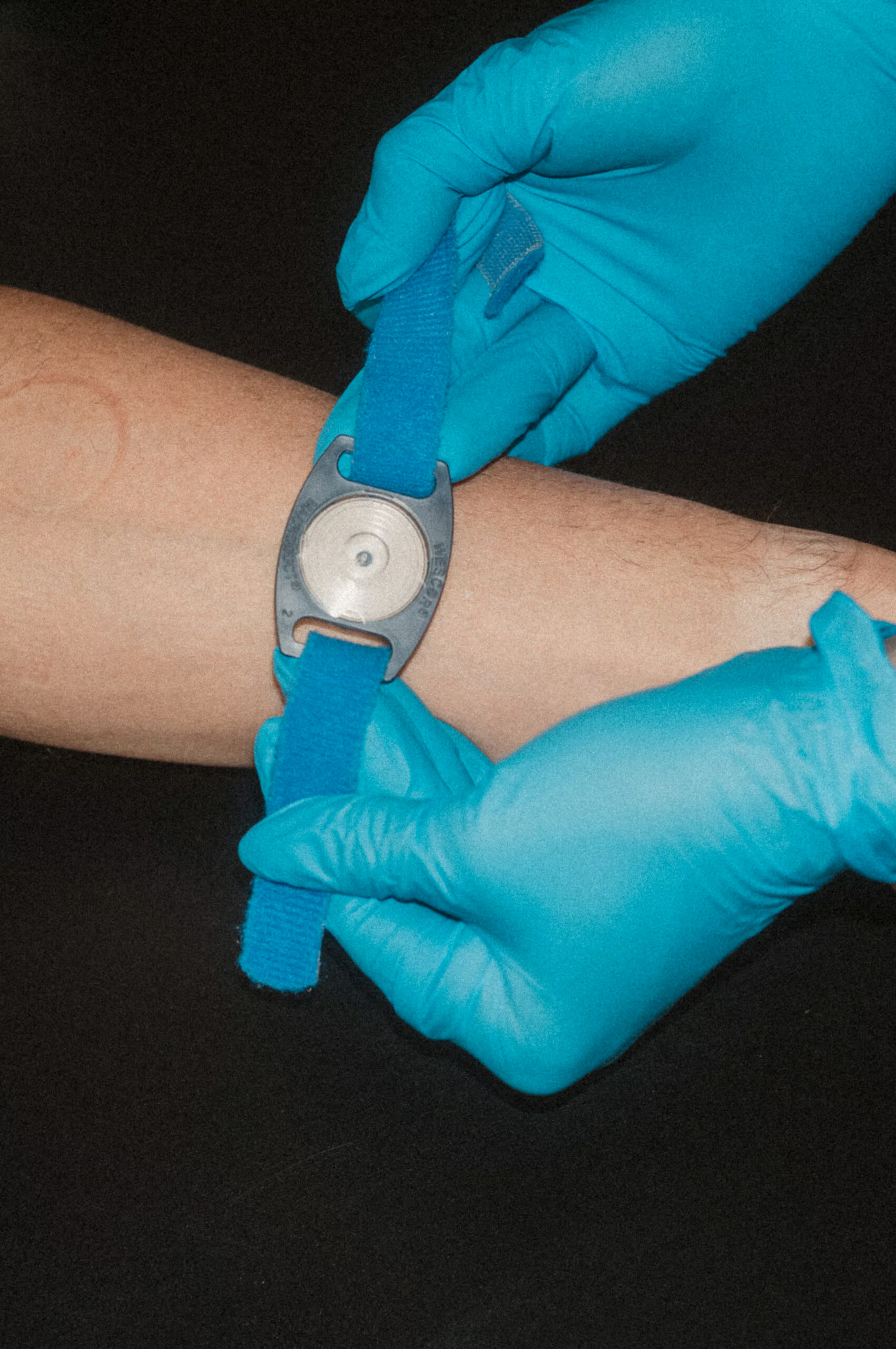
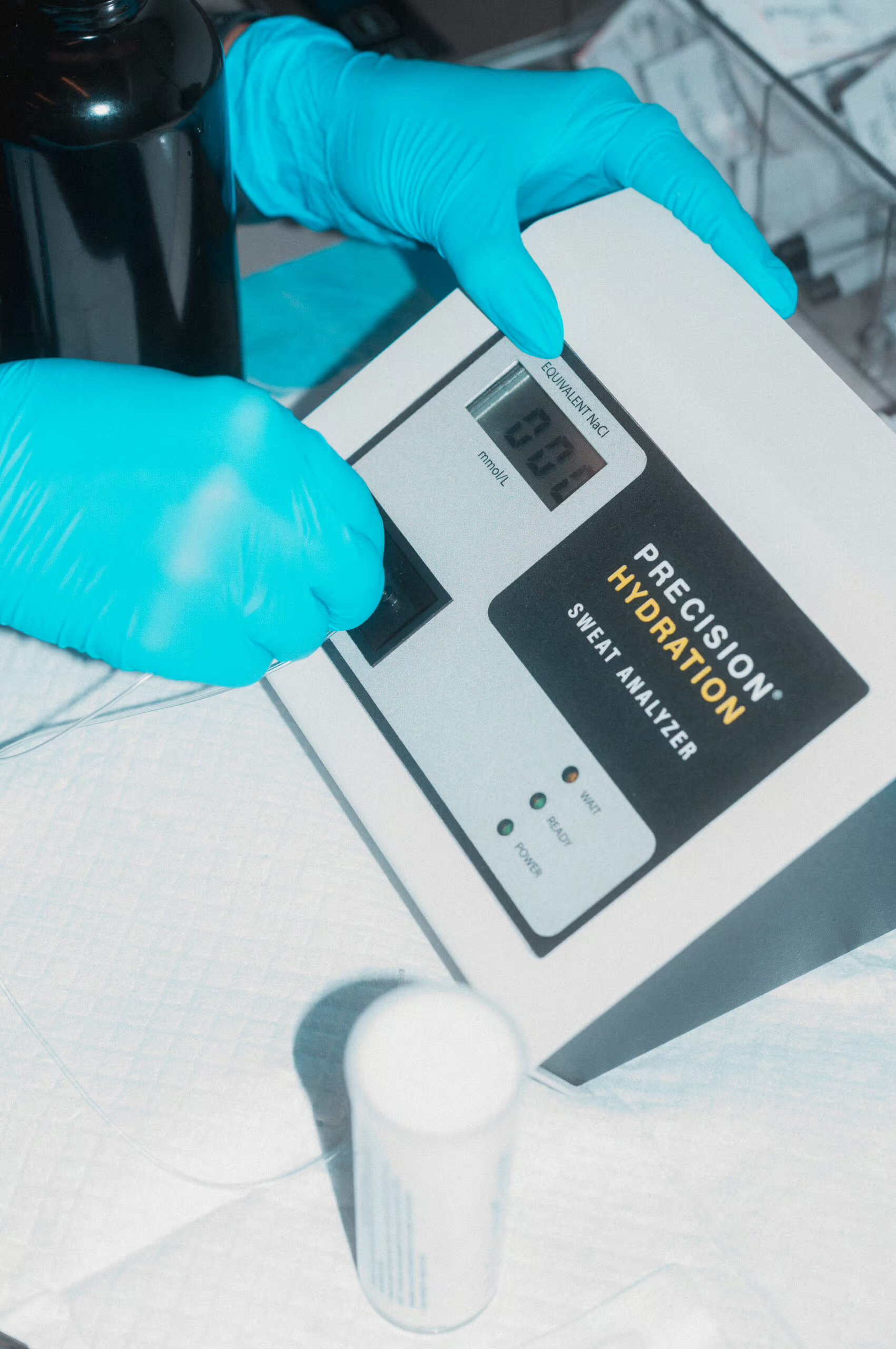
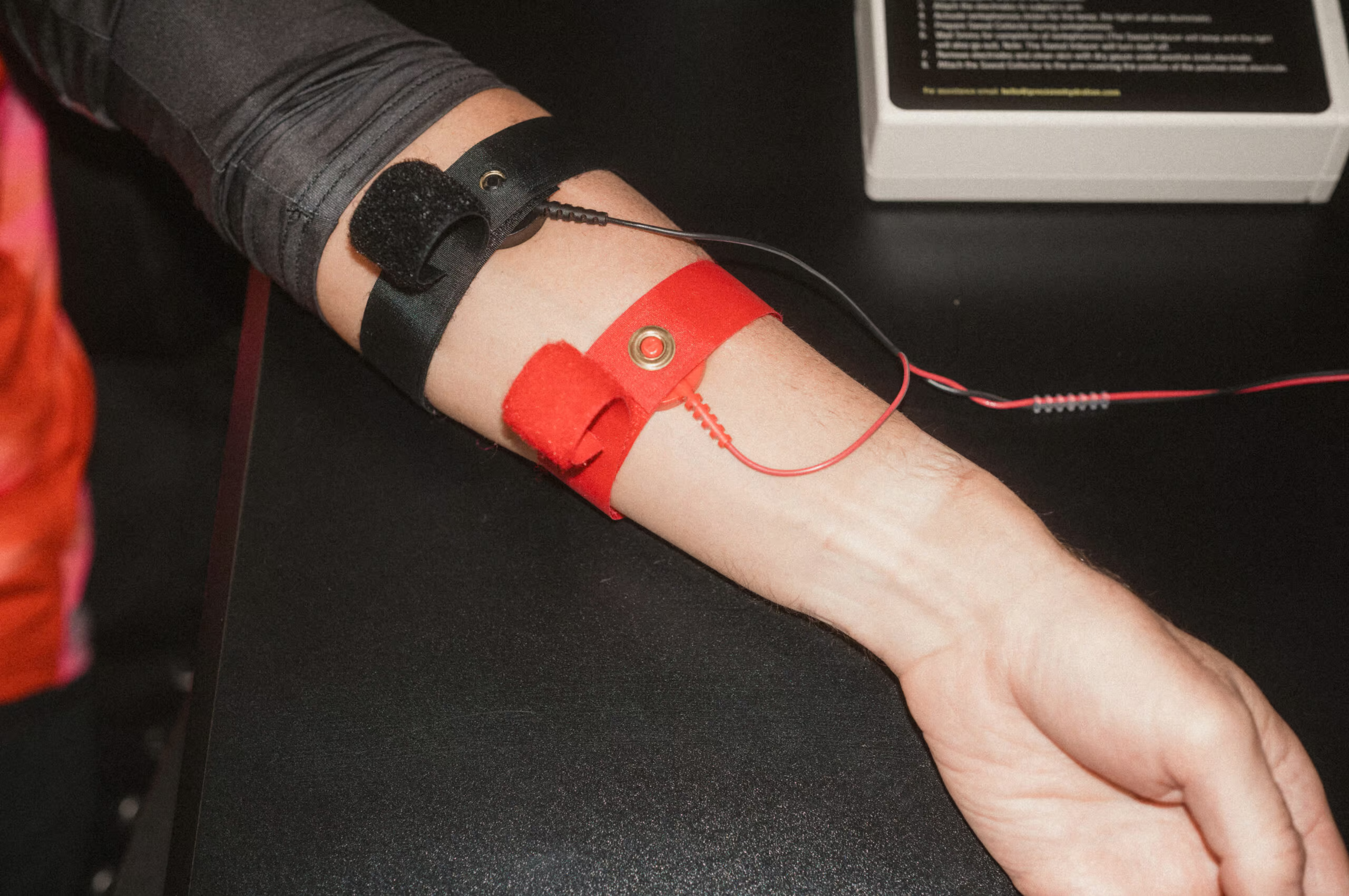
Sweat testing measures an athlete’s sodium loss per litre of sweat. The test is passive and takes about twenty minutes. We place two electrodes on the forearm, apply a low‑grade electrical current and pilocarpine to stimulate the sweat glands, and collect the sweat on a small disc. The sample is then run through an analyzer that tells us how many milligrams of sodium are lost per litre. Because the method uses the same Cystic‑Fibrosis device that’s validated in hospitals, the forearm reading reliably reflects whole‑body sodium concentration.

How variable is sodium loss among individuals?

An individual’s sweat sodium concentration is genetically determined and remains relatively stable throughout their lifetime. But there can be huge variance in sweat sodium concentration between athletes. We’ve tested some who lose as little as 200 milligrams per litre, to salty sweaters who lose two thousand two hundred milligrams per litre. Most people fall somewhere in the middle, but the range is wide enough that two cyclists taking the same electrolyte drink can have very different outcomes—one may still be losing too much sodium and risk cramps, while the other could retain excess salt and feel bloated or be craving more straight water.

Why does electrolyte personalization matter for cyclists?

If two cyclists on the same course consume identical electrolyte products, the rider with a higher sweat‑sodium rate may still be deficient, leading to cramps and fatigue, whereas the rider with a lower rate could end up with too much sodium, causing discomfort. Tailoring electrolyte intake to each athlete’s sweat profile can help to prevent both extremes.

How does Precision turn sweat‑test data into product recommendations?

The wide range of sodium concentrations we see inspired Precision’s multi‑strength electrolyte line, a version of which we recommend based on your sweat test data. In an ideal world, every athlete would get a sweat test and receive a formula matched to their measured concentration. When testing isn’t feasible, we suggest starting around the population average of roughly one thousand milligrams per litre and then adjusting through trial‑and‑error, guided by symptoms and practitioner feedback.

What follow‑up do athletes receive after a test?

I always encourage a sweat‑rate test—basically, weighing yourself before and after a training session to see how much fluid you lose. By combining that total fluid loss with the sodium concentration, we get a complete picture of your total electrolyte loss. I stay in touch for questions, especially after races, to fine-tune your profile. Most athletes tell me they experience fewer cramps, steadier alertness, and more sustained energy when the plan is applied correctly.

How do environmental conditions affect sodium levels?

A rider’s sodium concentration itself stays relatively stable regardless of temperature or humidity, but their sweat rate rises in heat or during prolonged effort. That means total sodium loss increases in hotter or longer rides, making precise electrolyte dosing even more critical under those conditions.
"If two cyclists on the same course consume identical electrolyte products, the rider with a higher sweat‑sodium rate may still be deficient, leading to cramps and fatigue, whereas the rider with a lower rate could end up with too much sodium, causing discomfort. Tailoring electrolyte intake to each athlete’s sweat profile can help to prevent both extremes."

Lexi Kelson

What is the cost of a sweat test?

In the United States, it’s roughly $200.

Once a rider has their Sweat Test data and the recommended product in hand, what advice do you give them in regard to applying it across their whole ride, before, during and after?

During a ride, I usually advise athletes to replace about seventy to eighty percent of their total fluid loss using the appropriate strength of Precision’s electrolyte product. I also recommend a pre‑loading protocol: taking a high‑sodium formulation (our “PH 1500” tablet is ideal for this) the night before a long event and again the morning of the race. That helps boost plasma volume and ensures optimal hydration from the start.

Does this protocol only apply to elite competition?

Not at all. Even long, demanding rides of 80 to 100 miles benefit from pre‑loading and a tailored electrolyte plan. Many recreational cyclists aren’t aware of these practices, but the same physiological principles apply regardless of fitness level.

Personalization sounds like the way to go. So why isn’t sweat testing more widespread?

It’s starting to become more mainstream, for sure. We’re seeing the emergence of wearable sweat testing monitors. However, ours is a clinical-grade test, and Precision holds the rights to use that technology in sport. Outside of the tech, there are two main barriers that keep sweat testing from being universal. First, awareness—athletes who have never experienced cramping or dehydration often don’t see the need for testing. Second, the cost—$200 per test is an investment, in the same way as investing in a bike and kit. Again, if you’ve never really bonked, cramped or struggled on a ride, you might not realize what you’re missing out on.

Which sports do you work with, and what’s your personal sport?

Professionally, I support endurance athletes—cyclists, triathletes—as well as team sports like baseball and football. Personally, I’m a powerlifter, which gives me a contrasting perspective. In weight‑class sports, precise sodium and carbohydrate timing around weigh‑ins can be decisive for performance, so I use Precision’s PH 1500 tablets strategically before meets.

Final question! How did you transition from journalism to dietetics?

I earned a degree in journalism and worked for a few years in the field before returning to school for nutrition. My own experimentation with diet and training sparked the career change, and I eventually became a personal trainer before moving into dietetics and joining Precision.